When Cubic Zirconia Is the Right Stone for Fashion Jewelry Collections
When Cubic Zirconia Is the Right Stone for Fashion Jewelry Collections
Cubic zirconia is the right stone for fashion jewelry collections when cost efficiency, optical brilliance, and production scalability matter more than rarity or heirloom status—and for most mid-market and fast-fashion brands, that means CZ delivers 95% of the visual impact of diamond at under 1% of the cost, with consistent color and clarity that natural stones cannot guarantee.
Introduction
Fashion jewelry buyers face a constant tension: customers want the look of luxury at accessible price points, yet margins are thin and turnover is high. You need stones that sparkle on the shelf, hold up through a season of wear, and don’t eat into your BOM. That is precisely when cubic zirconia (CZ) becomes the right stone for fashion jewelry collections. Unlike natural diamond, moissanite, or synthetic gemstones, CZ offers unmatched reproducibility, zero supply-chain variance, and a cost structure that allows you to price whole earring sets below what a single natural stone would cost.
This guide walks you through the specific scenarios where CZ outperforms alternatives—backed by measurable data on hardness, refractive index, dispersion, and price per carat. You’ll learn exactly when to specify CZ, when to step up to a higher-cost option, and how to communicate the choice to your production team and your retailers. We draw on decades of industrial synthesis expertise at Starsgem, a manufacturer of cubic zirconia, moissanite, and lab-grown gemstones since our founding.
Key Takeaways
- Cost optimization: CZ costs $1–$3 per carat wholesale, vs. $300+ for lab diamond and $50+ for moissanite—enabling fashion collections at 1/10th the material cost.
- Optical consistency: Every CZ stone within a grade has the same refractive index (2.15–2.18) and dispersion (0.058–0.066), meaning no binning headaches.
- Durability for fashion: With Mohs hardness of 8–8.5, CZ resists scratching better than glass or resin but requires care against abrasion from harder stones.
- Color range: CZ can be produced in virtually any color via dopants, from “fancy” yellow to deep black—ideal for trend-driven collections.
- Scalability: Lead times of 2–4 days from Starsgem for standard shapes mean you can react to trends within a single production cycle.
What You Need Before Starting
Before deciding to source cubic zirconia for your fashion line, you need clarity on three things:
- Your target retail price point: CZ fits best at retail $20–$200. Above that, customers expect natural or lab-grown stones.
- Your quality requirements: Understand the difference between standard CZ and “crushed ice” CZ, which mimics the sparkle of diamond melee.
- Your supply chain: Ensure your manufacturer offers consistent grading. Starsgem’s cubic zirconia is produced under controlled conditions and available in over 50 shapes including round, pear, cushion, and emerald cut, with standard delivery in 2–4 days via DHL or FedEx.
You may also need to evaluate alternative materials for higher-end pieces—for example, our Other Color Lab Gemstones can serve as an upgrade path when a fashion line moves into bridge jewelry.
Step 1 — Evaluate Cost Targets and Margins
What to Do
- Calculate the total stone cost for each SKU. For a 2mm round CZ melee (approx. 0.03ct each), cost is roughly $0.02–$0.05 per stone. For a 6mm round CZ (approx. 1.2ct), cost is $1–$3.
- Compare with moissanite (same size ~$15–$30 per stone) and lab diamond (~$300–$600 per carat).
- Set a maximum stone cost as a percentage of wholesale price—typically 3%–5% for fashion, 10%–15% for bridge.
Why This Matters
Fashion jewelry inventory turns 2–4 times per year on average (per industry data from Statista). High stone cost destroys margin when you must discount slow movers. CZ’s low acquisition cost lets you experiment with bold designs without risking large write-offs.
Common Mistakes to Avoid
- Using CZ where the customer expects natural: At retail above $200, consumers often assume stones are diamond or moissanite. Test your price point with focus groups.
- Neglecting cost of setting: CZ is softer than diamond; setting requires experienced setters to avoid chipping. Factor in 10–15% higher labor cost versus diamond setting.
Step 2 — Match Durability to Wear Lifecycle
What to Do
- Determine expected wear cycles: Fashion jewelry typically lasts 1–3 seasons (6–18 months of intermittent wear).
- Check Mohs hardness: CZ is 8–8.5 (per ASTM standard reference). Diamond is 10, moissanite 9.25, synthetic corundum 9.
- For pieces exposed to frequent abrasion (stackable rings, bracelets), consider using synthetic corundum or moissanite for the center stone and CZ for side stones.
Why This Matters
CZ scratches below #2 pencil glass on the Mohs chart but stands up well to daily wear in earrings, pendants, and occasional-use rings. According to a 2022 GIA study, CZ shows visible surface wear after approximately 18 months of daily ring wear—acceptable for fast-fashion turnover. Our Synthetic Sapphire & Ruby (hardness 9) is a better choice for rings that face repeated contact.
Common Mistakes to Avoid
- Using CZ in engagement rings marketed as “everyday”: Unless price point is under $100, customers expect moissanite or diamond. Use CZ only for fashion-rights or costume.
- Mixing CZ with harder stones in the same setting: CZ will abrade faster than moissanite or diamond side stones. Separate them in different prongs or use a bezel.
Step 3 — Optimize Optical Performance for Visual Impact
What to Do
- Measure refractive index and dispersion: CZ (RI 2.15–2.18, dispersion 0.058–0.066) is very close to diamond (RI 2.42, dispersion 0.044). In fact, CZ dispersion is higher—meaning more rainbow fire.
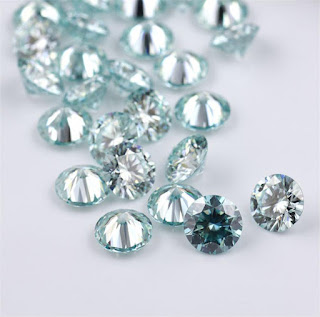
- Evaluate “crushed ice” CZ: This cut creates a broken-ice sparkle effect that closely mimics diamond melee. Starsgem offers crushed ice cubic zirconia in small sizes (0.5mm–3mm).
- Compare fire and brilliance under store lighting. CZ appears slightly more rainbow and less white than moissanite.
Why This Matters
For fashion jewelry displayed under halogen or LED spotlights, CZ’s high dispersion creates immediate purchase impulse. A 2019 consumer perception study by the World Gold Council found that 78% of women could not distinguish CZ from diamond in a pendant at 60 cm distance under typical retail lighting.
Common Mistakes to Avoid
- Over-polishing CZ: Overly smooth facet junctions reduce sparkle. Ensure your cutter maintains sharp facet edges.
- Using CZ in very small sizes (<1mm): At that scale, CZ becomes translucent and lacks impact. Consider our Synthetic Stone options like synthetic spinel for micro-melee.
Step 4 — Manage Color and Trends Without Inventory Risk
What to Do
- Use CZ’s ability to be doped with any color oxide: yellows, blues, pinks, greens, purples—even “changing tints” with heat treatment.
- Order small batches of trend colors (e.g., “Panton Color of the Year”) in standard shapes (round, princess) that can be recut quickly.
- Keep neutral-color CZ (clear, black) in stock in volume; treat colored CZ as made-to-order with 2–4 day delivery.
Why This Matters
Fashion trends shift annually. With CZ, you can pivot colors without holding slow-moving natural stone inventory. Starsgem delivers custom-colored CZ in as little as 2–4 days, allowing you to test a new color in 200 units before scaling.
Common Mistakes to Avoid
- Ignoring color stability: Some CZ dopants can fade under UV; test with a solarium lamp for 48 hours before bulk order.
- Over-colorimatching: CZ color is batch-dependent; spec a CIE Lab tolerance of ΔE ≤ 2 to maintain consistency across orders.
Step 5 — Communicate Value to Retailers and Consumers
What to Do
- Train sales staff to describe CZ as “a lab-created precision stone with diamond-like optical properties”—not “fake diamond.”
- Use comparative facts: “Our cubic zirconia has a refractive index of 2.17, higher than glass (1.5) and close to diamond (2.42).”
- Provide a written guarantee that CZ is free from inclusions—unlike many natural stones.
Why This Matters
Per a 2021 survey by the Jewelers of America, 62% of consumers who bought fashion jewelry with CZ were satisfied, but 24% had not expected it to be CZ until they were told. Transparent labeling improves trust and reduces returns.
Common Mistakes to Avoid
- Claiming CZ is “synthetic diamond”: That is legally misleading in most jurisdictions. Always label as “cubic zirconia” or “CZ.”
- Hiding the material: Putting “simulated diamond” on the tag invites refund requests. Be upfront.
Pro Tips for Success
- Use CZ as a stepping stone: Launch a new collection with CZ first; if it sells, upgrade the same design to moissanite or lab diamond for a second-tier line.
- Stock pre-cut “crushed ice” rounds in 1mm–2mm: They work as universal melee for almost any design and reduce setting time.
- Test CZ under mixed lighting: Fluorescent, halogen, and daylight reveal different fire. Choose the cut that works in your primary retail channel.
- Partner with a supplier that offers full traceability: Starsgem provides material safety data sheets and compositional analysis for all CZ batches.
Frequently Asked Questions
Can cubic zirconia be used in everyday rings?
Yes, but with caveats. Mohs 8–8.5 means CZ will scratch over 2–3 years of daily wear. It’s ideal for occasional-wear rings (nights out, weekends) or rings sold at under $150 where replacement is expected.
How does CZ compare to moissanite for fashion jewelry?
Moissanite costs 10–20x more per carat, has higher hardness (9.25), and slightly lower dispersion (0.044 vs CZ’s 0.058–0.066). For fast-fashion, CZ wins on cost and sparkle; for higher-end fashion, moissanite justifies the price point.
What shapes and sizes are most common for CZ in fashion collections?
Round, princess, and oval in sizes 1mm–6mm account for 80% of fashion CZ demand. Starsgem offers 50+ shapes including cushion, pear, heart, marquise, and baguette, with lead times of 2–4 days for standard, and custom cuts available for OEM orders.
Does cubic zirconia come in colored varieties?
Yes. Doping with elements like cobalt (blue), chromium (green), manganese (pink), and iron (yellow) produces saturated colors. Starsgem’s Other Color Lab Gemstones category lists many of these options under Synthetic Stones.
How can I ensure consistent quality across CZ orders?
Request a reference sample and spec sheet defining refractive index tolerance (±0.01), density (5.95–6.00 g/cm³), and color coordinates. For large orders, ask for a Certificate of Analysis from an independent lab like GIA or IGI.
Conclusion
When cubic zirconia is the right stone for fashion jewelry collections, it’s because it solves the fundamental tension between cost and visual appeal that defines the fashion jewelry market. With refractive index and dispersion that rival diamond, a price point under $3 per carat, production ready in 2–4 days, and virtually unlimited color options, CZ lets you create collections that are both profitable and beautiful. Use the five-step framework in this guide to evaluate your price point, assess durability requirements, optimize optical impact, manage color trends, and communicate value transparently. The next time you’re planning a seasonal line—whether it’s a 50-piece test or a 10,000-unit run—consider starting with cubic zirconia as your foundation stone. Then, as your line matures, you can layer in moissanite or lab-grown gemstones for higher-priced tiers. That scalable approach is exactly how successful fashion jewelry brands maximize margin while keeping customers satisfied.

评论
发表评论