Quality Control Checklist for Wholesale Diamond Earrings Orders
Quality Control Checklist for Wholesale Diamond Earrings Orders
The short answer: A quality control checklist for wholesale diamond earrings orders is a documented, AQL-based inspection protocol that verifies stones, metal purity, setting security, finish, pair symmetry and packing against a signed specification sheet before a bulk shipment leaves the factory. Relevant specifications and application guidance are available through Product Categories.Earrings fail in ways rings rarely do. Two stones must match each other. Two posts must sit at the same height. A buyer often sees the goods for the first time after they clear customs, which means every check has to happen before the box is sealed — not after.
A loupe and a hopeful handshake do not scale to 500 pairs, let alone 5,000, and they do not survive a chargeback. What follows is the working checklist for bulk stud, drop and hooped earring runs: six stages, the tools for each, the numbers that define a pass, and the mistakes that slip through when a step gets skipped. It applies equally to lab grown diamond, moissanite, hydrothermal emerald and colored stone programs. Relevant specifications and application guidance are available through Emerald Cut.
Key Takeaways
- Freeze a signed specification sheet and a sealed golden-sample pair before any bulk production starts.
- Sample per ISO 2859-1 at general inspection level II, AQL 2.5 for major and 4.0 for minor defects.
- Grade each stone individually at 10x, then grade the pair against each other — never the reverse.
- Test metal fineness to ISO 9202 and nickel release to EN 1811/EN 12472 (≤0.5 µg/cm²/week).
- Log post height, pair weight delta and plating thickness in numbers, not adjectives.
What You Need Before Starting
Gather these before the first carton is opened:
- Approved specification sheet — stone type, shape, carat band, color range, clarity range, metal and purity, plating, post length, backing type, finished weight tolerance, packaging.
- Sealed golden sample — one signed pair kept in a tamper-evident bag, used as the physical reference for the whole order.
- Calibrated instruments — 10x loupe or stereo microscope, diamond/moissanite tester, digital micrometer reading to ±0.01 mm, balance reading to 0.001 g, UV lamp, stone-setting probe, brass tweezer.
- Sampling plan — ISO 2859-1, single sampling, general inspection level II, with AQL 2.5 for major and 4.0 for minor defects, agreed in writing.
- Compliance paperwork — lab-grown disclosure consistent with the FTC Jewelry Guides (16 CFR Part 23), metal assay report, plating thickness certificate.
- A written item list pulled from the supplier's Product Categories so the inspection plan maps to the actual SKUs being shipped.
Step 1 — Freeze the specification sheet and golden sample
What to Do
- Write every attribute as a measurable value: "1.00–1.05 ct total weight per pair", not "about one carat".
- Define tolerance bands for pair matching — typically ±2% on total weight and ±0.10 mm on post height.
- Sign and date the sheet with the supplier, and seal one production pair as the golden sample.
- Photograph the golden sample on a millimeter grid, front and side.
- Store the sheet version number on every carton label and packing list.
Why This Matters
Around 70% of wholesale earring disputes trace back to an unwritten expectation, not a manufacturing fault. A measurable spec converts a subjective argument into a pass/fail reading anyone can repeat, in any language.
Common Mistakes to Avoid
- Descriptive specs: "nice white color" cannot be inspected. Use a defined color or clarity band instead.
- Skipping the golden sample: without a sealed reference, "the same as last time" drifts batch to batch.
- Unversioned sheets: a mid-order spec change without a version bump invalidates every previous inspection record.
Step 2 — Inspect the stones before they touch metal
What to Do
- Verify carat band by weighing 20 random stones on a 0.001 g balance; melee typically runs 0.003–0.15 ct, with single stones from 0.15–0.5 ct, 0.5–0.99 ct, 1–1.99 ct and 2 ct upward.
- Confirm identity with a thermal/electrical tester and a UV lamp — lab grown and natural follow the same grading language, so disclosure must be explicit.
- Grade color and clarity at 10x, stone by stone, then pair them.
- Check girdle thickness, culet and any chip or extra facet at the prong contact points.
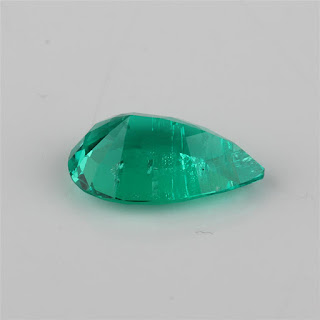
- For step cuts, inspect each stone individually: an Emerald Cut shows every internal line and feather at 10x, so pair the stones only after both pass alone.
Why This Matters
Stone cost dominates the unit price of a diamond earring. A 3% mismatch in carat band across a 5,000-pair run is a measurable budget overrun and a visible size difference in the customer's hand. Relevant specifications and application guidance are available through Color Diamond.
Common Mistakes to Avoid
- Pair-first grading: matching two flawed stones to each other hides defects in both.
- Eyeballing melee: sieve sizes vary; weigh or gauge, do not guess.
- Ignoring fancy colors: Color Diamond pairs are the hardest to match because tone shifts with the light source. Grade under standardized daylight, not office LEDs.
Step 3 — Verify metal, solder joints and setting security
What to Do
- Confirm fineness against ISO 9202 — 925 silver is 92.5% minimum, 18K gold 75.0%, 14K gold 58.5%.
- Inspect every prong at 10x: tips should be rounded, sit over the girdle, and show no tool marks or porosity.
- Run a gentle tug test on each stone with a brass probe; nothing should move.
- Flex each hinge, butterfly and lever-back 20 times to confirm spring tension and alignment.
- Check solder seams on posts and galleries for pits, discoloration or incomplete flow.
Why This Matters
A loose stone is the single most expensive defect in earrings, because the return shipping, re-setting and reputational cost can exceed the piece value several times over. Prong security is cheap to check and impossible to fix after delivery.
Common Mistakes to Avoid
- Polishing over weak prongs: a high polish can mask a thin tip that fails within weeks.
- Testing on the finished polish only: inspect after setting and again after plating.
- Skipping backing hardware: butterfly friction is the most common wear complaint and is rarely inspected.
Step 4 — Audit finish, plating and skin contact
What to Do
- Measure plating thickness by X-ray fluorescence; rhodium on white gold or silver typically runs 0.10–0.25 µm for earrings.
- Verify nickel release per EN 1811 with EN 12472 simulated wear, targeting ≤0.5 µg/cm²/week for skin-contact parts.
- Ultrasonic clean 3–5 minutes, then inspect under 10x for polish residue, compound trapped under prongs or in gallery gaps.
- Check for scratches, firestain, tool chatter and rhodium drag around settings.
- Confirm earring posts and backs are lead- and cadmium-free if children's sizing is involved; ASTM F2923 is the reference framework.
Why This Matters
Skin-contact compliance is a legal requirement in the EU and UK, not a preference. Plating and nickel failures are batch-wide, so one test result applies to the entire shipment.
Common Mistakes to Avoid
- Testing the plated sample but shipping the unplated run: pull samples from the actual packed cartons.
- Reporting plating as a range without a minimum: specify a floor value, e.g. 0.10 µm minimum.
- Wet packing: residual moisture in a polybag causes tarnish before the goods reach the shelf.
Step 5 — Match pairs, measure symmetry, run a wear simulation
What to Do
- Weigh both earrings of each pair; keep the difference within ±2% of total weight.
- Measure post length and stone table height with a micrometer; hold the delta to ±0.10 mm.
- Stand both stones face-up on a flat bench and compare tilt and rotation — misalignment is visible at arm's length.
- Check that left and right are mirror images for drops, and identical for studs.
- Run a 24-hour wear simulation: hang test, 30 open/close cycles on backs and a soft-tumble in a lined jar.
Why This Matters
Asymmetry is the defect buyers notice first and forgive least, because it is the only one a customer sees without a loupe. Numbers catch what the eye rationalizes.
| Inspection stage | Sample basis | Key tool | Pass criteria |
|---|---|---|---|
| Stone identity | 100% of stones above 0.15 ct | Tester + UV lamp | Matches declared type |
| Carat band | 20 stones per lot | Balance, 0.001 g | Inside declared band |
| Metal fineness | 3 pieces per lot | Assay / XRF | ISO 9202 minimum met |
| Plating thickness | 5 pieces per lot | XRF | ≥0.10 µm rhodium |
| Nickel release | 2 pieces per style | EN 1811 lab test | ≤0.5 µg/cm²/week |
| Pair match | 100% of pairs | Micrometer + balance | ±2% weight, ±0.10 mm |
| Final audit | ISO 2859-1, level II | Visual + function | AQL 2.5 / 4.0 |
Step 6 — Run the final AQL audit, then label and pack
What to Do
- Draw the sample size from ISO 2859-1 at level II and inspect against the defect classification list.
- Record every defect with a photo, carton number and SKU — reject per the agreed AQL, not per mood.
- Verify labels: SKU, metal, stone type and disclosure, carat weight, country of origin, batch code.
- Pack each pair in an individual polybag with an anti-tarnish strip, then a labeled inner box and a master carton with a packing list.
- Confirm dispatch logistics against the agreement — standard manufacturer turnaround is 2–4 days, with expedited DHL or FedEx shipping, so the QC window must close before the courier cutoff, not after.
Why This Matters
The final audit is the last point where a defect can be corrected at production cost. Once the carton is on a plane, every correction costs freight, duty and a second inspection cycle.
Common Mistakes to Avoid
- Inspecting only the top layer: pull samples from multiple cartons, including the last one packed.
- Mixed SKUs in one bag: it guarantees a mis-ship and slows receiving inspection.
- No photo record: undocumented rejects are unenforceable in a claim.
Pro Tips for Success
- Build a defect library. Photograph the top 20 recurring faults with a millimeter scale beside them. New inspectors reach consistency in days instead of months.
- Split the AQL. Apply AQL 1.0 to critical defects (loose stone, wrong metal, sharp post tip) and 4.0 to cosmetic ones. Treating all faults equally wastes inspection time.
- Audit the supplier's audit. Request the factory's own inspection record with each shipment and spot-check 10% of it against your results.
- Calibrate quarterly. A micrometer that drifts 0.05 mm silently fails your pair-matching standard.
- Keep one golden sample per style, sealed. Store it away from daylight and production dust so the reference stays valid for a year or more.
Frequently Asked Questions
How many pieces should I inspect in a wholesale earrings order?
Use ISO 2859-1 general inspection level II. For a 5,000-pair lot, that means a sample of roughly 200 pieces; for 500 pairs, about 50. Apply AQL 2.5 to major defects and 4.0 to minor ones, and write the plan into the purchase order.
Can I skip stone inspection if the supplier provides certificates?
No. Certificates cover the stones graded, not the stones set. Verify identity and carat band on a random sample from the packed cartons, and confirm lab-grown disclosure on the label matches what was actually shipped.
What tolerance is realistic for pair weight matching?
±2% of total pair weight is achievable on commercial studs and drops. Tightening to ±1% raises grading time and cost sharply, so reserve it for premium 2 ct-plus pairs where the difference is visible.
How do I verify plating and nickel compliance without a lab?
You cannot, fully. In-house XRF gives fast plating readings, but nickel release testing under EN 1811 with EN 12472 requires an accredited laboratory. Budget for periodic third-party tests on each new metal and plating combination.
What is the biggest cause of rejected earring shipments?
Pair mismatch — stones that differ in tone, size or position, or posts at different heights. It is rarely a single catastrophic fault; it is small asymmetries multiplied across hundreds of pairs.
Conclusion
A quality control checklist for wholesale diamond earrings orders is really a risk-transfer tool: it moves the moment of discovery from your customer's hands to your inspection bench. Six stages, one measurable spec sheet and a sealed golden sample will catch the defects that matter — mismatched stones, loose prongs, thin plating, uneven posts — while the fix still costs minutes instead of freight.
Start with step one this week. Rewrite one spec sheet in numbers, seal one golden sample, and run the next incoming shipment against the ISO 2859-1 sampling table. Ask your supplier for the factory inspection record with each carton and reconcile it with your own readings. Do that for two or three orders and the checklist stops being paperwork and starts being the reason your return rate drops.


评论
发表评论