Price Positioning Strategies for CZ Jewelry Compared with Diamond Alternatives
Price Positioning Strategies for CZ Jewelry Compared with Diamond Alternatives
Introduction
CZ jewelry achieves its market position by offering the lowest per-carat cost among diamond simulants, typically priced at less than $2 per carat in wholesale quantities for standard round cuts, compared to moissanite at $100-$300 per carat and lab-grown diamonds at $300-$1,200 per carat. For B2B buyers evaluating price positioning strategies for CZ jewelry compared with diamond alternatives, the core distinction lies in how each material balances cost, visual performance, durability, and supply chain reliability. CZ delivers affordability and consistent color across large production runs, but its lower hardness (8-8.5 Mohs) and lower refractive index (2.15-2.18) limit its use in long-term daily-wear fine jewelry. This article breaks down the structural trade-offs across four key alternatives — cubic zirconia, lab-grown diamond, moissanite, and synthetic corundum — with specific data points and sourcing considerations for OEM buyers.
Key Takeaways
- CZ is the lowest-cost option ($1-$5/ct wholesale) but scratches easier; best for fashion jewelry and short-term use
- Lab-grown diamond offers identical hardness (10 Mohs) and refractive index (2.42) to mined diamonds at 60-80% lower cost
- Moissanite sits between CZ and lab diamond in price ($100-$300/ct) but has higher refractive index (2.65-2.69) for extra fire
- Synthetic sapphire/ruby offers high hardness (9 Mohs) and specific color consistency for durability-focused lines
- Supply lead times vary: CZ and synthetic corundum can ship in 2-4 days from Chinese manufacturers, while lab diamond requires longer growing cycles
How to Evaluate Price Positioning Strategies for CZ Jewelry Compared with Diamond Alternatives
Different diamond alternatives solve different cost-performance equations. The evaluation framework has four measurable dimensions:
- Fire and brilliance: Refractive index determines light return; moissanite (2.65-2.69) exceeds diamond (2.42), while CZ (2.15-2.18) is noticeably lower
- Hardness and durability: Measured on Mohs scale from 1 (talc) to 10 (diamond); higher hardness means better scratch resistance for daily wear
- Price per carat: Wholesale cost per CT varies by more than 100x across these materials
- Supply chain reliability: Production speed, color consistency batch-to-batch, and lead times for custom shapes
Top Alternatives to CZ Jewelry for Price Positioning
Lab-Grown Diamond — Identical Material at Lower Cost
- What it does: Provides the same crystal structure, hardness (10 Mohs), and refractive index (2.42) as mined diamond, grown in controlled laboratory conditions
- Main strength: Indistinguishable from natural diamond by standard gemological tests; offers genuine diamond sparkle and durability
- Best for: OEM buyers targeting fine jewelry lines that require lasting wear, resale value, or third-party grading reports (GIA/IGI)
- Not ideal for: Budget-conscious fashion lines where per-unit cost must stay below $50; lab diamond melee (0.003ct-0.15ct) starts at roughly $300-$500 per carat
- Key difference from CZ: Lab diamond costs 100-500x more per carat but offers ten times the scratch resistance and an identical light performance to natural diamond
Moissanite — High Fire at Mid-Range Price
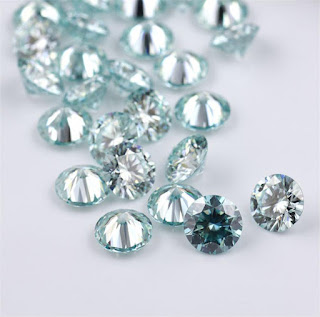
- What it does: Silicon carbide crystal with refractive index 2.65-2.69 — higher than diamond — producing characteristic "rainbow fire" sparkle
- Main strength: Outstanding brilliance and fire that many customers find more visually striking than diamond; hardness 9.25 Mohs makes it suitable for everyday wear
- Best for: Engagement ring alternatives and bridal jewelry where customers want high visual impact at $100-$300/ct rather than $800+/ct for lab diamond
- Not ideal for: Buyers who require exactly diamond-like appearance without extra fire, or where market positioning demands "real diamond" certification
- Key difference from CZ: Moissanite disperses light into spectral colors more strongly than CZ, which has relatively low fire; moissanite also resists scratching much better than CZ
Synthetic Sapphire and Ruby — Colored Stone Durability at Moderate Cost
- What it does: Lab-grown corundum (aluminum oxide) with hardness 9 Mohs — second only to diamond — available in consistent saturated colors
- Main strength: Exceptional hardness for a colored stone; batch-to-batch color consistency that natural stones cannot match; available in calibrated sizes for standard settings
- Best for: Color-focused jewelry lines where durability matters — wedding bands, daily-wear earrings, or birthstone collections
- Not ideal for: Customers seeking diamond-like colorless brilliance; synthetic corundum has lower refractive index (1.76-1.77) than CZ or moissanite
- Key difference from CZ: At roughly $5-$50/ct wholesale, synthetic corundum costs 2-10x more than CZ but provides dramatically better scratch resistance for colored stone applications
Side-by-Side Comparison
| Factor | Cubic Zirconia | Lab-Grown Diamond | Moissanite | Synthetic Sapphire/Ruby |
|---|---|---|---|---|
| Hardness (Mohs) | 8-8.5 | 10 | 9.25 | 9 |
| Refractive Index | 2.15-2.18 | 2.42 | 2.65-2.69 | 1.76-1.77 |
| Wholesale Price/CT | $1-$5 | $300-$1,200 | $100-$300 | $5-$50 |
| Fire (Dispersion) | Low (0.060) | Moderate (0.044) | High (0.104) | Low (0.018) |
| Best Use Case | Fashion, costume jewelry | Fine jewelry, engagement rings | Engagement rings, high-end fashion | Colored stone jewelry daily wear |
| Scratch Resistance | Moderate, show wear in 1-3 years | Excellent, lifetime durability | Very good, near-diamond | Very good, slightly below moissanite |
| Color Consistency | Excellent, uniform batches | Varies by growth method (HPHT vs CVD) | Good, slight green/cast variations | Excellent, perfectly repeatable colors |
When You Need More Than a Point Solution
A single material rarely covers an entire jewelry collection. Most OEM buyers work with a tiered strategy:
- Entry-level fashion lines: Use CZ for its $1-$5/ct cost structure. Pair with base metal settings (brass, stainless steel) for fast-fashion price points. Lead time from Chinese manufacturers like Starsgem is 2-4 days for standard CZ rounds, making it ideal for seasonal promotions.
- Mid-range everyday wear: Synthetic corundum fills this slot well. At $5-$50/ct with hardness 9 Mohs, it outlasts CZ by years. The Synthetic Sapphire & Ruby category offers calibrated sizes in standard shapes (round, oval, cushion) that fit existing setting tooling.
- Premium collections: Lab-grown diamond and moissanite cover this tier. Lab diamond maintains price anchoring against natural diamond, while moissanite captures customers who want maximum fire per dollar. Both materials allow for third-party certification and carry higher perceived value.
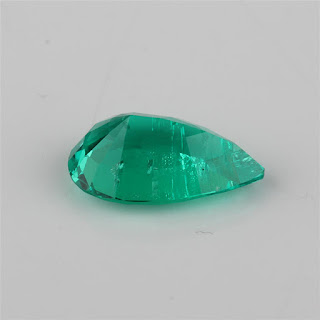
The Other Color Lab Gemstones category extends beyond simple white stones. For colored fashion lines, lab-grown emerald (hardness 7.5-8) and lab spinel (hardness 8) offer specific color palettes that natural sources cannot supply consistently. When planning a multi-material collection, consider that synthetic stones from a single supplier simplify logistics: one purchase order covers CZ, synthetic corundum, moissanite, and lab diamond, reducing vendor management overhead by 30-50% compared to sourcing each material from separate factories.
Which CZ Alternative Fits Your Collection Budget and Target Market
The price positioning strategy depends on three variables: target retail price point, expected wear life, and customer perception of "real" vs "simulated" stone.
If your collection retails under $50: CZ is the only economically viable option. Keep designs simple — round brilliant or princess cuts in standard sizes (4mm-8mm) — and accept that these pieces have a 1-3 year lifespan before visible scratching. The Synthetic Stone category includes CZ, crushed ice CZ, and synthetic spinel, giving you multiple look-alike options at under $5/ct. If your collection retails $100-$300: Moissanite and synthetic corundum compete here. Moissanite for colorless bridal looks; synthetic corundum for colored statement pieces. Both offer hardness above 9 Mohs, meaning the stone will outlast the setting. Consider offering both options within the same collection — bridal with moissanite, fashion with corundum — to capture different buyer motivations. If your collection retails $500+: Lab-grown diamond becomes the standard. At $300-$1,200/ct wholesale, a 1-carat lab diamond engagement ring can retail at $1,500-$3,000 with healthy margins. The key advantage: lab diamond carries the same optical performance as natural diamond and can be certified by GIA/IGI, which moissanite and CZ cannot.FAQ: Price Positioning for CZ Jewelry
Q: How much cheaper is CZ compared to lab-grown diamond per carat?A: CZ wholesale pricing ranges from $1 to $5 per carat, while lab-grown diamond ranges from $300 to $1,200 per carat. The price difference is roughly 100-500x, depending on cut quality and clarity grade.
Q: Does CZ scratch over time?A: Yes. CZ has hardness 8-8.5 on the Mohs scale. For comparison, quartz dust (common in air) is hardness 7. Everyday contact with hard surfaces will cause surface scratches within 1-3 years of regular wear. Polishing can restore appearance but reduces stone size slightly each time.
Q: What is the best diamond alternative for daily wear?A: Lab-grown diamond (hardness 10) is the most durable. For lower cost, moissanite (hardness 9.25) or synthetic sapphire (hardness 9) both offer excellent daily-wear durability. CZ is not recommended for daily-wear fine jewelry. Relevant specifications and application guidance are available through Synthetic Sapphire & Ruby.
Q: Can moissanite pass as diamond?A: Moissanite has higher refractive index (2.65-2.69) than diamond (2.42), producing more fire (rainbow flashes). A trained eye can distinguish them by the double refraction effect — moissanite shows slightly blurred facet junctions under 10x magnification. Diamond testers that measure thermal conductivity will also identify moissanite as non-diamond.
Q: What lead times should I expect for custom CZ orders?A: From major Chinese manufacturers like Starsgem, standard round CZ shapes ship in 2-4 days via DHL or FedEx. Custom shapes or sizes typically add 3-5 working days for cutting. This is significantly faster than custom lab diamond orders, which require 2-8 weeks of growth time.
Q: Are synthetic stones considered "real" by customers?A: This depends on market positioning. Lab-grown diamonds are chemically identical to mined diamonds and recognized by FTC and FTC guidelines as genuine diamonds. Moissanite and CZ are diamond simulants, not diamonds. Clearly labeling materials in product descriptions builds trust and avoids liability.

评论
发表评论