Diamond Earrings Buying Guide: Studs, Hoops, Drops, and Huggies
Diamond Earrings Buying Guide: Studs, Hoops, Drops, and Huggies
Diamond earrings are four separate products sold under one name: studs sit flush against the lobe, huggies clasp it, hoops frame it, and drops hang below it — and each silhouette carries its own stone-size range, metal weight, and finding design. Buyers who treat the category as a single SKU tend to fail in the same three places: a drop built on a 0.8 mm post that bends in week one, a "1 ct tw" pair that arrives with two 5.1 mm stones when the sample showed 6.5 mm, and white gold hoops that yellow after two months because nobody specified rhodium thickness. Relevant specifications and application guidance are available through Color Diamond.
This diamond earrings buying guide covers six steps — silhouette, stone and setting, proportions and gram weight, metal specification, stone vetting, and supplier QC. It is written for private-label buyers, boutique owners, and OEM product managers sourcing at volume, though the same numbers apply to a single bespoke pair. Relevant specifications and application guidance are available through Product Categories.
Key Takeaways
- Silhouette drives the findings, and findings drive returns — choose the style before the carat weight.
- Total carat weight for a pair means two stones; "1.00 ct tw" is 0.50 ct per ear, roughly 5.1 mm.
- Spec gram weight per pair, not just stone size — 14K studs typically run 0.6–2.6 g per pair.
- Metals need written standards: 14K is 58.5% gold, 18K is 75%, Pt950 is 95% platinum.
- Vet suppliers with AQL sampling under ISO 2859-1 and demand pair-matched stones within one color grade.
What You Need Before You Start
- A price band and target margin, so metal weight and stone grade are decided against retail, not after sampling.
- A stone brief: lab-grown diamond, moissanite, hydrothermal emerald, or cubic zirconia — each has a different hardness and price curve.
- A metal standard: 14K, 18K, Pt950, or 925 sterling, plus a plating spec if the finish is rhodium.
- Calipers and a gram scale (0.01 g resolution) to check samples against the spec sheet.
- A written QC checklist covering post diameter, hinge action, stone security, and pair matching.
Step 1 — Pick the Silhouette Before the Carat Weight
What to Do
- Studs for volume and everyday wear: 3.0–6.5 mm stones, 0.10–2.00 ct total weight per pair, friction or screw backs.
- Huggies for a snug, second-piercing look: 8–12 mm inner diameter, 0.05–0.50 ct total, hinged closure.
- Hoops for silhouette presence: 12–50 mm outer diameter, 1.5–3.0 mm tube, often with pavé set melee.
- Drops for occasion: 20–45 mm drop length, 0.50–3.00 ct total, and a finding rated for the swing weight.
Why This Matters
The finding — post, hinge, latch, omega back — is the part that fails first and the part customers complain about. A 3.0 g drop hung on a friction back will tilt forward on the lobe; the same drop on a locking back or a French wire sits correctly. Committing to a silhouette first tells your factory which finding to quote, which is where cost and durability are actually decided.
Common Mistakes to Avoid
- Calling a huggie a hoop: huggies are defined by inner diameter under about 12 mm and a hinged clasp; anything larger is a small hoop and needs a different finding.
- Scaling a drop by carat alone: a 3.00 ct tw drop needs a longer, heavier body, not just bigger stones, or the earring hangs like a plumb line.
Step 2 — Match Stone Shape and Setting to the Style
What to Do
- Choose the shape first: round, oval, pear, cushion, princess, emerald, asscher, heart, marquise, baguette, trapezoid, or radiant.
- Choose the setting: four-prong for light return, three-prong martini for a low profile, bezel for protection on hoops and huggies, pavé for melee coverage.
- Decide whether stones are uniform or mixed — fancy Color Diamond accents in pink, blue, or yellow work well in drops and hoops, where a small colored stone reads clearly against the skin.
Why This Matters
Setting choice controls two things buyers actually pay for: how much light reaches the stone and how much metal touches it. A bezel on a hoop protects the girdle during daily wear; a four-prong on a stud maximizes brilliance but snags on knitwear. Matching setting to silhouette is what separates a pair that survives a year of wear from one that comes back as a repair ticket.
Common Mistakes to Avoid
- Prong-setting melee on a thin hoop tube: the drill holes weaken a 1.5 mm tube; use a slightly heavier tube or channel-set the stones.
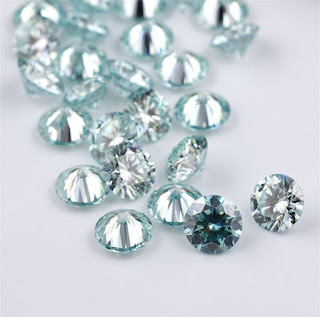
- Ignoring stone supply depth: confirm your supplier's size increments before you design around 2.7 mm melee, because Product Categories typically run from 0.003 ct melee up through 2 ct+ rounds, with 0.15–0.50 ct and 0.50–0.99 ct bands being the workhorses of earring production.
Step 3 — Set Proportions and Gram Weight From Real Numbers
What to Do
- Convert carat to millimetres before you approve a sample: a 1.00 ct round brilliant measures about 6.5 mm; 0.50 ct is about 5.1 mm; 0.25 ct is about 4.1 mm.
- Remember that 1 ct = 200 mg = 0.2 g, so a pair at 1.00 ct tw carries 0.20 g of diamond and the rest of the weight is metal.
- Write gram weight per pair into the purchase order with a tolerance — ±0.10 g is workable for studs, ±0.20 g for hoops and drops.
| Silhouette | Stone size | Total carat (pair) | Metal weight/pair | Key dimension |
|---|---|---|---|---|
| Stud | 3.0–6.5 mm | 0.10–2.00 ct | 0.6–2.6 g | Post 0.8–1.0 mm |
| Huggie | 1.0–2.5 mm melee | 0.05–0.50 ct | 1.2–3.0 g | Inner Ø 8–12 mm |
| Hoop | 1.0–3.0 mm melee | 0–1.50 ct | 1.5–9.0 g | Tube 1.5–3.0 mm |
| Drop | 3.5–8.0 mm | 0.50–3.00 ct | 1.8–6.0 g | Drop length 20–45 mm |
Why This Matters
Carat weight is a mass unit, not a size unit — a 1.00 ct oval and a 1.00 ct round look nothing alike in the ear. When a spec sheet lists only carats, two factories can quote the same number and deliver visibly different products. Millimetres and grams close that gap.
Common Mistakes to Avoid
- Approving a "1 ct tw" pair from a photo: order the physical sample and measure the stone diameter with calipers.
- Under-specifying the post: 0.8 mm (roughly 20 gauge) is the industry default, but drops above 2.5 g belong on 1.0 mm posts or locking backs.
Step 4 — Specify the Metal, Alloy, and Plating in Writing
What to Do
- State fineness by percentage, not just karat shorthand: 14K = 58.5% gold, 18K = 75.0% gold, Pt950 = 95.0% platinum, sterling = 92.5% silver, consistent with ISO 9202 fineness conventions.
- Name the alloy family for white gold — palladium-bearing alloys hold color longer than nickel-white alloys.
- Specify rhodium plating thickness, typically 0.10–0.20 µm, and ask for a re-plating interval recommendation.
Why This Matters
Nickel-sensitive wearers are a real segment, and the EU Nickel Directive limits nickel release to under 0.5 µg/cm²/week as tested under EN 1811. If your market includes Europe, that number belongs in the supplier agreement, not in a verbal conversation. Plating thickness is the other silent variable: a thin rhodium layer looks perfect in the showroom and grey in the jewelry box three months later.
Common Mistakes to Avoid
- Assuming "white gold" is a single material: it is a gold alloy plus a rhodium finish, and both parts need specifying.
- Skipping the solder and hinge spec: earring hinges are the highest-cycle joint in the piece; ask for cycle-test data before a bulk order.
Step 5 — Vet the Stones With the Right Paperwork
What to Do
- Grade against the GIA 4Cs — color, clarity, cut, carat — and require a grading report or in-house grading statement per parcel.
- Use the correct descriptor: the FTC Jewelry Guides (16 CFR Part 23) require a clear "laboratory-grown" or "lab-grown" qualifier before the word diamond.
- Match hardness to the style: diamond is 10 on the Mohs scale, moissanite 9.25, cubic zirconia 8–8.5, and emerald 7.5–8 — emerald earrings need bezels or protective settings, not exposed prongs on a swinging drop.
Why This Matters
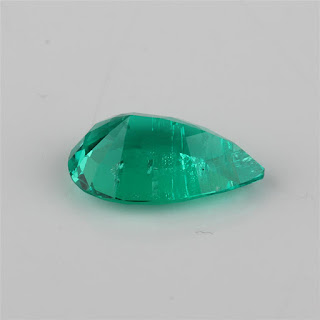
Lab-grown diamonds share the same crystal structure and optical properties as mined diamonds, which is exactly why the qualifier matters commercially and legally — a buyer comparing quotes needs to know which material is in the parcel. For colored stones, cut style changes everything: an Emerald Cut stone has a large, open table that shows body color beautifully but also reveals inclusions a brilliant cut would hide, so clarity standards must be set higher for step cuts.
Common Mistakes to Avoid
- Mixing grading scales across parcels: a "G/H" from one supplier is not automatically a "G/H" from another; request master stones or a photo set in consistent lighting.
- Pair-matching by carat only: matched pairs should sit within one color grade and one clarity grade, with table-size difference under 3%.
Step 6 — Lock QC Sampling, Packaging, and Lead Time
What to Do
- Agree an AQL plan under ISO 2859-1 — AQL 1.0 for critical defects (loose stones, broken hinge) and 2.5 for major cosmetic issues.
- Define the checks: post straightness, back tension, hinge action, stone security under a light shake, plating coverage inside the gallery, and pair symmetry.
- Confirm logistics: B2B and OEM orders with a stated 2–4 day delivery window and expedited DHL or FedEx shipping reduce the cash locked in samples and re-orders.
Why This Matters
Earrings are sold in pairs, so a 2% defect rate at the piece level becomes roughly a 4% defect rate at the pair level — a number that eats a retail margin quickly. Sampling discipline catches the systematic faults (a hinge batch, a plating bath) before they reach 500 pairs.
Common Mistakes to Avoid
- Inspecting only finished goods: check the first-article sample and mid-production, not just the shipment.
- Leaving packaging undefined: backing cards, pair-matching cards, and pouch labeling are part of the SKU; unspecified packaging is the most common cause of a delayed launch.
Pro Tips for Success
- Keep a physical "golden sample" per SKU, sealed and signed, and measure every bulk delivery against it with calipers.
- Buy melee in graded parcels and store by size band so pavé hoops and huggies can be fed from stock without re-sorting.
- For drops above 2.5 g, budget for a locking back from the start — retrofitting backs costs more than specifying them.
- Ask for stone photos on a white background and on skin; color that looks fine on white can read warm next to the ear.
Frequently Asked Questions
Are lab-grown diamond earrings real diamonds?
Yes. Lab-grown diamonds have the same crystal structure, hardness (Mohs 10), and optical properties as mined diamonds; the difference is origin. Under the FTC Jewelry Guides, they must be described with a clear "laboratory-grown" or "lab-grown" qualifier, and GIA grades them on the same 4Cs scale.
What size studs suit a first pair or everyday wear?
Most everyday studs land between 3.5 mm and 5.1 mm, which is roughly 0.25 ct to 0.50 ct per ear (0.50–1.00 ct total weight for the pair). Below 3.0 mm the stone reads as an accent; above 6.5 mm it becomes an evening piece for most wearers.
How much should a pair of diamond earrings weigh?
Studs typically run 0.6–2.6 g per pair, huggies 1.2–3.0 g, hoops 1.5–9.0 g depending on diameter and tube thickness, and drops 1.8–6.0 g. Specify gram weight with a tolerance in the purchase order, because two factories can quote identical carat weights at very different metal weights.
What is the difference between huggies and small hoops?
Huggies have an inner diameter of about 8–12 mm and hug the lobe with a hinged click closure. Small hoops start around 12 mm outer diameter and use a latch, wire, or hinged finding. The distinction matters for fit on second piercings and for finding cost.
Can I order mixed shapes and colors for an OEM earring line?
Yes. Production lines commonly run round, oval, pear, cushion, princess, emerald, asscher, heart, marquise, baguette, trapezoid, and radiant shapes, plus fancy colors for accent stones. Confirm size increments and minimum quantities per shape before finalizing a design that depends on an unusual cut.
Conclusion
This diamond earrings buying guide follows one rule: decide the silhouette, then the finding, then the numbers. Studs, huggies, hoops, and drops are not interchangeable formats — each one demands its own gram weight, post thickness, setting type, and QC checks, and the specifications in the table above give you a benchmark to hold suppliers against. Buyers who write millimetres, grams, karat percentages, and AQL levels into the purchase order get consistent re-orders. Buyers who order from photos get samples that photograph well and sell badly. Start with one silhouette, build a golden sample, measure it, and scale from there.

评论
发表评论