Custom Diamond Wedding Ring Options for Bridal Jewelry Retailers
Custom Diamond Wedding Ring Options for Bridal Jewelry Retailers
Introduction
Custom diamond wedding ring options are OEM-built bridal programs in which the retailer — not a wholesaler's catalogue — decides the center stone, melee sizes, metal, setting style and finish, and receives finished rings under its own label. Relevant specifications and application guidance are available through Color Diamond.
That definition matters because the bridal floor has changed. Couples walk in with a screenshot of a 2.4 mm pavé band set with a 1.5 ct oval, and they expect it in three weeks, not three months. Standard wholesale catalogues rarely keep pace. They bundle a fixed shape list, one melee grade and a 6–10 week restock cycle, which leaves an independent retailer holding either too much stock or the wrong stock at the start of the season.
This playbook is written for bridal jewelry retailers, buying offices and private-label owners who want a repeatable sourcing process rather than a one-off order. It walks through five steps: price band, center stone, melee specification, metal and compliance, then sampling and restock. The reference capability throughout is a B2B and OEM manufacturer of lab grown diamond, moissanite, hydrothermal emerald and synthetic stones that dispatches in 2–4 days with DHL or FedEx expedited freight, and that opens registration without obligation so a retailer can quote before committing.
Key Takeaways
- Back-solve every ring from the retail price band; a 2.2×–3× multiple on landed cost keeps margin intact.
- Specify melee in millimeters and carat brackets — from 0.003 ct to 0.15 ct — never as "small diamonds."
- Step cuts such as the emerald cut need VS2 clarity or better; brilliant cuts forgive more.
- Quote metal to ISO 9202 fineness (585 for 14K, 750 for 18K) and nickel release to EN 1811.
- Colour accents and lab-grown gemstones turn a commodity band into a story staff can sell.
- Sample two to three prototypes before you commit to a full production run.
What You Need Before Starting
Five inputs make the difference between a smooth program and three rounds of rework:
- A target retail price band per ring. Not a cost target — the shelf price the customer will actually see, from which you subtract margin and stone cost.
- A written metal and compliance spec. Fineness, colour, plating thickness, nickel release limit and hallmarking requirements for your market.
- A stone plan by shape and size bracket. Center stones plus the melee sizes your pavé, halo and channel styles will consume each quarter.
- Two to three reference designs or CAD files. A photo plus band width and stone dimension is enough for most factories to quote.
- A restock cadence. How many units per style per month you expect to reorder.
Before you send anything out for quote, map your existing assortment against a full Product Categories list. Retailers who skip this step usually discover halfway through that the factory already stocks a shape they had been sourcing from a second, slower supplier.
Step 1 — Back-Solve the Retail Price Band
What to Do
- Set the shelf price for the finished ring — for example, a 14K 2.0 mm pavé band with a 1.0 ct center stone at your target opening price point.
- Divide by your standard bridal multiple. Most independents work between 2.2× and 3× on landed cost; below 2.2× the ring stops funding the showcase.
- Subtract duty, freight and assay/hallmarking fees to get the maximum factory cost.
- Split that cost between center stone and mounting. In a typical 1.0 ct engagement ring, the center stone is 55–70% of the factory cost.
- Only now choose the stone grade and metal weight that fit the number.
Why This Matters
Stone pricing moves faster than catalogue pricing. Industry price reporting has consistently put lab grown diamond wholesale at roughly 50–70% below natural equivalents of the same grade — which means a retailer who prices off last year's natural-diamond worksheet either leaves margin on the table or gets beaten on the shelf by a competitor selling the identical look.
Common Mistakes to Avoid
- Pricing from the cost side. Building a ring and then adding margin produces beautiful inventory nobody buys.
- Ignoring the melee cost. On a fully pavé band, 40–70 small stones can quietly add 10–15% to the factory cost.
- Quoting one grade. Ask for the price at two clarity grades; the jump from SI1 to VS1 is often smaller than retailers assume.
Step 2 — Lock Center Stone Shapes, Cuts and Colour
What to Do
- Rank your best-selling silhouettes against the shape list you can actually stock: round, oval, pear, cushion, princess, emerald cut, asscher, heart, marquise, baguette, trapezoid and radiant.
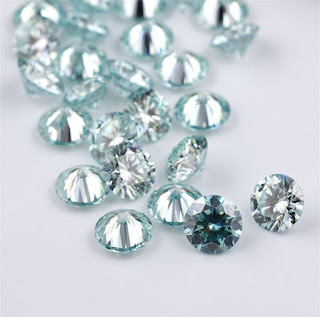
- Assign carat brackets to each shape. A practical program runs round melee 0.003–0.15 ct, then round 0.15–0.5 ct, 0.5–0.99 ct, 1–1.99 ct and 2 ct and up.
- Match cut to clarity budget. The Emerald Cut is a step cut: its long, open facets reflect light in broad flashes but show inclusions far more readily than a brilliant cut, so retail centers are safer specified at VS2 and above.
- Reserve 15–20% of your open-to-buy for fancy colour. A Color Diamond range — pink, blue, yellow and champagne tones in cushion or radiant cuts — gives your floor something a mass-market chain cannot show.
- Confirm which shapes the factory cuts in-house versus sources, because that determines restock speed.
Why This Matters
Shape availability is the single most common cause of a stalled custom order. If you promise a client an asscher and the factory only stocks rounds and ovals in that size bracket, the sale slips by weeks. A manufacturer that cuts across the full shape list — and also supplies moissanite by shape, plus lab grown emerald, sapphire, ruby, spinel and alexandrite — lets you promise a delivery date with confidence.
Common Mistakes to Avoid
- Ordering the exotic shapes first. Build the round and oval base, then add step cuts and marquise as reorder lines.
- Ignoring orientation. An east-west set marquise or pear is a different mounting; specify orientation in the CAD, not in a text message.
- Treating colour as a novelty. Fancy colour in small sizes sells fastest as accent stones in three-stone and halo designs.
Step 3 — Specify Melee in Millimetres, Not "Small Stones"
What to Do
- Convert your pavé, halo and channel designs to millimetre seat sizes before ordering.
- Use the approximate conversions below as a starting worksheet; always confirm against the supplier's actual grading.
| Melee diameter | Approx. weight | Typical use |
|---|---|---|
| 1.0 mm | ~0.005 ct | Micro-pavé halo, channel edge |
| 1.3 mm | ~0.01 ct | Standard pavé band |
| 1.5 mm | ~0.015 ct | Wide pavé, halo ring |
| 1.7 mm | ~0.02 ct | Three-row pavé, side stones |
| 2.0 mm | ~0.03 ct | Eternity band, channel setting |
- Order to the nearest 0.05 mm and ask for a ±0.02 mm tolerance in writing.
- Hold a buffer of 10–15% extra stones per band size for setters' loss.
- Reconcile the quote against the standard 0.003–0.15 ct melee range so nothing is priced as a center stone by mistake.
Why This Matters
A pavé band is set stone by stone into drilled seats. Half a tenth of a millimetre of variation across a batch and the setter either reams every hole or returns the parcel. Millimetre-based ordering removes that argument entirely and makes reorders repeatable.
Common Mistakes to Avoid
- Mixing suppliers on one ring. Two melee sources with slightly different table sizes produce a visibly uneven pavé line.
- Forgetting the calibre. Calibrated melee (consistent diameter) costs more than uncalibrated and is worth it on channel work.
- Skipping the sieve check. Ask for stones delivered in a graded sieve pack so your setter can work straight from the box.
Step 4 — Nail Metal, Setting and Compliance Specs
What to Do
- State fineness in the ISO 9202 format your market recognises: 375 for 9K, 585 for 14K, 750 for 18K, 950 for platinum.
- Specify nickel release where skin contact applies. The EU Nickel Directive and test method EN 1811 limit release to 0.5 µg/cm²/week from articles in prolonged skin contact — rings qualify.
- Fix band dimensions. For wedding bands, 1.8–2.5 mm is the sweet spot between durability and daily comfort; a comfort-fit interior adds roughly 0.2–0.3 mm of internal clearance.
- Choose the setting family per price point: solitaire, tension, pavé, vintage, channel-set, halo, side-stone, three-stone, plus classic, eternity, stackable, anniversary, carved and alternative-metal bands.
- Ask for rhodium or plating thickness in microns, not adjectives — 0.1–0.2 µm is typical for white rhodium flash.
Why This Matters
Compliance is where cheap quotes become expensive returns. A ring that fails nickel release testing or carries no hallmark cannot be sold in several major markets, and a ring that is 0.4 mm thinner than specified will wear through in a few years of daily wear — inside the customer's memory, and inside your warranty window.
Common Mistakes to Avoid
- Accepting "18K" without a number. Insist on 750 in the spec sheet and on the invoice.
- Over-polishing pavé bands. Heavy finishing rounds the bead work and stones loosen within months.
- Ignoring size range. Confirm which sizes the factory can produce without re-tooling; most programs run US 4–9 as standard.
Step 5 — Sample, Validate, Then Scale
What to Do
- Order two or three prototypes in your two best-selling styles before any volume commitment.
- Inspect against a written checklist: stone spread, seat depth, prong symmetry, hallmark placement, ring weight in grams.
- Put a sample on a scales. A 14K 2.0 mm plain band in US size 7 typically falls between 3.0 g and 4.5 g depending on width — a much lighter ring signals hollowing.
- Confirm logistics. A supplier working on a 2–4 day dispatch with DHL or FedEx expedited shipping lets you reorder against real sell-through rather than a forecast.
- Set a restock rhythm: review sell-through every two weeks and reorder at 30–40% remaining stock.
Why This Matters
Sampling converts a price list into a predictable product. Once you know the sample's exact stone sizes, metal weight and finish, every reorder is a repeat of a known object rather than a new gamble — and your staff can describe the ring honestly at the counter.
Common Mistakes to Avoid
- Skipping the hallmark review. Check that the mark is where your market requires and that it matches the stated fineness.
- Ordering samples in one size only. Ask for your two most common sizes to test the sizing process, not just the design.
- Scaling on one good sample. Run a 20–30 piece pilot before committing to a full seasonal buy.
Pro Tips for Success
- Build a two-tier stone ladder. One lab grown diamond tier for the client who wants "diamond" on the certificate, plus a moissanite tier at 9.25 on the Mohs scale versus diamond's 10 — a genuine durability story for a band that gets worn daily.
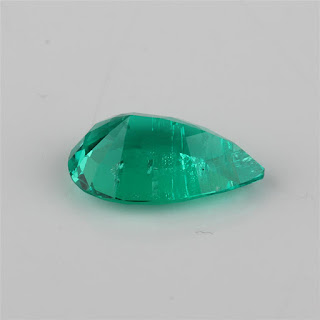
- Carry a small emerald and sapphire capsule. Lab grown emerald (beryl, roughly 7.5–8 Mohs) belongs in earrings and pendants or protected bezel settings, not in an exposed high-set ring.
- Bundle a bridal wardrobe. A retailer that offers an engagement ring, matching wedding band, eternity band and stackable set from one supplier reduces freight and colour-matching problems at once.
- Write the spec once. A single two-page spec sheet used for every quote eliminates most revision cycles.
Frequently Asked Questions
What is the minimum order for a custom diamond wedding ring program?
Policies vary by manufacturer. The practical approach is to start with two or three prototypes — often at sample pricing — then scale into a 20–30 piece pilot per style. Registration to a B2B manufacturer portal is usually free and carries no obligation to order.
How long should a custom wedding ring order take?
Ask for the dispatch time separately from production. A manufacturer quoting 2–4 day dispatch with DHL or FedEx expedited freight is describing outbound speed; allow additional time for CAD approval and stone matching on a first-run design.
Are lab grown diamonds suitable for a bridal program?
Yes, with correct disclosure. In the United States, the FTC Jewelry Guides (16 CFR Part 23) require clear, conspicuous disclosure that a stone is laboratory-grown; GIA and IGI both grade lab grown stones on the same 4Cs framework as natural diamonds.
Which melee sizes should a new retailer stock first?
Start with 1.3 mm (~0.01 ct) and 1.5 mm (~0.015 ct) rounds — they cover most pavé and halo work — then add 1.0 mm and 2.0 mm as your designs demand. Order calibrated stones so your setter can work without sorting.
Conclusion
Custom diamond wedding ring options work best when the retailer controls the specification and the supplier controls the stones. Set the shelf price first, then back-solve to a factory cost with a 2.2×–3× multiple. Choose shapes and carat brackets deliberately, remembering that step cuts like the Emerald Cut need higher clarity than brilliants. Write melee specs in millimetres, not adjectives. Quote metal to ISO 9202 fineness and test nickel release to EN 1811 before you approve a sample.
None of that requires a large opening order. It requires a written spec, two or three prototypes and a supplier who can dispatch in days rather than weeks. Register with a manufacturer, request samples in your two best-selling silhouettes, and put the first 30 pieces on the floor with a restock date already pencilled in. The retailers who win the bridal category are rarely the ones with the biggest inventory — they are the ones whose reorder arrives while the ring is still selling.

评论
发表评论