Custom Diamond Necklace Manufacturing Tips for Jewelry Retail Brands
Custom Diamond Necklace Manufacturing Tips for Jewelry Retail Brands
Custom diamond necklace manufacturing is the OEM process of building a necklace to a retail brand's own specification — stone type, cut, metal, setting, clasp and packaging — instead of buying finished stock from a catalogue. Done well, it gives a retail brand a product no competitor can undercut with an identical SKU. Done badly, it burns six months on samples and misses the season.
The problem is rarely the factory. It is the brief. A necklace is a chain of dependencies: a 0.9 mm melee stone will not sit in a setting bored for 1.3 mm, and an 18k white gold drop that looks correct on a render can arrive 1.5 g lighter than the spec sheet promised. Vague instructions get resolved by whoever is standing at the bench that morning.
This tutorial is for retail brands, private-label buyers and sourcing managers commissioning diamond necklaces — pendants, tennis lines, station necklaces, bezel drops — who want a repeatable path from spec sheet to reorder. Six steps, with the numbers that belong in your brief.
Key Takeaways
- Put every dimension, alloy and tolerance in writing before requesting a quotation.
- Match stone supply to your price architecture, not to habit.
- Specify cut geometry and setting clearance in millimetres, not adjectives.
- Approve a physical sample against a checkpoint list, never against a render.
- Lock QC standards and packaging at sample stage so reorders stay identical.
- Confirm lead time and shipping terms in the same document as the price.
What You Need Before Starting
Six items make the difference between a smooth program and three rounds of rework:
- A target landed cost and retail price band. Everything downstream — stone grade, metal weight, setting labour — is derived from this.
- A finished spec sheet template. Metal and alloy (18k = 750‰ fineness under ISO 9202), stone size in millimetres and carats, total gram weight, necklace length in mm, clasp type, plating thickness.
- A stone standard. Lab grown, moissanite, hydrothermal emerald or CZ — decided per SKU, not per mood board.
- Compliance targets for your market. In the EU, EN 1811 limits nickel release to 0.5 µg/cm²/week on items in prolonged skin contact. In the US, the FTC Jewelry Guides (16 CFR Part 23) govern how you may describe lab-grown material.
- A reference sample or photo with callouts. One good photo with arrows beats a paragraph of prose.
- A shipping plan. A supplier working on a 2–4 day dispatch window with DHL or FedEx changes how late you can leave a decision.
Step 1 — Write the Spec Sheet Before You Ask for a Quote
What to Do
- Fix the metal: 18k white, yellow or rose gold, or 14k / 925 silver for entry price points.
- State the necklace length in millimetres, not inches alone. 16" is 406 mm, 18" is 457 mm, 20" is 508 mm — three lengths, three separate SKUs.
- Declare total metal weight in grams with a tolerance, typically ±3%.
- List each stone position with its diameter in millimetres and its carat weight.
- Add a finish line: rhodium plating at 0.05–0.20 µm on white gold, high polish elsewhere.
Why This Matters
A quote without a spec sheet is a guess, and guesses get re-quoted. When you hand a manufacturer a dimensional brief, you get a firm price, a firm gram weight and a firm dispatch date. That is the difference between a purchase order and a negotiation.
Common Mistakes to Avoid
- Quoting from a mood board: images convey style, not weight. Add a dimension table.
- Omitting tolerances: without them, a 12.4 g necklace against a 12.0 g spec is technically compliant.
- Forgetting the clasp: a lobster clasp and a box clasp can differ by 0.4 g and by 30% of the labour.
Step 2 — Choose the Stone Route That Fits Your Margin
Lab grown diamonds, moissanite, hydrothermal emerald and cubic zirconia are not interchangeable — they differ in hardness, optical behaviour and how your customer will talk about them two years later. Build a matrix and decide per SKU.
| Material | Mohs hardness | Refractive index | Best fit | Relative stone cost |
|---|---|---|---|---|
| Lab grown diamond | 10 | 2.42 | Fine jewellery, bridal, heirloom positioning | Highest |
| Moissanite | 9.25 | 2.65–2.69 | High-brilliance fashion and bridal alternatives | Mid |
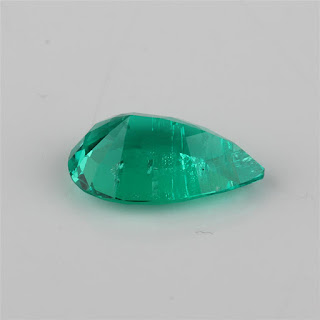
| Hydrothermal emerald | 7.5–8 | 1.57–1.58 | Colour-led pendants, vintage-inspired lines | Mid |
| Cubic zirconia | 8–8.5 | 2.15–2.18 | Test drops, entry price points, trend pieces | Lowest |
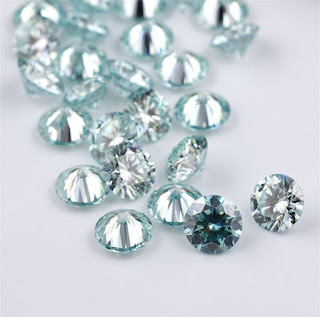
For diamond-set lines, melee is where the money and the risk sit. A round 1.00 mm stone is roughly 0.005 ct, so a 40-stone bezel pendant holds about 0.20 ct in total — useful when your buyer asks why the price moved. Suppliers who stock graded round melee from 0.003 ct to 0.15 ct, alongside the larger 0.15–0.5 ct and 1 ct-plus sizes, let you build a whole collection from one Product Categories list rather than stitching together three vendors.
If your line-up includes fancy tones — champagne, pink, blue — running them through the same Color Diamond range keeps colour consistency across a capsule. Mixed suppliers mean mixed undertones, and a customer will notice.
Why This Matters
Grading bodies such as GIA and IGI report lab grown diamonds on the same 4Cs scale as natural stones, with colour and clarity described the same way. That means your product page can stay legible to a consumer who already understands the language — and your QC standard can be written in the same terms.
Common Mistakes to Avoid
- Mixing suppliers mid-collection: two melee lots in the same colour grade rarely match under daylight.
- Ignoring the Kimberley Process question: even for lab-grown lines, buyers ask. Have the answer ready.
Step 3 — Nail Cut Geometry and Setting Tolerances
What to Do
- Choose the cut and commit to it. Step-cut stones like Emerald Cut read as a clean rectangle or octagon and need a setting that protects four fragile corners.
- Give a seat clearance of 0.05–0.10 mm between stone girdle and metal seat.
- Specify prong count and tip thickness — bench practice is 0.25–0.30 mm finished, thinner will wear through.
- State the pavé spacing in millimetres and the bead size.
Why This Matters
Step cuts show every inclusion and every metal artefact. A corner chip on a 1.5 ct Emerald Cut is a remake; a corner chip on a 0.005 ct melee is a shrug. Matching the cut to the price point is a manufacturing decision, not a design one.
Common Mistakes to Avoid
- Sending a CAD without tolerances: the model may be perfect and the casting still 2% small.
- Assuming shrinkage is a factory problem: gold alloys shrink roughly 1–2% in casting. Ask who compensates for it.
Step 4 — Engineer the Chain, Clasp and Drop for Wear
A necklace fails at the weakest mechanical point, and that is almost always the jump ring or the clasp. Specify solder grade, closed versus open jump rings, and a clasp rated for the piece's weight. A 3 g pendant on a 0.8 mm cable chain will swing and abrade; a 1.2 mm curb chain settles.
Ask for a pull-test figure in kilograms and a target of 3–5× the finished weight. Ask, too, for the chain's anti-tarnish treatment on silver lines.
Step 5 — Approve a Physical Sample, Not a Render
What to Do
- Request one pre-production sample in the final metal and stone combination.
- Weigh it, measure it and photograph it on a grey card next to a ruler.
- Check the checkpoint list: gram weight, length, stone diameter, prong tips, clasp function, plating evenness.
- Wear-test it for 48 hours before signing off.
- Keep the signed sample — it becomes the golden standard for every reorder.
Why This Matters
Renders cannot show you a 0.3 mm burr on a prong tip or a bead that sits 0.1 mm proud. A signed physical sample converts an opinion into a specification everyone can measure against.
Common Mistakes to Avoid
- Approving by video: cameras lie about scale.
- Skipping the wear test: clasps fail in week two, not in the box.
Step 6 — Lock QC, Packaging and Replenishment
Write the inspection standard at the same time as the order. State AQL level, the defect categories, and who pays return freight. For a 0.003–0.15 ct melee programme, add a stone-count and carat-weight reconciliation per batch — a 40-stone pendant that arrives with 38 stones is a customer complaint waiting to be posted.
Packaging is part of the product. Specify pouch, box, tissue, certificate sleeve and barcode placement, and confirm whether certificates travel with the goods.
Then confirm logistics in writing. A 2–4 day dispatch window with expedited DHL or FedEx means you can design a capsule in eight weeks and still land it before a launch date.
Pro Tips for Success
- Buy melee by weight, price by piece. Compute carat totals per SKU so margin is never a surprise at invoice.
- Standardise two chain gauges across the collection. Fewer components, faster reorders, cheaper freight.
- Build a golden-sample library for every SKU. Photograph it, weigh it, store it — and send a digital copy with each PO.
- Test one new cut per season, not five. A single 2 ct oval drop tells you more than a whole new line.
Frequently Asked Questions
How long does custom diamond necklace manufacturing take?
Plan on 8–14 weeks from approved sample to delivered bulk order for a first run, depending on stone sourcing and casting schedules. Reorders move faster once the golden sample and spec sheet exist. Suppliers with a 2–4 day dispatch window compress the tail end significantly.
What is the minimum information a factory needs to quote?
Metal and alloy, finished gram weight, necklace length, stone type, stone diameter and carat per position, setting style, clasp type, plating specification, packaging and target quantity. With those nine items, a manufacturer can price accurately instead of quoting a range.
Are lab grown diamonds graded the same way as natural diamonds?
Yes. GIA and IGI grade lab grown stones on the same 4Cs scale — cut, colour, clarity, carat — and report them with a disclosure that the stone is laboratory-grown. Under the US FTC Jewelry Guides, that disclosure must be clear and conspicuous in your marketing too.
How do I keep colour consistent across reorders?
Fix a colour range and a single melee supplier, then attach a signed master set of stones to the spec. Ask for stones from the same growth or production batch where volume allows. Reputable graders hold colour to within one grade; beyond that, mismatch becomes visible in a tennis line.
Conclusion
Custom diamond necklace manufacturing rewards brands that treat it as an engineering exercise rather than a design conversation. Write the spec, pick the stone route deliberately, put tolerances in millimetres, approve a physical sample, and hold reorders to that sample. Six steps, and each one removes a decision the factory would otherwise make for you.
Start with the smallest viable test: one pendant SKU, one melee size, one metal, one clasp. Get it right, document it, then scale the template across pendants, station necklaces and tennis lines. The brands that win this category are not the ones with the boldest mood board — they are the ones whose purchase orders nobody has to interpret.

评论
发表评论