Clasp Strength and Chain Quality Checks for Diamond Necklaces
Clasp Strength and Chain Quality Checks for Diamond Necklaces
Clasp strength and chain quality checks are the bench measurements — clasp load rating, wire gauge, link integrity, pull-test results and metal fineness — that prove a diamond necklace can carry its pendant through years of wear without opening, stretching or snapping. Trade repair desks see the same pattern year after year: closure failures and chain breakage sit among the top reasons finished necklaces come back as returns or warranty claims. Visual inspection will not catch them. A 5 mm spring ring looks perfectly fine right up to the moment a 2 ct pendant pops it open on a stairwell.
This tutorial is written for buyers, QC staff and product developers sourcing diamond necklaces from a manufacturer — the people who sign off on a 500-piece order and then own the complaint file. Six checks follow, all runnable with roughly €300 of bench equipment, and all expressed as pass/fail numbers rather than opinions. The same steps work for lab grown diamond pendants, moissanite and colored stone necklaces.
Key Takeaways
- Weigh pendant and chain separately; set chain gauge from pendant mass, not from a catalog photo.
- Measure chain wire with a 0.01 mm caliper and reject lots that fall below spec.
- Pull-test 5–10% of every lot (minimum three pieces) at 2× the rated clasp load.
- Inspect bail, jump ring and end-cap joints — most failures begin there, not at the clasp.
- Confirm fineness to ISO 9202 and nickel release to EN 1811 before goods leave the factory.
What You Need Before Starting
- Digital caliper, 0.01 mm resolution. Chain wire is measured in hundredths of a millimeter.
- Bench scale, 0.001 g resolution. A 0.01 g scale cannot resolve a 0.15 ct melee substitution.
- Force gauge with clamp rig, 0–50 kg range. For static, non-destructive and destructive pulls.
- 10× loupe or 20× stereo microscope. For solder joints, link gaps and clasp tongues.
- Two reference samples per SKU. One sealed "golden sample," one working sample kept on the bench.
Stones and findings should come from a supplier who can state the exact gauge of every component. If the stone side of your bill of materials is still open, start with the range on this manufacturer's Product Categories page — round melee from 0.003 ct to 0.15 ct, larger rounds and fancy shapes from 0.15 ct past 2 ct — then match clasp rating to the finished pendant weight you actually plan to ship.
Step 1 — Weigh Pendant and Chain Separately
What to Do
- Weigh the pendant alone on the 0.001 g scale and record it, stone plus setting.
- Weigh the chain alone, clasp to clasp, and record the length in millimeters.
- Convert stone weight to grams: 1 ct = 0.2 g, so a 1.50 ct center stone adds about 0.30 g of diamond.
- Apply the gauge rule: pendant under 1.5 g → 0.6–0.8 mm chain; 1.5–3 g → 0.8–1.0 mm; above 3 g → 1.0 mm or heavier.
Why This Matters
A hallmarked 18-inch, 0.8 mm 14k cable chain typically weighs 1.2–1.5 g. Hang a 3 g pendant on it and the chain is carrying twice its own mass in a single, swinging point load. The failure mode is not dramatic — the links stretch, the end-cap solder fatigues, and the necklace starts "hanging long" after three months.
Common Mistakes to Avoid
- Weighing only the finished necklace. Total mass hides a heavy pendant on a light chain, which is exactly the combination that fails.
- Trusting the nominal gauge. A "0.8 mm" chain from one factory may measure 0.72 mm. Always measure, never read the label.
Step 2 — Measure Wire Gauge and Link Integrity
Run the caliper across three links in three places along the chain, then repeat at both ends, where solder and tension are highest. Record the minimum, not the average. Then check gaps: with a 10× loupe, a link that shows visible daylight at the joint after gentle hand-flex has opened and will keep opening.
| Chain style | Typical pendant gauge | Load behavior | What to watch |
|---|---|---|---|
| Cable | 0.6–0.9 mm | Predictable, flexes evenly | Stretched links after heavy pendants |
| Box | 0.7–1.0 mm | Strong per gram, stiff | Crushed corners, hinge cracks |
| Curb | 0.8–1.2 mm | Good for heavier drops | Worn link faces on the flat side |
| Rope | 0.9–1.2 mm | High tensile for its look | Internal strand breakage, invisible |
| Snake | 0.9–1.2 mm | Smooth, least flexible | Kinks that never straighten |
Chain tensile values vary by alloy and construction, so test your own lots rather than relying on a table: clamp the chain 50 mm from one end and load it slowly. A chain that permanently elongates more than 2% at 5 kg is undersized for pendant work, whatever the caliper says.
Step 3 — Identify the Clasp Type and Its Rating
Clasp type drives the rating more than clasp size does. Measure the clasp body, then test it.
| Clasp | Typical size | Bench load before deformation | Suitable for |
|---|---|---|---|
| Spring ring | 4–6 mm | 2–4 kg | Pendants under ~1.5 g |
| Lobster claw | 8–12 mm | 12–20 kg | Most pendant necklaces |
| Box / snap with figure-8 | 8–12 mm | 8–15 kg | Heavier drops, bracelets |
| S-hook | 10–14 mm | 3–6 kg | Light fashion pieces only |
| Toggle | 12–18 mm | 4–8 kg | Design-led pieces, low load |
| Magnetic | 6–10 mm | 1–2 kg | Not recommended above 0.3 ct |
Why This Matters
Spring rings are stamped from 0.6–0.8 mm wire and rely on a single torsion spring. A 10 mm lobster claw uses a 1.2 mm cast or stamped body with a positive snap. The load difference is roughly four to five times — and a chain that survives will still lose the pendant if the clasp is the weak link.
Common Mistakes to Avoid
- Sizing the clasp to the chain end width only. It must be sized to the load first, the end-cap second.
- Skipping the cycle test. Open and close a sample clasp 500–1,000 times. A tongue that loses tension after 200 cycles will lose it in the customer's hands too.
Step 4 — Pull-Test a Sample From Every Lot
Test 5–10% of each production lot, never fewer than three pieces. Use a calibrated force gauge, apply load over 5–10 seconds, hold 10 seconds, then release and re-inspect. Destructive testing to failure on 1–2 pieces per style tells you the true margin; non-destructive testing at 2× the rated load clears the rest.
Why This Matters
Batch-to-batch variation in cast clasps is real. Two lots from the same mold can differ by 30% in breaking load after a heat-treat change nobody documented. A 10-second static hold catches that; a quick hand-tug does not.
Common Mistakes to Avoid
- Pulling the chain instead of the clasp assembly. Clamp at the end-caps, in line with the clasp, so the load path matches real wear.
- Testing one piece per style per year. Test per lot, and log results against the supplier's lot code.
Step 5 — Inspect Bail, Jump Rings and End-Caps
The weakest point on most pendant necklaces is a 4 mm unsoldered jump ring. Wire diameter there should equal or exceed the chain gauge, and every load-bearing jump ring should be soldered or laser-welded shut. Check the bail next: a fixed bail on a heavy pendant concentrates stress at one point, while a hinged or articulated bail spreads it.
Shape matters more than most buyers expect. A step-cut stone has four sharp corners that catch on clothing and add torsion at the bail, so an Emerald Cut pendant above 1.5 ct deserves a 1.0 mm chain and a soldered, oversized jump ring as standard, not as an upgrade.
Common Mistakes to Avoid
- Leaving jump rings open for "easy replacement." That convenience costs you the pendant.
- Soldering the end-cap without re-checking alignment. Heat moves metal; verify the clasp still seats after the pickle and polish.
Step 6 — Verify Metal Fineness and Nickel Release
Precious metal fineness is governed by ISO 9202:2019, which sets tolerances around the stamped value — 750‰ for 18k gold, 585‰ for 14k, 925‰ for sterling silver. Under EN 1811:2011+A1:2015, nickel release from items in prolonged skin contact must stay at or below 0.2 µg/cm²/week for post assemblies and 0.5 µg/cm²/week for other articles. In the US, ASTM F2999 covers heavy metals in adult jewelry. Ask for a test report per alloy batch, not per order.
Color adds a second variable. Fancy-color stones must be matched for hue and saturation across the whole lot, because a clasp that passes every mechanical test still fails the buyer's eye if the shade drifts between pieces. When you source Color Diamond goods, request a spread of the actual stones under 5,000–6,500 K neutral light and compare against your approved set before the setting work begins.
Pro Tips for Success
- Keep one approved golden sample per SKU in a sealed bag with the pull-test record attached.
- Photograph every failed joint at 20× — supplier disputes end quickly with images and lot codes.
- Specify clasp rating in the purchase order in kilograms, not in words like "heavy duty."
- Use sample rounds to de-risk a new chain supplier before a full order; Starsgem ships samples in 2–4 days by DHL or FedEx.
- Re-test after plating. Rhodium and e-coat add thickness that can bind a spring ring's travel.
Frequently Asked Questions
What pull force should a pendant necklace clasp hold?
Match it to pendant mass with margin. A common bench rule is a minimum 2× static hold on the rated load, with destructive samples pulled to failure to establish the real ceiling. A 10 mm lobster claw typically deforms around 12–20 kg, which covers most pendants above 1.5 g comfortably.
Is a lobster clasp stronger than a spring ring?
Yes, usually by four to five times. A 4–6 mm spring ring deforms around 2–4 kg, while a 8–12 mm lobster claw holds 12–20 kg. Spring rings suit light pendants and children's pieces; anything above roughly 1.5 g total should use a lobster or a box clasp with a safety catch.
How often should chain quality be re-checked?
Every lot, with a minimum of three pieces or 5–10% of the batch for pull testing. Gauge checks should run on every shipment. Re-qualify the full specification whenever the supplier changes alloy, plating line, clasp mold or solder, since each of those changes shifts breaking load.
Can magnetic clasps be used on diamond pendants?
Not on anything above about 0.3 ct. Magnetic clasps typically release at 1–2 kg, and a swinging pendant generates peak loads well beyond that. They also attract steel wool, filings and grit in the workshop. Reserve them for lightweight fashion pieces where loss carries no stone risk.
Does chain gauge matter more than clasp type?
Both matter, and they must be paired. An oversized clasp on a 0.5 mm chain simply moves the failure point to the links. Size the chain from pendant mass first, then choose a clasp rated at least twice the load the finished necklace will see in normal wear.
Conclusion
Clasp strength and chain quality checks turn a subjective "feels solid" into a number you can put on a purchase order. Weigh the pendant, measure the wire, rate the clasp, pull-test the lot, inspect the joints and confirm the alloy paperwork — six steps, one afternoon of setup, and a pass/fail record for every shipment you approve. The approach works because it targets the physical weak points in load order: clasp, jump ring, end-cap, then chain. Start with your three highest-return SKUs this week. Pull five pieces from stock, measure and test them, and use the results to rewrite the gauge and clasp rating on your next spec sheet before you place another order.
A note on sourcing: Starsgem supplies lab grown diamond, moissanite and hydrothermal emerald to B2B and OEM buyers, with registration that carries no obligation, order delivery in 2–4 days and expedited DHL or FedEx shipping.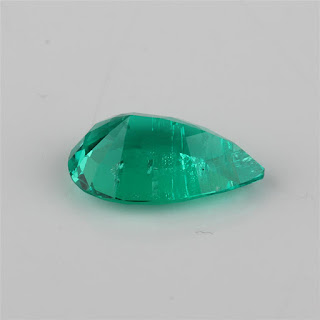

评论
发表评论