Wholesale Moissanite Diamond Sourcing Checklist for Jewelry Businesses
Wholesale Moissanite Diamond Sourcing Checklist for Jewelry Businesses
A wholesale moissanite diamond sourcing checklist for jewelry businesses is a step-by-step verification system that covers stone quality, grading reports, pricing transparency, cut precision, and supplier reliability before you commit a single purchase order. If you design engagement rings, earrings, or bridal sets, your reputation rides on every stone you set. Moissanite has moved from "diamond alternative" to a legitimate center stone choice, but the supply chain is uneven. Some suppliers sell glass-filled junk; others ship inconsistent color batches. This guide walks you through the exact checks that separate dependable moissanite manufacturers from middlemen who cannot answer basic questions.
Key Takeaways
- Verify moissanite hardness (9.25 Mohs) and refractive index (2.65–2.69) before approving any supplier.
- Demand grading reports that specify color grade, clarity, and cut measurements — not vague "premium" labels.
- Compare per-carat pricing across at least three suppliers; moissanite wholesale typically runs 5–10% of equivalent diamond cost.
- Confirm cut precision with ASET or Idealscope imaging for round brilliants above 1 carat.
- Audit delivery terms: look for 2–4 day dispatch windows and expedited shipping via DHL or FedEx.
- Request a pre-production sample batch of 10–20 stones before committing to bulk volume.
What You Need Before Starting
Before you contact any supplier, assemble your internal specification sheet. This document prevents scope creep and gives vendors a clear target.
- Target carat sizes and shapes: Round melee from 0.003ct to 0.15ct behaves differently than a 2ct cushion. Define your range precisely.
- Color tolerance: Moissanite typically ranges from colorless (D–F equivalent) to near-colorless (G–I). Decide which band your collection demands.
- Quality budget: Know your landed cost ceiling per stone, including shipping and potential customs duties.
- Certification requirements: Determine whether you need a grading report from a gemological lab or if an in-house certificate suffices for your market.
- Sample testing protocol: Allocate budget for a trial order before your main purchase.
Start by browsing the Product Categories on your candidate supplier's site. If they cannot organize their catalog by shape, size, and color, that disorganization often reflects their warehouse operations too.
Step 1 — Verify Material Properties Against Industry Standards
What to Do
- Confirm the stone is silicon carbide (SiC) with the proper crystal structure.
- Ask for the supplier's stated hardness and refractive index values.
- Request documentation on whether stones are near-colorless or colorless grade.
- Check if the supplier offers both classic brilliant cuts and specialty cuts like crushed ice or antique cushions.
Why This Matters
Moissanite's physical properties are its selling point. At 9.25 on the Mohs scale, it sits just below diamond (10) and well above ruby or sapphire (9.0). Its refractive index of 2.65–2.69 exceeds diamond's 2.42, which explains moissanite's signature fire and brilliance. A supplier who cannot state these figures confidently likely does not control their own manufacturing. The best moissanite producers grow their own crystals and cut their own stones, which gives them quality control at every stage.
Common Mistakes to Avoid
- Accepting "diamond quality" as a description: Moissanite is not diamond. It is a separate gemstone with its own optical personality. A supplier who conflates the two is either ignorant or deceptive.
- Skipping the hardness conversation: If a vendor hesitates on the 9.25 Mohs figure, walk away. That number is non-negotiable industry knowledge.
Step 2 — Audit Cut Quality and Shape Consistency
What to Do
- Request macro photography of each shape you plan to order — round, oval, pear, cushion, princess, emerald, asscher, heart, marquise, baguette, trapezoid, and radiant.
- Ask for ASET or Idealscope images on rounds above 1 carat.
- Measure a sample of stones with calipers to verify dimensions match the stated millimeter sizes.
- Check girdle thickness and table percentage against industry norms.
Why This Matters
Cut quality determines how moissanite performs optically. A poorly cut round moissanite looks dull and glassy, defeating the entire purpose of choosing the stone. Precision cutting matters more in moissanite than in diamond because the material's high refractive index amplifies every cutting error. For fancy shapes like pear and marquise, symmetry issues become visible to the naked eye — a crooked bowtie or lopsided wings ruins the stone.
Common Mistakes to Avoid
- Ordering by carat weight alone: Moissanite is lighter than diamond. A 1ct moissanite measures larger than a 1ct diamond. Always specify millimeter dimensions, not just carat weight.
- Ignoring shape-specific challenges: Emerald cuts and asscher cuts show inclusions more readily because of their open tables. If you order these shapes, demand higher clarity grades.
Step 3 — Scrutinize Color Grading and Batch Consistency
What to Do
- Ask whether the supplier sorts stones into color bands (D–F, G–I, etc.) or sells mixed lots.
- Request side-by-side comparison photos of stones from different production batches.
- Inquire about yellow or gray tint management in larger carat sizes.
- Verify that melee stones (under 0.15ct) are color-sorted, not dumped together.
Why This Matters
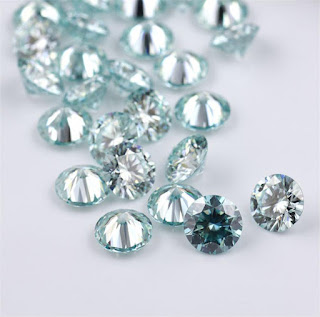
Color consistency across a single order can make or break a jewelry piece. A pair of earrings with one stone slightly warmer than the other looks wrong even to untrained eyes. Larger moissanite stones — 1ct and above — tend to show more body color than melee. A reputable supplier sorts inventory by color grade and can guarantee batch consistency. This is where the Color Diamond expertise of a manufacturer matters; the same color-sorting discipline applies across their entire gemstone line.
Common Mistakes to Avoid
- Assuming all moissanite is colorless: Most moissanite has a slight yellow or gray tint, especially in larger sizes. "Colorless" is a specific grade, not a default.
- Skipping the batch test: Order stones from two different production runs and compare them side by side under the same lighting.
Step 4 — Evaluate Shape Portfolio Depth
What to Do
- Confirm the supplier stocks all the shapes your collection requires.
- Check for unusual cuts like trapezoid, baguette, and special cuts for accent stones.
- Ask about minimum order quantities per shape.
- Verify they can supply matched pairs for earrings and matched sets for three-stone rings.
Why This Matters
Jewelry collections need design flexibility. If your best-selling design requires a 5x3mm pear and your supplier only stocks rounds, you are stuck. A manufacturer with a deep shape portfolio — from round melee at 0.003ct to 2ct-plus radiants — lets you design freely without sourcing from multiple vendors. Working with one supplier for all shapes also simplifies quality control and shipping logistics.
Common Mistakes to Avoid
- Choosing a supplier based on one shape: A vendor might excel at rounds but produce mediocre emerald cuts. Ask for shape-specific samples before committing.
- Overlooking melee quality: Small stones under 0.15ct are easy to hide defects in, but they show up in the final piece. Verify melee quality just as rigorously as center stones.
Step 5 — Assess the Supplier's Broader Gemstone Capabilities
What to Do
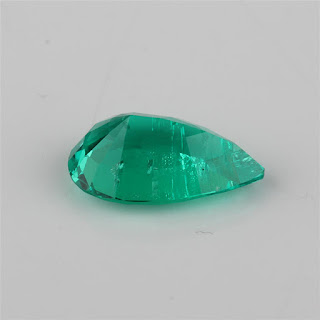
- Check if the supplier also offers lab-grown diamonds, hydrothermal emeralds, sapphires, rubies, and spinels.
- Ask whether they can coordinate mixed-material orders in a single shipment.
- Evaluate their expertise across different growth methods — CVD for diamonds, flux or hydrothermal for emeralds.
Why This Matters
A jewelry business rarely sells only moissanite pieces. Bridal collections often pair moissanite center stones with lab-grown diamond melee. Fashion lines might mix moissanite with colored gemstones. A supplier who manufactures multiple lab-grown materials simplifies your procurement. You negotiate one contract, manage one shipping schedule, and maintain one quality standard. This is particularly relevant if you are building an Emerald Cut collection that combines moissanite center stones with lab-grown diamond side stones.
Common Mistakes to Avoid
- Assuming moissanite-only suppliers understand diamonds: Lab-grown diamond grading follows different protocols. If your supplier cannot speak both languages fluently, coordination gets messy.
- Ignoring the OEM opportunity: Many manufacturers offer OEM services, letting you specify exact cuts, sizes, and quality parameters. Ask about this early.
Step 6 — Verify Grading Reports and Quality Documentation
What to Do
- Ask which gemological laboratory grades their stones — GIA, IGI, or an in-house lab.
- Request sample grading reports before ordering.
- Confirm whether reports are issued per stone or per lot.
- Check if the supplier provides documentation for moissanite's specific properties (refractive index, dispersion, etc.).
Why This Matters
Moissanite grading is less standardized than diamond grading. While diamonds benefit from the 4Cs framework and GIA's authority, moissanite lacks a single universal grading standard. Some suppliers issue their own certificates; others rely on third-party labs. Understanding what documentation you receive protects you when selling to end consumers who ask questions. If you sell online, listing accurate grading details reduces returns and chargebacks.
Common Mistakes to Avoid
- Accepting vague certificates: A certificate that says "premium quality" without color grade, clarity grade, and measurements is worthless.
- Assuming all labs grade equally: Different labs apply different standards. Know which lab graded your stones and what their criteria mean.
Step 7 — Confirm Pricing Structure and Payment Terms
What to Do
- Request a full price list in your currency, including any volume discounts.
- Ask about payment terms — wire transfer, letter of credit, or platform escrow.
- Clarify whether prices are FOB or CIF.
- Get quotes for different quality tiers (colorless vs. near-colorless).
Why This Matters
Moissanite wholesale pricing varies dramatically based on quality, size, and supplier. A 1ct round colorless moissanite might cost $50–$150 per stone depending on cut quality and origin. Compare apples to apples: a cheap stone with poor cut precision will cost you more in returns and reputation than a slightly pricier stone that performs optically. Transparent pricing signals a confident supplier. Hidden fees or vague quotes suggest they are padding margins somewhere.
Common Mistakes to Avoid
- Chasing the lowest price: Rock-bottom pricing usually means inconsistent quality or undisclosed color tints.
- Ignoring shipping costs: A $2 per stone saving disappears if shipping costs $50 more per order.
Step 8 — Evaluate Delivery Speed and Logistics
What to Do
- Confirm the supplier's dispatch timeline from order confirmation.
- Ask about expedited shipping options — DHL or FedEx preferred.
- Check packaging standards for loose stones.
- Verify how they handle customs documentation for international shipments.
Why This Matters
Jewelry businesses run on launch calendars. A delayed stone shipment pushes back your entire production schedule. Look for suppliers who dispatch within 2–4 days of order confirmation and offer expedited shipping. Fast dispatch matters more than fast manufacturing — a supplier with inventory ready to ship beats one who grows to order if you need stones now. Reliable logistics also reduce the risk of lost or damaged packages.
Common Mistakes to Avoid
- Assuming all suppliers ship fast: Some manufacturers grow stones to order, adding 2–4 weeks to delivery. Confirm inventory status before ordering.
- Skipping insurance: Loose stones are small and valuable. Ensure your shipment is insured and trackable.
Step 9 — Run a Pilot Order Before Bulk Commitment
What to Do
- Order 10–20 stones across your target shapes and sizes.
- Test the stones in your own setting process.
- Compare the received stones against the supplier's photos and specifications.
- Evaluate communication quality and response speed throughout the process.
Why This Matters
A pilot order reveals everything a sales call cannot. You see actual stone quality, packaging standards, delivery speed, and documentation accuracy. You also test the supplier's responsiveness when questions arise. This is your lowest-cost insurance policy before committing thousands of dollars to bulk inventory.
Common Mistakes to Avoid
- Skipping the pilot for a "great deal": Bulk discounts mean nothing if the quality fails your standards.
- Not testing in your own setting: A stone might look perfect loose but behave differently in your casting or setting process.
Pro Tips for Success
- Build a relationship with a specific sales representative: Consistency in communication prevents specification drift across orders.
- Request videos under different lighting: Photos can hide color tints. Videos under LED, fluorescent, and natural light reveal true performance.
- Ask about future availability: If a specific cut or size sells well, you need a supplier who can replenish it consistently.
- Check for registration or account systems: Many B2B suppliers offer account registration for pricing and order tracking. Use these tools to streamline reordering.
Frequently Asked Questions
How is moissanite different from lab-grown diamond?
Moissanite is silicon carbide, while lab-grown diamond is actual carbon in diamond crystal structure. Moissanite has higher fire (dispersion 0.104 vs. diamond's 0.044) and costs significantly less. Lab-grown diamond measures 10 on the Mohs scale; moissanite measures 9.25.
What is a good price for wholesale moissanite?
Wholesale moissanite typically costs 5–10% of an equivalent diamond. A 1ct round colorless stone might range from $50–$150 depending on cut quality and supplier. Melee stones under 0.15ct cost considerably less per stone.
Can moissanite pass a diamond tester?
Yes and no. Standard thermal testers distinguish moissanite from diamond because moissanite conducts heat differently. However, moissanite is electrically conductive, which some advanced testers detect. Always disclose moissanite as moissanite to customers.
How should I store loose moissanite stones?
Store loose stones in compartmentalized trays separated by shape, size, and color grade. Keep them away from other gemstones to prevent scratching. Moissanite at 9.25 Mohs can scratch softer stones like quartz or topaz.
Conclusion
A wholesale moissanite diamond sourcing checklist for jewelry businesses protects you from inconsistent quality, delayed shipments, and misrepresented stones. The nine steps above — verifying material properties, auditing cut quality, scrutinizing color consistency, evaluating shape depth, assessing broader capabilities, confirming documentation, comparing pricing, checking logistics, and running pilot orders — form a complete procurement system. Apply this checklist to every new supplier relationship, not just your first order. Re-verify periodically, especially if you expand into new shapes or carat sizes. Start with a small pilot order from a manufacturer who can demonstrate expertise across moissanite, lab-grown diamonds, and colored gemstones. Your customers trust you to deliver beautiful, durable jewelry. That trust begins with the stones you source.

评论
发表评论