Moissanite Diamond vs Lab Grown Diamond: Sparkle, Hardness, and Price
Moissanite Diamond vs Lab Grown Diamond: Sparkle, Hardness, and Price
Moissanite diamond vs lab grown diamond comes down to this: moissanite is a silicon carbide gem with more fire and a lower price tag, while lab grown diamond is chemically identical to mined diamond with superior hardness and a classic white sparkle. For B2B jewelry buyers deciding between the two, the choice hinges on application, budget, and what your customers actually value in a finished piece. This comparison breaks down the structural differences across sparkle, hardness, and price so you can match the right stone to the right product line. Relevant specifications and application guidance are available through Product Categories.
Key Takeaways
- Moissanite offers roughly 2.4 times the fire of diamond, creating a rainbow-heavy sparkle that some buyers love and others find too flashy.
- Lab grown diamonds score 10 on the Mohs scale, while moissanite sits at 9.25 — both are suitable for daily wear.
- Wholesale pricing favors moissanite dramatically, often at 10-20% of the cost of an equivalent lab grown diamond.
- Lab grown diamonds are optically identical to mined diamonds; moissanite is a distinct gemstone with different light performance.
- Your choice depends on whether your line targets bridal luxury or fashion-forward affordability.
How to Evaluate Moissanite vs Lab Grown Diamond
Different stones solve different problem layers. Before you compare specific gems, understand what each option actually delivers to your catalog:
- Feature depth: Moissanite excels at brilliance and fire per carat, outperforming diamond on refractive index.
- Ease of use: Lab grown diamonds integrate seamlessly into existing diamond-setting workflows since they behave identically to mined stones.
- Integration: Moissanite requires no special handling but may need different quality-control checks for color grading.
- Scope: Lab grown diamonds cover the full bridal spectrum, while moissanite fits fashion jewelry, right-hand rings, and entry-level bridal.
The Sparkle Difference: Refractive Index and Dispersion
Sparkle is where these two stones diverge most visibly. Diamond has a refractive index of 2.42, which produces that crisp, white brilliance collectors prize. Moissanite's refractive index measures 2.65 to 2.69 — higher than diamond — which means it bends light more aggressively. The result is more brilliance, but the real story is dispersion.
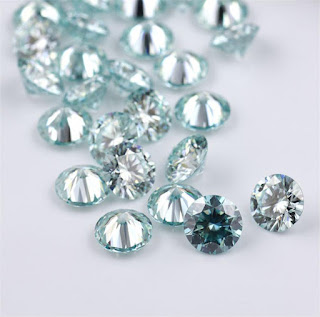
Dispersion, or fire, is the rainbow flash you see when light splits inside a gem. Diamond measures 0.044 on the dispersion scale. Moissanite measures 0.104 — roughly 2.4 times higher. In practical terms, a moissanite stone under direct light throws visible rainbow flashes, while a lab grown diamond shows subtle spectral colors mixed into a predominantly white sparkle.
For a round brilliant cut, moissanite's sparkle pattern differs from diamond's because of its double-refractive nature. Diamond is singly refractive, meaning light travels in one path. Moissanite is doubly refractive, splitting light into two paths. Under magnification, you can see facet doubling through the pavilion of a moissanite — a telltale sign for gemologists. At normal viewing distance, most consumers cannot distinguish the two without training.
Lab grown diamonds produce sparkle identical to mined diamonds because they share the same crystal structure and optical properties. If your customers want the classic diamond look with zero optical compromise, lab grown diamond wins on authenticity of appearance. If they want maximum visual impact per dollar, moissanite delivers more fire than any diamond at any price point.
Hardness and Durability: What Survives Daily Wear
Hardness determines scratch resistance, and both stones perform well beyond the threshold for daily wear. Diamond sits at 10 on the Mohs scale — the hardest natural material known. Lab grown diamonds match this exactly since they are real diamond, just created above ground. Nothing scratches a diamond except another diamond.
Moissanite measures 9.25 on the Mohs scale. That places it above ruby and sapphire (both 9.0) and far above quartz (7.0). For practical purposes, moissanite resists scratching from everyday contact — keys, metal surfaces, and dust won't mar its surface. Only diamond and a few synthetic abrasives can scratch it.
Toughness is a separate property from hardness. Diamond has good toughness but can chip along cleavage planes if struck sharply. Moissanite has no cleavage planes, making it somewhat more resistant to chipping from accidental impacts. In a pavé setting with many small stones, moissanite's lack of cleavage can be an advantage.
Heat resistance matters for manufacturing and repair. Diamond burns at around 800°C in the presence of oxygen. Moissanite withstands heat up to approximately 1,800°C before degradation. If your workshop performs torch repairs or laser setting, moissanite tolerates higher temperatures without risk of burning. Both stones handle ultrasonic cleaners and steam cleaning without issue.
Price Comparison: Wholesale Reality
Price is where moissanite separates itself decisively. A lab grown diamond's cost scales with carat weight, cut quality, and color grade. A 1-carat round lab grown diamond of good quality typically wholesales between $800 and $1,500, depending on specifications and supplier. Compare that to a mined diamond of similar quality at $5,000 to $8,000 retail — lab grown already represents a 60-80% saving over mined.
Moissanite undercuts both dramatically. Wholesale moissanite in 1-carat equivalent sizes typically ranges from $100 to $400 per stone, depending on cut complexity and brand certification. That puts moissanite at roughly 10-20% of the cost of an equivalent lab grown diamond. For a 3-carat equivalent moissanite, you might pay $500 to $900 wholesale, while a 3-carat lab grown diamond could run $5,000 to $12,000.
The price gap reflects production economics. Lab grown diamonds require high-pressure high-temperature (HPHT) or chemical vapor deposition (CVD) reactors running for weeks to grow a single crystal. Moissanite grows faster in silicon carbide furnaces, and the raw material costs less. Both are manufactured goods, but moissanite's shorter production cycle translates directly to lower wholesale pricing.
Color grading affects price differently for each stone. Lab grown diamonds follow the GIA color scale from D (colorless) to Z (light yellow). Near-colorless stones (G-H) cost less than colorless (D-F). Moissanite comes in colorless and near-colorless grades, but its color behavior differs — some moissanite shows a slight yellow or green tint in larger sizes, which is why premium colorless moissanite commands a higher price within its own range.
Side-by-Side Comparison
| Factor | Moissanite | Lab Grown Diamond |
|---|---|---|
| Refractive Index | 2.65 – 2.69 | 2.42 |
| Dispersion (Fire) | 0.104 | 0.044 |
| Mohs Hardness | 9.25 | 10 |
| Chemical Composition | Silicon carbide (SiC) | Pure carbon (C) |
| Optical Identity | Distinct gemstone | Identical to mined diamond |
| 1ct Wholesale Price Range | $100 – $400 | $800 – $1,500 |
| Heat Tolerance | ~1,800°C | Burns at ~800°C |
| Cleavage Planes | None | Present |
| Best Application | Fashion, entry bridal | Bridal, fine jewelry |
When You Need More Than a Single Stone Type
Most jewelry manufacturers do not stock just one gem. A typical bridal line needs lab grown diamonds for engagement rings and wedding bands, but the same catalog might feature moissanite for fashion rings, earrings, and anniversary pieces where price sensitivity drives purchasing decisions. A manufacturer that offers both stones — plus colored gemstones — gives buyers a single source for diverse product lines.
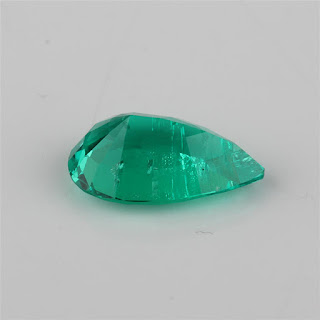
Starsgem operates as a B2B manufacturer covering this full spectrum. The company produces lab grown diamonds from 0.003-carat melee up to 2-carat and larger stones, with shapes including round, oval, pear, cushion, princess, and Emerald Cuts. The moissanite program covers the same shape range plus special cuts. Beyond diamonds and moissanite, the catalog extends to lab grown emeralds, sapphires, rubies, spinels, and alexandrites, as well as synthetic options like cubic zirconia and crushed ice cubic zirconia.
Working with a single supplier across these categories simplifies quality control and logistics. You maintain consistent grading standards, one shipping relationship, and a unified reordering process. Starsgem quotes delivery times of 2-4 days with expedited DHL or FedEx shipping, which matters when you are managing production schedules against customer deadlines.
For manufacturers building a bridal collection, the ability to source both moissanite and lab grown diamonds from one factory means you can test market response without committing to separate supply chains. Start with moissanite pieces to establish a price-conscious line, then introduce lab grown diamond versions as your customers trade up. The stones are not interchangeable in positioning, but they are complementary in a catalog.
Which Stone Fits Your Product Line
If your customers ask for "real diamond" engagement rings, lab grown diamond is the only choice that satisfies that requirement. Lab grown stones carry the same optical, physical, and chemical properties as mined diamonds, and they pass standard diamond testers. The Federal Trade Commission recognizes lab grown diamonds as genuine diamonds, provided marketing clearly states their origin.
If your line targets fashion-forward buyers who prioritize size and sparkle per dollar, moissanite wins. A customer who wants a 2-carat look for under $500 will not find that in lab grown diamond. Moissanite delivers the visual presence at a fraction of the cost, and its higher dispersion actually creates more visible fire than diamond — a feature many fashion buyers actively seek.
Consider your setting styles. For pave bands with numerous small stones, moissanite melee offers cost savings that compound across dozens of stones per ring. For solitaire engagement rings where the center stone is the hero, lab grown diamond's authentic sparkle and hardness justify the higher price. For colored jewelry, both stones work as accent stones, but lab grown diamonds in fancy colors — available through Starsgem's Color Diamond program — open design possibilities that moissanite cannot match.
FAQ
Is moissanite a fake diamond?No. Moissanite is a distinct gemstone made of silicon carbide. It looks similar to diamond but has different optical properties, including higher fire. Lab grown diamond is actual diamond, not a simulant.
Can a jeweler tell moissanite from lab grown diamond?Yes, with proper tools. A diamond tester measures thermal conductivity — moissanite conducts heat differently and registers as non-diamond on standard testers. Magnification reveals moissanite's facet doubling, which diamond does not exhibit.
Which stone holds its value better?Lab grown diamonds retain more resale value than moissanite, though both depreciate compared to mined diamonds. Moissanite has minimal resale market, while lab grown diamonds trade in secondary markets at 30-50% of original retail.
Does moissanite look cloudy over time?No. Moissanite does not cloud or dull with normal wear. Its hardness of 9.25 resists scratching, and it cleans easily with standard jewelry cleaners. The stone's brilliance remains consistent for the life of the piece.
Can moissanite pass a diamond tester?Standard thermal diamond testers identify moissanite as non-diamond. However, some electronic testers that measure electrical conductivity can be fooled, which is why reputable jewelers use multiple testing methods for verification.
What carat sizes are available for each stone?Starsgem offers lab grown diamonds from 0.003-carat melee through 2-carat and larger rounds, with various fancy shapes available. Moissanite is available across a similar range of shapes and sizes, including special cuts. Both stones can be sourced in bulk for manufacturing runs.
Making the Sourcing Decision
The moissanite diamond vs lab grown diamond decision is not about which stone is "better" — it is about which stone fits each SKU in your catalog. Moissanite delivers exceptional fire, solid durability, and wholesale prices that enable aggressive retail margins. Lab grown diamond delivers authentic diamond performance, maximum hardness, and consumer recognition as a genuine gemstone.
For a balanced inventory, stock both. Use moissanite for fashion lines, entry-level bridal, and high-volume pieces where price drives the sale. Use lab grown diamond for engagement rings, fine jewelry, and custom work where customers demand the real thing. The two stones serve different market segments, and a manufacturer that offers both captures more of the market than one that commits to a single option.
When you evaluate suppliers, look beyond stone quality to the breadth of the catalog. A manufacturer that produces lab grown diamonds, moissanite, and colored lab grown gems under one roof simplifies your supply chain and lets you respond to market shifts without requalifying vendors. Starsgem's range spans lab grown diamonds in multiple cuts and sizes, moissanite in standard and special cuts, and a full suite of lab grown colored gemstones — enough variety to build entire collections from a single source.

评论
发表评论