Lab Grown Diamond vs Natural Diamond: Composition, Value, and Customer Demand
Lab Grown Diamond vs Natural Diamond: Composition, Value, and Customer Demand
The debate between lab grown diamond vs natural diamond has moved from niche forums to mainstream jewelry counters. Buyers today ask sharper questions: Is the sparkle identical? Does resale value matter? Which one fits a specific budget without compromising on carat weight? For B2B buyers—jewelry brands, retailers, and wholesalers—the answer shapes inventory decisions, pricing strategy, and customer messaging.
This article breaks down the structural differences, market value, and shifting demand patterns. We will compare them side by side, using data from industry standards and observable market trends. No hype, just the facts a purchasing manager needs.
Key Takeaways
- Lab grown diamonds share identical chemical composition (pure carbon, cubic crystal structure) with natural diamonds; only origin differs.
- Natural diamonds carry scarcity-driven pricing; lab grown diamonds typically cost 50–70% less for comparable carat and grade.
- Customer demand splits by purpose: bridal and investment favor natural; fashion, daily wear, and budget-conscious buyers favor lab grown.
- Both grades are certified under the same 4Cs system (GIA, IGI), but lab grown reports are explicitly labeled as such.
- B2B suppliers like Starsgem offer lab grown diamonds from 0.003ct melee to 2ct+ rounds, plus fancy shapes, supporting flexible inventory builds.
How to Evaluate Lab Grown vs Natural Diamonds
Comparing these two requires a clear framework. Different buyers prioritize different factors, so a one-size-fits-all answer fails. Use these four lenses:
- Composition: Both are crystallized carbon (diamond). Lab grown diamonds are created via HPHT or CVD processes; natural diamonds form over billions of years in the earth's mantle.
- Value retention: Natural diamonds have an established resale market; lab grown diamonds currently have limited secondary market liquidity.
- Cost per carat: Lab grown diamonds offer significantly lower prices, allowing larger carat weights within the same budget.
- Customer perception: Natural diamonds carry emotional and traditional weight; lab grown diamonds appeal to younger, ethically-minded, and price-sensitive demographics.
Composition: Identical Chemistry, Different Origins
Here is the core fact: a lab grown diamond is not a simulant. It is real diamond. Both natural and lab grown stones are pure carbon arranged in a cubic crystal lattice. The hardness is 10 on the Mohs scale for both. The refractive index is 2.417 for both. Under a loupe, a trained gemologist distinguishes them only by growth patterns or laser inscriptions—not by brilliance.
The production methods differ. High Pressure High Temperature (HPHT) mimics the earth's conditions, while Chemical Vapor Deposition (CVD) grows diamond from a carbon-rich gas. Both yield gem-quality material. Industry standards from the Gemological Institute of America (GIA) and International Gemological Institute (IGI) grade lab grown diamonds using the same 4Cs—cut, color, clarity, carat—as natural stones. The reports state the origin clearly.
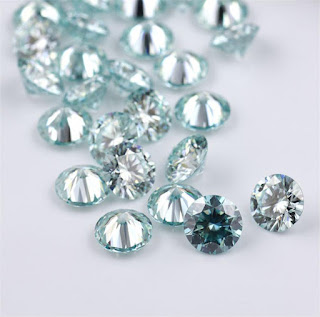
For a B2B buyer, this means one thing: you can source lab grown diamonds in any shape and size your catalog demands. Starsgem, for instance, stocks lab grown diamond rounds from 0.003ct melee to 2ct and above, alongside ovals, pears, cushions, princess cuts, emerald cuts, asschers, hearts, marquises, baguettes, trapezoids, and radiants. That range covers everything from micro-pavé to statement solitaires.
Value: The Price Gap and What It Buys
Price remains the most visible differentiator. Industry data consistently shows lab grown diamonds retail for roughly 50–70% less than natural diamonds of equivalent carat, color, and clarity. A 1ct natural diamond of good quality might retail between $5,000 and $8,000; a comparable lab grown stone often falls in the $1,500 to $2,500 range. These figures vary by market and grade, but the proportional gap holds.
That price difference changes what a customer can afford. A budget that buys a 0.5ct natural diamond can often secure a 1.5ct lab grown stone. For bridal sets, this translates to a larger center stone without stretching the loan. For fashion jewelry, it means diamonds can replace cubic zirconia in everyday pieces without destroying margins.
However, value retention tells a different story. Natural diamonds have a functioning secondary market—estate sales, pawn shops, and diamond buyers. Lab grown diamonds currently lack that liquidity. Some retailers offer trade-in programs, but a robust resale market has not yet formed. For customers who view diamonds as heirlooms or stores of value, natural remains the safer choice. For customers who prioritize upfront cost and visual impact, lab grown wins.
Customer Demand: Who Buys What and Why
Demand patterns have shifted noticeably over the past five years. Bridal remains the stronghold of natural diamonds—engagement rings and wedding bands still lean traditional. But the growth curve for lab grown diamonds is steep, particularly in fashion jewelry, anniversary gifts, and right-hand rings.
Younger buyers, especially millennials and Gen Z, drive much of this shift. They cite ethical sourcing, environmental impact, and price transparency as deciding factors. Lab grown diamonds sidestep concerns about mining practices and conflict zones. They also allow buyers to choose a larger stone for the same money, which social media amplifies.
For B2B buyers, this creates a two-track inventory strategy. Carry natural diamonds for the bridal customer who wants tradition and resale value. Carry lab grown diamonds for the fashion-forward customer who wants size and sparkle at a accessible price point. Many retailers report that offering both expands their addressable market rather than cannibalizing sales.
Side-by-Side Comparison
| Factor | Lab Grown Diamond | Natural Diamond |
|---|---|---|
| Chemical composition | Pure carbon (cubic crystal) | Pure carbon (cubic crystal) |
| Hardness (Mohs) | 10 | 10 |
| Refractive index | 2.417 | 2.417 |
| Origin | HPHT or CVD reactor | Earth's mantle, billions of years |
| Typical price (1ct, good grade) | $1,500–$2,500 | $5,000–$8,000 |
| Certification | GIA/IGI (labeled lab grown) | GIA/IGI (labeled natural) |
| Resale market | Limited, developing | Established |
| Best for | Fashion, daily wear, budget-conscious | Bridal, heirloom, investment |
When Natural Diamonds Make Sense
Natural diamonds still dominate the bridal category for a reason. The emotional weight of "a diamond is forever" marketing, combined with a functioning resale market, gives them a durability that lab grown stones cannot yet match. If your customer asks about resale value, insurance appraisals, or family heirlooms, natural is the answer.
The supply side also matters. Natural diamonds are finite. Mining production has declined in recent years, and high-grade rough is increasingly scarce. This scarcity underpins pricing stability. For a retailer positioning itself as a premium or luxury house, natural diamonds carry a brand cachet that lab grown stones do not.
When Lab Grown Diamonds Win
Lab grown diamonds excel in every scenario where price per carat and visual impact take priority over resale value. Fashion jewelry is the obvious category—pendants, earrings, and stackable rings benefit from diamond brilliance without the premium price tag. Starsgem's Diamond Pendants collection, for example, offers lab grown stones in a range of sizes and cuts, making it easy to stock a full assortment without tying up capital in natural inventory.
The same logic applies to Diamond Necklaces. A lab grown diamond necklace can deliver the same sparkle as a natural one at a fraction of the cost, which makes it an easier upsell for retail staff. Customers who balk at a $3,000 natural diamond pendant often say yes to a $1,200 lab grown version.
For budget-conscious buyers, lab grown diamonds also open the door to larger carat weights. A customer who can only afford a 0.3ct natural diamond can often step up to a 0.7ct or 1ct lab grown stone. That difference is visible across a room. It changes the perceived value of the piece entirely.
The Role of Setting and Metal Choice
The setting metal influences the overall cost and perception of any diamond piece. Sterling silver settings, for instance, pair well with lab grown diamonds in fashion-forward designs. Starsgem's S925 Jewelry line combines 925 sterling silver with lab grown stones, offering a price point that appeals to younger buyers and volume-focused retailers.
Silver settings also allow for more experimental designs. Since the metal cost is lower, designers can afford bolder silhouettes, more stones per piece, and more intricate detailing. This matters in a market where Instagram and TikTok drive trends. A striking silver-and-lab-grown-diamond ring can outsell a conservative gold-and-natural-diamond piece among the under-30 demographic.
FAQ: Lab Grown vs Natural Diamond
Can a jeweler tell the difference between lab grown and natural diamonds?Yes, but only with specialized equipment. Standard loupes and most handheld testers cannot distinguish them. Gemological laboratories use advanced spectroscopy and microscopy to identify growth patterns. Many lab grown diamonds also carry laser inscriptions on the girdle.
Do lab grown diamonds test as real diamonds?Yes. They test positive on diamond testers because they are real diamond—same hardness, same thermal conductivity, same optical properties.
Are lab grown diamonds cheaper because they are lower quality?No. The price difference reflects production cost and market supply, not quality. A well-cut lab grown diamond can be flawless and colorless, matching the top grades of natural diamonds.
Which holds value better over time?Natural diamonds have an established resale market; lab grown diamonds do not yet. If resale value is a priority, natural is the safer choice.
Can lab grown diamonds be insured?Yes. Most insurers cover them, but you should declare the origin. The insured value will reflect the lower replacement cost.
Final Verdict for B2B Buyers
The lab grown vs natural diamond decision is not about which is "better." It is about which fits your customer segment and price architecture. Natural diamonds serve the traditional bridal and heirloom market with established resale value. Lab grown diamonds serve the fashion and budget-conscious market with larger stones and lower price points.
Most successful retailers stock both. They use natural diamonds for engagement rings and premium collections, and lab grown diamonds for fashion pieces, daily wear, and entry-level price points. This dual approach captures the full spectrum of customer demand without forcing a single narrative.
The data is clear: both products have a place in the market. The question is how you position them in your catalog.

评论
发表评论