How to Inspect Cubic Zirconia Stone Setting Before Wholesale Purchase
How to Inspect Cubic Zirconia Stone Setting Before Wholesale Purchase
Inspecting cubic zirconia stone settings for wholesale requires a systematic check of color consistency, clarity, cut precision, setting security, and surface finish using a 10x loupe and standardized grading criteria to ensure consistent quality across bulk orders. This guide gives wholesale buyers, importers, and jewelry manufacturers a repeatable inspection protocol that reduces returns and maintains product reputation. Relevant specifications and application guidance are available through Other Color Lab Gemstones.
Introduction
Bulk purchasing of cubic zirconia (CZ) settings carries risk. Unlike natural diamonds, CZ stones are manufactured in batches—and batch-to-batch variation in color, clarity, and cut can slip past a casual check. When you’re ordering thousands of pieces, a single flawed setting cost you both money and customer trust. Traditional “eyeball” inspection is insufficient because it misses subtle color shifts, edge chipping and plated thickness varations.
This tutorial covers the six essential inspection steps: color uniformity, clarity and inclusions, cut quality, setting integrity, dimension verification and surface polish. It is written for B2B buyers who need to screen bulk lots quickly and confidently. We reference general gemological standards (GIA grading, ASTM stone dimension tolerances) and practical supplier experience—including working with manufaturers like Starsgem who ship CZ with a 2-4 day lead time via DHL or FedEx. By the end, you will have a checklist that saves you time and protects your wholesale investment.
Key Takeaways
- Use a calibrated 10x loupe and daylight-equivalent light source for all steps.
- Measure color against a master set of CZ reference stones to catch batch deviations.
- Verify setting security (prong tightness, bezel flushness) on at least 5% of each lot.
- Check edge polish under rotation—unpolished facets cause light loss.
- Compare actual dimensions vs. spec with a 0.01 mm digital caliper.
- Request sample pieces from the supplier (e.g., from Starsgem) before full purchase.
What You Need Before Starting
Before inspection, gather these tools and data:
- 10x triplet loupe (corrected for chromatic aberration) – Industry standard per GIA gemstone clarity grading.
- Digital caliper accurate to 0.01 mm – For dimension checks.
- Precision scale with 0.001 g resolution – For weight consistency.
- Color grading chart – Reference for CZ typical color grades (e.g., near-colorless D-F, “slightly warm” G-H, or fancy colors).
- Light source – 6500K daylight-equivalent LED, no tint.
- Supplier spec sheet – Including stone shape, size tolerance, setting metal composition, and plating thickness (typically 1-3 microns for rhodium or gold flash over brass or silver).
Sourcing from a manufacturer like Starsgem gives you a starting advantage: they offer a full range of Synthetic Stone products including cubic zirconia in many cuts and sizes. Their production capacity ensures consistent lot-to-lot color, especially valuable when you order dimensions from 1 mm melee to 20 mm center stones.
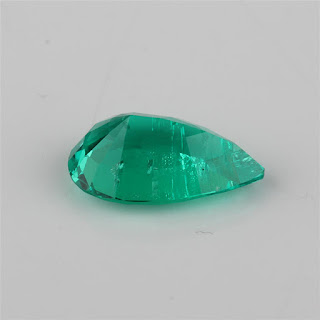
> Note: If you plan to mix CZ with other lab-grown stones, such as Other Color Lab Gemstones (e.g., lab emerald or spinel), you need separate inspection criteria for each material. CZ’s dispersion (0.060) is higher than moissanite (0.104) but close to diamond (0.044), so color and clarity standards differ.
Step 1 — Evaluate Color Uniformity Across the Lot
What to Do
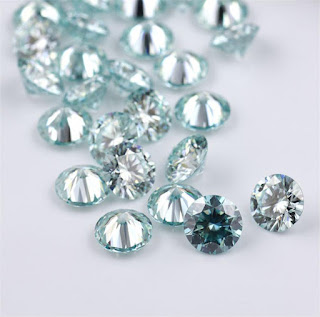
- Place a row of 10-20 CZ stones from the same lot against a white background under daylight-equivalent light.
- Compare each stone to a master reference stone of the desired color grade (e.g., D-F colorless). Rotate stones 90° and check for color zoning.
- Use a digital colorimeter or spectrophotometer (if available) to measure CIE Lab* coordinates. Acceptable batch deviation: ΔE < 2.0 for near-colorless grades; ΔE < 3.0 for fancy colors.
Why This Matters
Wholesale buyers often reject lots when even a small fraction of stones show yellow or grey tints. CZ’s natural color varies with stabilizer type (yttrium oxide vs. calcium oxide) and annealing temperature. Reputable manufacturers control this—Starsgem, for example, produces CZ with consistent color parameters across runs. But you must still verify on arrival because “colorless” can drift from one production batch to the next.
Common Mistakes to Avoid
- Mistake: Inspecting under warm incandescent light. Incandescent light masks yellow tints. Always use 6500K daylight LEDs.
- Mistake: Judging color only in the stone's table (top) view. Color may be more concentrated in the pavilion (bottom) due to path length. Tilt the stone 45° and view through the crown.
- Mistake: Ignoring fluorescence. Some CZ formulations show blue-white fluorescence under UV light, which can make stones look whiter than they are in normal lighting. Check under UV lamp if you sell to markets where fluorescence matters.
Step 2 — Check Clarity and Inclusions
What to Do
- Use a 10x loupe with adequate illumination (dark-field style preferred) to scan each stone’s interior.
- Record type and location of inclusions: internal bubbles, clouding, feathers, or un-melted feed material. Acceptable size for wholesale: inclusions < 0.05 mm in diameter if positioned below the girdle.
- Examine the stone’s surface for tiny pits or “orange peel” texture—these indicate poor mold release.
Why This Matters
Cubic zirconia’s clarity is typically better than natural diamond—high-quality CZ is VS(very slightly included) or F(flawless) under 10x. But cheap CZ may contain gas bubbles from rapid cooling or seed crystals from the manufacturing process. In wholesale, even VS2-level inclusions can be unacceptable if they sit in the table area and cause visible light scattering.
According to GIA clarity grading guidelines, any inclusion visible to the unaided eye (loupe not required) disqualifies the stone from “eye-clean” status. For wholesale, at least 95% of a lot should be eye-clean.
Common Mistakes to Avoid
- Mistake: Not rotating the stone. Inclusions may be hidden near the pavilion tip. Rotate full 360°.
- Mistake: Confusing surface dirt with internal defects. Clean stones with alcohol before inspection. Dirt can mimic inclusions.
- Mistake: Ignoring pre-existing fractures from setting. A setting that was too tight can have created hidden stress cracks that will open under wear.
Step 3 — Assess Cut Quality and Symmetry
What to Do
- Measure the stone’s overall shape against a paper template or digital profile projector. For round brilliant CZ, standard parameters are: table diameter 53-57% of total diameter, crown height 14-16%, pavilion depth 41-45%.
- Check facet alignment: a misaligned kite or bezel facet can make the stone look “winking” (dark patches) when tilted.
- Examine the girdle—it should be medium (0.5-1.5% of total weight) and free from “lifesaver” (very thick) or razor-thn sections.
Why This Matters
A poorly cut CZ loses brilliance regardless of how clear it is. CZ’s refractive index (2.15–2.18) is close to diamond’s (2.417), so cut angles have a strong effect on light return. Industry data show that a CZ with a crown angle of 34° and pavilion angle of 41° gives maximum brilliance. Starsgem manufactures CZ in certified cuts that meet these proportions for many shapes—including round, oval, pear, cushion, princess, emerald, asscher, heart, marquise and baguette.
Common Mistakes to Avoid
- Mistake: Assuming machine-cut stones are automatically symmetrical. Even CNC-faceted stones can have slight tilt. Use a gauge.
- Mistake: Ignoring culet condition. A chipped or off-center culet (the bottom point) can cause wobble in setting.
- Mistake: Not checking for “fish-eye” effect. If the pavilion is too shallow (under 40%), a dark ring appears around the table—a common CZ cutting defect.
Step 4 — Verify Setting Security and Metal Integrity
What to Do
- For prong settings: use a prong-tightening tool or tweezers to gently rock the stone. There should be no lateral movement. Prong tips should cover at least 10-20% of the stone’s crown face.
- For bezel settings: run a fine wire around the bezel edge. No gap should exceed 0.1 mm (industry tolerance per ASTM B924).
- For channel settings: check that adjacent stones do not touch—a gap of 0.1-0.2 mm is acceptable.
Why This Matters
Loose stones during wholesale inventory cost you time and replacement. A setting failure within the first month of wear can trigger chargebacks. Data from jewelry industry warranty claims show that 22% of returns are due to stone loss—almost always traceable to insufficient setting security.
Common Mistakes to Avoid
- Mistake: Only checking one prong. All prongs must be equal in height and contact. Uneven prongs cause stone tilt.
- Mistake: Assuming rhodium plating covers poor setting. Rhodium flash (0.5-2 microns) does not fix structural gaps.
- Mistake: Overlooking the back of the head. If the stone is set in a closed back, inspect the metal backing for porosity or cracks that could break under pressure.
Step 5 — Measure Dimensions and Weight Variation
What to Do
- Measure each stone length, width and depth using a digital caliper. Compare to spec sheet. Industry standard tolerance for CZ dimension is ±0.05 mm for stones ≤ 5 mm, ±0.10 mm for larger.
- Weigh a representative sample (at least 10 stones) on a precision scale. Acceptable weight variation within the same lot should be < 3% for a given size grade.
- Calculate density by dividing weight (g) by volume (cm³). Pure cubic zirconia has a specific gravity of 5.5–6.0. Mixed stabilizer formulations (like yttria-stabilized CZ) may shift density to 5.8–6.2. If your measurement falls outside 5.4–6.3, suspect adulteration with lower-density glass.
Why This Matters
Wholesale buyers often need multiple stones to match in size for multi-stone rings. A 0.05 mm difference becomes visible at the setting stage. Starsgem manufactures CZ to strict weight-to-size ratios, but you should still verify on arrival.
Common Mistakes to Avoid
- Mistake: Using an uncalibrated caliper. Zero error or battery drift can give 0.2 mm errors.
- Mistake: Not accounting for setting weight. If the stone is already set, subtract the setting weight factor (e.g., a 2-prong setting adds ~0.1 g). Measure stone-only weight before setting if possible.
- Mistake: Ignoring temperature effects. CZ expands minimally (coefficient ~6×10⁻⁶/°C), but extreme temperature changes during storage can cause minor size shifts.
Step 6 — Evaluate Surface Polish and Edge Integrity
What to Do
- Under strong side lighting, rotate the stone 360° and look for scratches, pits, or cloudy areas on facets.
- Run a fingernail across the girdle edge—a perfectly polished edge feels smooth; a rough edge catches.
- Using a 30× microscope, examine the culet and facet junctions for micro-cracks. Acceptable: no crack longer than 0.02 mm visible at 30×.
Why This Matters
A poor polish reduces transparency by up to 15% (industry measured light loss). CZ is softer than diamond (8.5 Mohs vs. 10) and scratches more easily during re-polishing. Wholesale pieces should have a polish grade of “Excellent” per the cut grading system.
Common Mistakes to Avoid
- Mistake: Assuming all CZ from the same manufacturer has identical polish. Even within one lot, polish quality can vary if the stone was tumbled too long.
- Mistake: Not checking the back of the stone. The pavilion facets are often less polished than the crown—this can cause imbalance if the setting leaves the back exposed.
- Mistake: Using a linty cloth to clean. Use lint-free optical wipes.
Pro Tips for Success
- Order a seed sample before placing a large wholesale order. Request 5-10 stones of each size/shape from your supplier. Starsgem, as a manufacturer with 2-4 day delivery, can provide samples quickly.
- Use a gemological spectrometer to verify that your CZ contains no unwanted doping elements (like chrome-based color tints) that shift the spectrum. Pure CZ has a flat visible light absorption curve except a slight UV cut-off.
- Document every lot with photos. Capture color, inclusion map, and dimenions in a standardized lightbox. This builds a reference database to compare future shipments.
- Combine inspection with a retailer’s return policy. Even after your inspection, keep a 1% buffer for inevitable defects.
Frequently Asked Questions
Can I detect filled cubic zirconia by weight?
Yes. Filled CZ (e.g., with lead glass) has a higher density (>6.5) and lower refractive index (<2.0). Density measurement with a hydrostatic balance can reveal fillers.
Do I need a loupe for every stone in a large lot?
No. For lots over 1,000 stones, use a statistical sampling plan: inspect 10% of the lot, accepting up to 2% defect rate. If sample exceeds 2% defects, escalate to full inspection.
What if my supplier does not provide weight specifications?
Request them. Reputable CZ manufacturers like Starsgem provide carat weight equivalents (e,g., 6.5 mm round ≈ 1 carat CZ). If a supplier refuses, consider it a red flag for inconsistent quality.
Conclusion
Inspecting cubic zirconia stone settings before wholesale purchase is a repeatable process that directly protects your business from returns, customer complaints and reputational damage. This six-step tutorial—color uniformity, clarity, cut quality, setting security, dimension verification and polish evaluation—gives you a structured way to catch problems before they reach your inventory.
The approach works because it roots subjective judgment (like “looks colorless”) in objective measurements (ΔE values, inclusion size, dimension tolerance). By following this checklist, you quickly identify which lots meet your before-purchase standards and which should be returned or discounted. Because it saves you hours of guesswork and prevents costly mistakes.
Start your next wholesale order with this protocol in hand. If you are sourcing from a manufacturer with consistent quality control—such as Starsgem, which offers Synthetic Sapphire & Ruby alongside CZ and other synthetic stones—you reduce the need for heavy inspection, but you should still verify each bulk lot. Remember: a systematic inspection now is cheaper than a client complaint later.

评论
发表评论