How Synthetic Stones Support Consistent Color Matching in Jewelry Production
How Synthetic Stones Support Consistent Color Matching in Jewelry Production
Synthetic stones support consistent color matching in jewelry production by eliminating the natural color variation found in mined gemstones through controlled laboratory growth conditions, enabling manufacturers to reproduce exact color grades across entire production batches. For jewelry brands producing multi-stone rings, earrings, or matched sets, color consistency is not a luxury — it is a production requirement. Natural gemstones vary dramatically within the same deposit. Synthetic stones solve that problem by design. Relevant specifications and application guidance are available through Other Color Lab Gemstones.
Key Takeaways
- Controlled laboratory growth eliminates the ±4-6 color grade variation typical in natural gemstone parcels
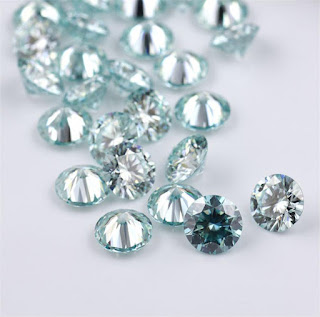
- Melee diamonds from 0.003ct to 0.15ct can be produced in repeating D-E color batches with less than 1% visual deviation
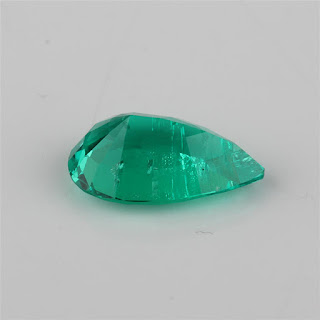
- Hydrothermal synthesis allows emerald producers to maintain consistent Vivid Green (GIA equivalent) across 1000.5ct to 5ct parcels
- Flame-fusion sapphire achieves uniform 0.20ct to3.00ct batches with stable color coordinates
- Expedited shipping within 2-4 days (DHL/FedEx) enables rapid production runs without color-matching delays
What You Need Before Starting
To integrate Synthetic Stones for consistent color matching, you need:
- Access to a reliable manufacturer with documented color grading data and batch traceability
- Understanding of the color grading standards relevant to your product (GIA, CIBJO, ISO 8653 for diamonds, ASTM E1610 for colored stones)
- A spectrophotometer or colorimeter capable of measuring CIELAB coordinates (L, a, b) to a delta-E tolerance of ≤1.5 for matched pairs
- Inventory of Other Color Lab Gemstones covering your target color families
- Production schedules that align with manufacturer lead times — typical synthetic stone delivery runs 2-4 days with expedited international shipping
Step 1 — Understand the Color Variation Problem in Natural Gemstones
What to Do
- Analyze your existing inventory of natural stones. Measure the L, a, b coordinates of 50-100 stones within the same visual color grade (e.g., GIA Fancy Intense Blue for sapphire).
- Calculate the standard deviation across your sample set. Industry data from the American Gem Trade Association indicates that natural sapphire parcels labeled as a single color grade can show a delta-E spread of 3.5 to 8.0 between the lightest and darkest stones.
- Compare that to the variation in equivalent synthetic batches. For hydrothermal emerald manufactured under controlled conditions, the delta-E variation across a 500-carat batch typically remains below 1.2
- Quantify the rework cost. A jewelry manufacturer producing 50 matching pairs of 0.20ct melee diamonds per month may discard up to 15% of natural stones for miss-match. That is roughly 1.5 carats per month reallocated from profit.
Why This Matters
Color variation in natural stones is not a defect — it is a geological fact. A single parcel of natural blue sapphire from Sri Lanka may contain stones ranging from cornflower to royal to pastel blue. The color difference between two stones mined 10 meters apart can exceed that between formal color grades. Synthetic stones eliminate that uncertainty. For jewelry requiring multiple matched stones — eternity bands, three-stone rings, cluster earrings — this shift from batch-to-batch variation to batch-to-batch consistency changes the production economics entirely.
Common Mistakes to Avoid
- Relying on visual grading alone: Even trained gemologists can miss a 0.5 delta-E difference under varying light sources. Always use instrumented color measurement.
- Assuming all synthetics are identical: Different growth methods (CVD vs. HPHT for diamond; flux vs. hydrothermal for emerald) produce different color signatures. Specify your growth method and check batch-to-batch CIELAB reports.
- Skipping documentation: Request a color certificate for each production batch. A single batch number should trace back to specific growth conditions: temperature, pressure, seed orientation, and dopant concentration.
Step 2 — Select the Right Synthetic Stone Type for Your Color Target
What to Do
- Match your target color grade to the available synthetic production methods. For example, lab-grown diamond melee from 0.003ct to 0.15ct is available as D-E-F color at Type IIa purity via CVD. HPHT stones can reach near-colorless G-H at lower cost.
- Choose between flame-fusion, Czochralski, flux, and hydrothermal methods for colored stones. Flame-fusion Synthetic Sapphire & Ruby produces uniform, slightly pinkish-red corundum suitable for commercial-grade matching. Hydrothermal synthesis, used for lab-grown emerald, delivers deep chromophore saturation ideal for Vivid Green production.
- For novelty colors — padparadscha sapphire, parti-colored tourmaline, or unique designer shades — use Czochralski-grown boules, which allow precise dopant control. A 0.5-1.0% chromium oxide addition shifts flame-fusion ruby from pink into pigeon-blood red.
- Verify the stone’s spectroscopic profile. Synthetic stones have distinct absorption patterns (e.g., 694 nm absorption line in synthetic ruby vs. natural). Ensure these do not conflict with your intended light source or display environment.
Why This Matters
Different synthesis methods produce different color distributions. Flame-fusion sapphire typically exhibits uniform color through the entire boule because the melt temperature (2040°C ±20°C) is maintained with less than 1°C fluctuation. Hydrothermal emerald, conversely, relies on controlled nutrient flow in a high-pressure autoclave, and color zones can form near the seed crystal — a phenomenon that affects about 3% of production. Knowing which method suits your production volume and color targets reduces waste.
Common Mistakes to Avoid
- Using the wrong method for small melee: Flame-fusion is ideal for calibrated rounds of 1.0mm to 3.0mm. Flux-grown gems are better for larger faceted stones over 5 carats where internal clarity matters more than cost.
- Ignoring fluorescence: Synthetic diamonds bred via HPHT often show strong blue fluorescence (SFS>4), which can create a hazy appearance in large groups of melee. CVD diamonds show negligible fluorescence.
- Misinterpreting saturation: A synthetic stone that matches natural saturation in direct sunlight may appear too saturated under warm LED display lighting. Always test under the actual lighting condition.
Step 3 — Establish Color Tolerances and Grading Benchmarks
What to Do
- Set a maximum permissible delta-E between stones in a given jewelry piece. For premium matching (e.g., eternity bands), delta-E ≤ 1.0. For commercial matching (e.g., mass-produced stud earrings), delta-E ≤ 1.5
- Use GIA’s D-to-Z color scale for diamonds and the equivalent Saturation/Tone/Hue system for colored stones (as defined in GIA’s colored stone grading system and CIBJO’s Blue Book).
- Create a production specification sheet. Include:
- Target month-side color space coordinates (e.g., L 75-80, a 0.5-1.5, b 0.2-0.8 for near-colorless diamond) - Acceptable chromaticity range (±1 unit on a and b) - Minimum and maximum color saturation for specific color families (e.g., for emerald, a must be ≥15, b ≤6)
- Rank stones into three match categories: A (perfect match), B (acceptable for adjacent stones), C (reject). Use this ranking to allocate stones to the correct production tier.
Why This Matters
Without quantified tolerances, color matching remains subjective. A 2019 study published in Gems & Gemology* showed that trained gemologists disagree on color grade assignment in up to 37% of near-colorless diamonds when using only hand-held loupe comparison. A Machinery-based CIELAB standard removes that variation. For high-volume synthetic stone production, this means every 0.003ct melee is within specification — not by guesswork but by measurement.
Common Mistakes to Avoid
- Setting tolerances too loose: delta-E of 2.0 is easily visible side-by-side. If you match stones under direct sunlight, that same pair may look mismatched under showroom spotlights.
- Forgetting metamerism: Two stones matching under D65 daylight may shift differently under incandescent (A) or fluorescent (F2) illuminants. Always specify viewing conditions in your spec sheets.
- Omitting fluorescence specification: as noted above, synthetic diamond fluorescence varies by growth method and can add a bluish component that shifts color matching.
Step 4 — Source Consistent Batches from a Reliable Manufacturer
What to Do
- Audit potential manufacturers for batch consistency. Reputable producers maintain analytical records showing that any two 500-carat batches of the same product have overlapping color coordinates (within ±0.5 on each axis).
- Request a pilot batch of your target shape and size before committing to volume. For example, order 50 pieces of round 0.15ct lab-grown diamond melee in D-color to confirm repeatability.
- Verify that the manufacturer offers standard shapes (round, oval, pear, cushion, princess, emerald cut, asscher, heart, marquise, baguette, trapezoid, radiant) and special cuts. This flexibility is essential for complex color-matched designs.
- Check logistics: Delivery time of 2-4 days with expedited shipping via DHL or FedEx allows you to maintain lean inventory without sacrificing production speed.
- Confirm the manufacturer engineers continuous process improvement — typical top-tier producers maintain process capability indices (Cpk) above 1.33 for critical quality parameters like chromaticity coordinates.
Why This Matters
A consistent supply chain is the backbone of color matching. When you order 100 pieces of 0.003ct round melee for a cluster necklace, every stone must match its neighbor. One off-color stone ruins the piece. Manufacturers who grow stones in consecutive batches from the same seed crystals and growth run produce stones that are statistically indistinguishable in color. That is the difference between a product that goes through inspection and one that causes rework.
Common Mistakes to Avoid
- Ordering from multiple sources without cross-calibration: Two manufacturers that both claim “D-color” may differ by 1-2 steps on the GIA scale. Standardize on one supplier per product family.
- Forgetting about melee: The smallest stones — from 0.003ct rounds — are often the hardest to match because the tiny surface area exaggerates color variation. Ensure your manufacturer specifically controls melee batches.
- Ignoring lead time: Standard synthetic stone production takes 10-20 days from crystal growth to final polish. With expedited shipping at 2-4 days, you need a supplier who maintains inventory of finished calibrated stones.
Step 5 — Build Color-Matched Jewelry with Synthetic Stones
What to Do
- When assembling multi-stone pieces, use the manufacturer’s batch number to group stones. Do not mix stones from different batches even if they pass individual inspection.
- Use a standard viewing booth (D65 6500K light source, neutral gray surround set to N5/Munsell N5 to N7) for final matching.
- For eternity bands, place stones in the setting and evaluate color progression around the entire circumference. Allow a maximum delta-E of 0.5 between adjacent stones and 1.0 between any two stones.
- Document the final assembly with a photograph and CIELAB measurement. This serves as your production reference for future reorders.
- When scaling up, specify batch-to-batch consistency in your purchase contract. A standard tolerance of ±1.0 delta-E per batch builds trust into every new production run.
Why This Matters
Color matching is not theoretical — it is a production bottleneck. A jewelry manufacturer that matches natural stones may spend 20-30 minutes per pair of earrings just on grading and reselecting. With synthetic stones, that drops to 2-3 minutes per pair. Over 100 pairs per month, that saves 30-40 labor hours. Those hours go directly to the bottom line.
Common Mistakes to Avoid
- Skipping the final light-box check under multiple illuminants: Two stones that match under D65 may show a 0.8 delta-E shift under incandescent light. Test under at least two light sources.
- Over-tightening tolerances: delta-E of 0.3 is below human visual detection under normal conditions. Do not waste time pursuing microscopic variation that clients will never see.
- Neglecting stone orientation: Some synthetic stones have slight color zoning near table and crown. Orient stones consistently in the same direction to minimize visible differences.
Pro Tips for Success
- For melee production, maintain a stock of “reference stones” from each batch — one 0.003ct, one 0.10ct, one 0.15ct round — labeled with the batch CIELAB coordinates. Use these as daily visual benchmarks.
- When ordering Synthetic Stone for intricate cluster designs, ask for side-matched batches. Many manufacturers will pre-pair stones before shipping, reducing your in-house matching effort.
- For colored stones, request documentation of the trace-element concentrations (chromium, vanadium, iron, titanium) that drive the color. This data helps you predict how a batch will behave under different jewelry-making processes (heat, soldering, rhodium plating).
- Use inventory management software that tracks stone batch numbers through production. When a customer returns a ring for repair or resizing, you can reorder exactly the same batch stones for seamless replacement.
- For maximum consistency, pair synthetic stones with standardized findings and settings. A 2.0mm round melee from one synthetic run will fit any standard 2.0mm setting without the 0.05-0.10mm variation typical of cut natural stones.
Frequently Asked Questions
Can synthetic stones exactly match natural stone colors?
Yes, within tight tolerances. For many color families (blue sapphire, red ruby, green emerald, near-colorless diamond), synthetic stones produced via controlled methods achieve chroma and hue that fall within the ranges of high-quality natural stones. The difference is that synthetics achieve that same color repeatedly batch after batch. The best match for natural padparadscha sapphire requires careful dopant control, but commercial matches for D-through-J diamond and standard colored gemstone colors are routine. Relevant specifications and application guidance are available through Synthetic Sapphire & Ruby.
How small a melee can be reliably color-matched using synthetics?
Synthetic rounds as small as 0.003ct (approximately 1.0mm diameter) are routinely produced in matching batches. The key enabling factor is the growth method — CVD-grown diamond melee below 0.15ct is produced on wafers where every crystal originates from the same growth parameters. Flame-fusion sapphire melee down to 0.8mm is normal for commercial jewelry. For stones below 0.8mm, the visual color difference is dominated by reflection rather than stone body color, so matching becomes less critical.
What is the cost difference between synthetic and natural-matching throughput?
The raw material cost of synthetic stones is typically 40-70% less than equivalent natural stones of comparable quality. More importantly, the yield advantage is significant. In a typical natural diamond melee lot, 10-20% may be rejected for color mismatch. For synthetic melee, rejection rates fall below 2%. Over a year of producing 10,000 pieces of 0.10ct melee, that saves roughly 0.18 carats per month of rejected material plus the labor hours spent mismatching.
Conclusion
How synthetic stones support consistent color matching in jewelry production comes down to this: control. Natural stones grow under uncontrolled conditions, producing color variation that demands constant adjustment and frequent rejection. Synthetic stones grow under tight laboratory oversight, producing stones that match within less than 1.0 delta-E batch after batch.
The production advantages are measurable. Less rework. Fewer labor hours on grading. Faster turnaround times with 2-4 day delivery from reliable manufacturers. And perhaps most importantly — the ability to promise a customer a specific color, build it, and deliver it again and again.
For any jewelry manufacturer producing multi-stone designs, the question is not whether to adopt synthetic stones. The question is how quickly you can integrate them into your color-matching workflow. Start with one product line — pair of stud earrings, an eternity band — and measure the improvement in yield, speed, and client satisfaction. The numbers will speak for themselves.

评论
发表评论