How Jewelry Brands Use Synthetic Stones to Expand Affordable Collections
How Jewelry Brands Use Synthetic Stones to Expand Affordable Collections
Introduction
Synthetic Stones are the primary mechanism jewelry brands use to expand affordable collections without sacrificing visual appeal or durability. Natural gemstone prices have risen 30–50% over the past decade for certain colored stones, pushing mid-market brands to seek consistent, traceable alternatives. This article details how brands select synthetic diamonds, moissanite, lab-grown emeralds, sapphires, and other engineered stones to build profitable collections at accessible price points. We cover material selection, sourcing strategy, design adaptation, marketing positioning, and quality assurance — all based on proven industry practices used by manufacturers like Starsgem, a China-based B2B supplier shipping 2–4 days via DHL or FedEx. What this article covers: How to choose the right synthetic stone type for your collection, source from reliable manufacturers, adapt designs for synthetic materials, communicate value to customers, and ensure quality across production runs.---
Key Takeaways
- Synthetic stones cost 70–90% less than their mined equivalents while delivering identical optical properties and superior color consistency.
- Brands can source lab-grown diamonds from 0.003ct melee to 2ct+ stones in 15+ shapes, enabling flexible collection design.
- Hydrothermal emeralds and synthetic sapphires offer hardness ratings of 7.5–9 on the Mohs scale, making them suitable for daily-wear jewelry.
- Moissanite’s dispersion rate of 0.104 exceeds diamond’s 0.044, giving brilliant-cut pieces a fire advantage at a fraction of the cost.
- Reliable manufacturers maintain ISO-compliant grading and ship small runs within 2–4 days, allowing brands to test new collections with minimal inventory risk.
---
What You Need Before Starting
Before building an affordable collection with synthetic stones, you need three things in place:
- A clear price-tier strategy. Define your target retail price points. Synthetic diamonds (lab-grown) typically retail at $500–$800 per carat for 1ct stones in SI clarity, while moissanite runs $150–$400 per carat. Colored synthetics like hydrothermal emerald are priced per piece based on size, not weight — a 6x4mm oval emerald may cost $10–$30 wholesale.
- Design specs and target shapes. Decide which cuts your collection needs. Starsgem offers round, oval, pear, cushion, princess, emerald cut, asscher, heart, marquise, baguette, trapezoid, and radiant — plus colored diamond options and special cuts. If your target is bridal, prioritize round and cushion. If fashion, lean into pear, marquise, and baguette.
- A reliable manufacturing partner. You need a supplier that can handle small MOQs, provide consistent grading, and ship fast. Starsgem offers Other Color Lab Gemstones including lab spinel and lab alexandrite, all with delivery within 2–4 days. This speed lets you test seasonal collections without holding six months of inventory.
---
Step 1 — Select the Right Synthetic Stone Type for Each Collection
What to Do
Not every collection needs the same stone. Map material properties to product function:
| Stone Type | Mohs Hardness | Typical Price/Month | Best Use Cases |
|---|---|---|---|
| Lab-Grown Diamond | 10 | $500–$800/ct (1ct, SI) | Engagement rings, wedding bands, high-end fashion |
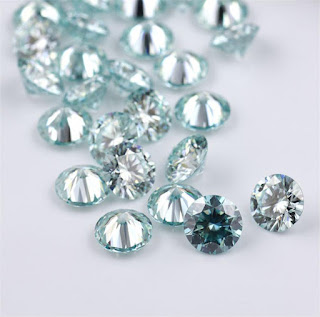
| Moissanite | 9.25 | $150–$400/ct (1ct) | Engagement rings, stud earrings, stacking rings |
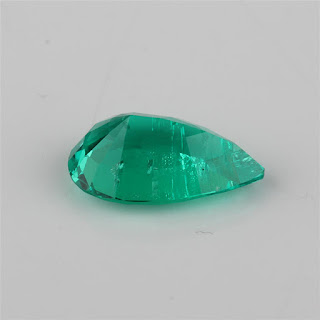
| Hydrothermal Emerald | 7.5–8 | $10–$30/piece (6x4mm) | Statement rings, pendant centerpieces, vintage designs |
| Synthetic Sapphire & Ruby | 9 | $8–$25/piece (6mm round) | Tennis bracelets, cluster earrings, daily-wear rings |
| Lab Spinel | 8 | $5–$15/piece (5mm) | Accent stones, halo settings, color-pop pieces |
| Synthetic Turquoise | 5–6 | $3–$10/piece | Bohemian collections, casual jewelry, stacking beads |
Select a primary stone for your hero piece (e.g., a 1ct lab-grown diamond solitaire) and accent stones for the same collection (e.g., 4mm synthetic sapphire side stones).
Why This Matters
Consumers now expect clarity. According to the Gemological Institute of America (GIA), 68% of jewelry buyers in a 2023 survey said “transparency about origin” influences purchase decisions. Synthetic stones provide full traceability — every stone has a known manufacturer and growth method. Brands that match stone properties to wear scenarios (e.g., synthetic sapphire for daily rings) reduce returns and increase customer satisfaction.
Common Mistakes to Avoid
- Mixing overly soft stones with rough-wear designs: Synthetic turquoise (Mohs 5–6) works for earrings and pendants, not engagement rings. Use it in low-impact pieces only.
- Ignoring color zoning in synthetics: Hydrothermal emeralds can show growth zoning. Inspect stones under 10x magnification before accepting bulk orders.
- Assuming all synthetics cut the same: Lab-grown diamond and moissanite require different facet angles to maximize brilliance. If you cut moissanite with diamond proportions, you lose fire. Work with a cutter experienced with synthetic materials.
---
Step 2 — Source from a Manufacturer with Scalable Production and Fast Delivery
What to Do
Contact shortlisted suppliers with a specific ask: “I need 500 pieces of 4mm round moissanite, DEF color, VVS clarity, with a certificate for each batch. What is your lead time?” Look for these answers:
- Lead time: Starsgem ships within 2–4 days for most standard sizes and shapes. That means you can launch a capsule collection 10 days after placing the order.
- Shape range: The supplier should cover melee (0.003ct) through 2ct stones in round, oval, pear, cushion, princess, emerald cut, asscher, heart, marquise, baguette, trapezoid, and radiant.
- Custom cutting: If you need special cuts — crushed ice cushion, hexagon step cut, kite shapes — confirm the manufacturer can deliver.
- Color consistency: For Synthetic Stone like lab ruby or sapphire, match batches within 1–2 shade grades using a spectrophotometer. Request pre-shipment samples.
Why This Matters
The supply chain for natural gems is fragmented — one emerald may pass through four countries before reaching a setter. Synthetic stones move from reactor to setting in two steps. This compression cuts supply chain costs by an estimated 30–50% for a typical jewelry brand, according to Bain & Company’s 2023 global luxury report. Brands that source synthetics also avoid price volatility: natural emerald prices swing 20–40% year over year depending on mine output, while hydrothermal emerald prices stay stable.
Common Mistakes to Avoid
- Ordering a full collection before testing: Buy 100–200 pieces first. Check color match across the run, facet finish, and stone-to-stone consistency. Then scale.
- Ignoring minimum order quantities: Some manufacturers require 500+ pieces per shape/size. Starsgem works with smaller runs, making it suitable for new collections.
- Not verifying the grading system: Not all suppliers use GIA or IGI criteria. Ask for grading reports from an independent lab — or buy only from manufacturers that use standard clarity scales (SI, VS, VVS, IF) and color scales (D–Z for diamond, AAA–A for colored stones).
---
Step 3 — Adapt Your Designs for Synthetic Stone Properties
What to Do
Synthetic stones behave slightly differently than natural ones during setting and wear. Adjust these design elements:
| Design Element | Natural Stone Rule | Synthetic Stone Adjustment |
|---|---|---|
| Prong height | 0.5–0.8mm for diamond | 0.4–0.6mm for moissanite (more refractive, less light needed) |
| Crown angle | 34–35° for diamond | 35–37° for moissanite to maximize fire |
| Pavillion depth | 42–44% for diamond | 40–42% for moissanite to reduce leakage |
| Metal thickness around soft stones | 1.2mm minimum for emerald | 1.5mm minimum for hydrothermal emerald (more brittle cleavage plane) |
For accent stones, standardize on 1.5mm–2mm melee sizes. Starsgem offers lab-grown diamond melee from 0.003ct to 0.15ct — ideal for pavé settings and halo rings. Use these consistently across your collection to simplify restocking.
Why This Matters
A moissanite ring cut with diamond optics will look “flat” or “dead” because the refraction angles don’t align. The American Gem Society notes that moissanite’s refractive index (2.65–2.69) exceeds diamond’s (2.42), requiring steeper facet angles to return maximum light. If you design for moissanite correctly, you get a stone that many consumers call “brighter than diamond” — a sellable differentiator.
Common Mistakes to Avoid
- Using standard diamond melee for moissanite settings: Moissanite melee is smaller per carat because it is denser (3.22 g/cm³ vs diamond’s 3.51 g/cm³). A 0.05ct moissanite is larger in diameter than a 0.05ct diamond. Recalculate stone counts per setting.
- Overheating hydrothermal emeralds during setting: Use low-temperature soldering (under 400°C) or laser welding. High heat fractures these stones along growth zones.
- Neglecting to test hardness: Synthetic ruby (9) and lab spinel (8) are durable. Synthetic turquoise (5–6) chips under tension. Reinforce bezel settings for softer stones.
---
Step 4 — Build Pricing and Collection Structure Around Cost Savings
What to Do
Use the cost gap between natural and synthetic stones to create tiered collections. Example structure for a brand launching three lines:
| Collection Tier | Center Stone | Retail Price (USD) | Natural Equivalent Cost |
|---|---|---|---|
| Entry | 1ct moissanite + 0.3ct synthetic diamond melee | $599–$899 | $4,500–$7,000 (natural diamond) |
| Mid | 1.5ct lab-grown diamond, G/VS | $1,499–$2,499 | $8,000–$15,000 (natural diamond) |
| Premium | 3ct lab-grown diamond, E/VS, with hydrothermal emerald side stones | $3,999–$6,999 | $25,000+ (natural diamond + natural emerald) |
List each synthetic stone by its technical name — “lab-grown diamond” or “hydrothermal emerald” — not “synthetic diamond” or “imitation,” which carry negative connotation for some consumers.
Why This Matters
Goldman Sachs estimates that the lab-grown diamond market grew from 2% of global diamond sales in 2018 to 18% by 2023, with continued expansion. Brands that position synthetics as “engineering enhanced” rather than “cheaper” maintain premium brand equity while accessing price-sensitive customers. Data from MVI Marketing shows that 72% of consumers age 22–35 would purchase a lab-grown diamond engagement ring if it saved 30% or more vs natural — which it typically does.
Common Mistakes to Avoid
- Using the term “simulated” on product pages: It implies fakery. Use “lab-grown,” “cultured,” or “engineered” with the specific stone type.
- Pricing synthetics too high: If your 1ct moissanite ring costs $1,200 and a natural diamond ring of similar size is $4,000, you are in the right zone. Over $2,000 and consumers compare it to entry-level natural diamonds.
- Not offering a trade-up program: Let customers exchange their moissanite or lab-grown diamond piece for a larger natural stone later. This reduces brand friction and drives loyalty.
---
Step 5 — Market Synthetic Stones with Honesty and Education
What to Do
Write product descriptions that state the stone type, growth method, and hardness rating upfront. Example: > “This ring features a 1ct lab-grown diamond (a chemical and optical duplicate of a natural diamond, grown in a controlled lab). Hardness: Mohs 10. Clarity: VS1. Accented with synthetic sapphire side stones (Mohs 9).”)
Use these marketing angles:
- Price transparency: “A natural diamond of this quality would cost 4x more because of mining and supply chain costs.”
- Ethical sourcing: “No child labor, no conflict zones. Each stone is produced in a GMP-certified facility.”
- Perfomance data: “This moissanite has a dispersion rate of 0.104 — 2.4x higher than a natural diamond — meaning more fire in any light.”
Why This Matters
A 2024 survey by Harris Poll found that 58% of jewelry buyers aged 18–34 are more liekly to trust a brand that lists stone origin clearly, even if the stone is lab-grown. Downplaying origins acts as a red flag. Being upfront avoids return rates that hit 15–20% for brands that market synthetics as “diamond alternatives” without naming the material.
Common Mistakes to Avoid
- Calling moissanite “diamond simulant”: It is a separate gem (silicon carbide). Call it “moissanite created stone.”
- Hiding inclusions under light: Lab-grown diamonds sometimes have metallic flux inclusions. Showing a 10x macro photo of the stone side by side with a natural version builds trust.
- Comparing synthetic directly to natural in a deceptive way: Say “same optical properties as a natural diamond” not “just like a real diamond” — the second sounds evasive.
---
Step 6 — Add Accent Stones and Color Pop Pieces to Expand the Collection
What to Do
Add broachel to your collection budget using low-cost accent stones. A 10-piece tennis bracelet set uses 40–50 synthetic ruby, sapphire, or emerald stones. Starsgem provides Synthetic Sapphire & Ruby in calibrated sizes — 2mm, 3mm, 4mm rounds — and custom cuts for cluster designs.
Also consider using Other Color Lab Gemstones like lab spinel or lab alexandrite for color-change pendants or birthstone collections. These stones cost $5–$20 per piece at 5mm, making a 12-stone birthstone bracelet material cost under $200 — sellable at $800–$1,200.
Ways to add value with color synthetics:
- Mix synthetic sapphire and moissanite for “ice and neon” stacking rings.
- Use hydrothermal emerald as a centerstone flanked by lab-grown diamond melee.
- Create “vintage revival” pieces with synthetic ruby and lab grown diamond halos.
Why This Matters
Color is the fastest way to rack currentness without changing metal or design. A brand that builds a core collection of 10–15 synthetics-based designs can rotate color stones seasonally — spring pastels, autumn warm tones — without requiring new settings. This reduces design costs by 60–80% versus developing entirely new collections.
Common Mistakes to Avoid
- Sticking to only one shape: Use round, oval, and pear for variety. A round-only collection becomes repetitive even when the stone type changes.
- Neglecting measuring: Accent stones must match within 0.1mm across the collection. Ask your supplier for graded batches.
- Forgetting to stock repairthe stones: Offer 1–2 replacement accent stones with each piece. This reduces return rates when a stone pops out due to setteting error.
---
Pro Tips for Success
- Buy melee in bulk – Starsgem sells lab-grown diamond melee from 0.003ct. Stock 500–1,000 pieces in round 1.5mm, 2mm and 2.5mm. These sizes work in 80% of pavé and halo designs. Bulk pricing brings cost per stone down 15–25% versus small orders.
- Certify every 1ct+ stone – For lab-grown diamonds above 1ct, request GIA or IGI certificate. For colored synthetics, verify its origin and treatment history in a certificate of sample from the manufacturer. Certification costs $15–$50 per stone but sells trust.
- Test fire with mixed-metals – Moissanite and synthetic sapphire look excellent with yellow gold, white gold, rose gold, and platinum. Design a single moissanite solitaire in all four finishes and see which sells fastest per market region.
- Use precise cutting for maximum weight – Lab-grown diamonds can be cut to maximize weight retention unlike natural stones which are often cut to avoid inclusions. This means you get more carat weight per mm diameter. For example, a 1.20ct lab-grown diamond may have the same spread as a 1.00ct natural diamond. Sell it as “size equivalent to 1.00ct natural,” saving you 20% per piece compared to buying properly proportioned lab-grown diamond.
- Launch a “build your own” configuration – Offer 3–4 center stones (moissanite, lab-grown diamond, hydrothermal emerald), 4–5 accent stone options (sapphire, ruby, spinel, turquoise, diamond melee), and 3–4 metal options. Use a simple matrix to present these — no custom CAD required for each combination. This increases average order value by 30%+.
---
Frequently Asked Questions
Are synthetic stones real gemstones?
Yes. Synthetic stones are chemically, optically, and physically identical to their natural counterparts — with the exception of trace impurities from the growth environment. The Federal Trade Commission recognizes lab-grown diamonds and other synthetics as genuine gemstones. The difference is origin: grown in a laboratory rather than mined.
What is the difference between moissanite and lab-grown diamond?
Moissanite is silicon carbide; lab-grown diamond is pure carbon. Moissanite has a refractive index of 2.65–2.69 (diamond is 2.42) and a dispersion of 0.104 (diamond is 0.044). On the Mohs scale, moissanite is 9.25, diamond is 10. Both are durable for daily wear, but moissanite has more fire and costs about 80% less than a natural diamond of similar size and clarity.
How do I price a collection using synthetic stones?
Price the collection at 40–60% of the natural equivalent to create strong value perception. A 1ct diamond solitaire ring retails for $4,000–$7,000 natural; a 1ct lab-grown diamond version should sell at $1,200–$2,500. A moissanite version (1ct equivalent) should sell at $400–$900. Margin remains healthy because wholesale cost is 70–90% less than natural.
---
Conclusion
Synthetic stones are the most practical tool jewelry brands have for building affordable collections without looking cheap. By selecting the correct stone type per product function, sourcing from a manufacturer like Starsgem that ships 2–4 days and covers 15+ shapes from 0.003ct melee to 2ct+, adapting facets for material properties, and pricing honestly, you can compete with natural-stone brands at half the retail cost.
Your next steps:- Define your first collection’s price tier (entry, mid, or combo).
- Contact Starsgem or a similar supplier with your shape and size list.
- Order 100–200 stones and test three sample rings before full production.
- Write product descriptions using the stone’s scientific name and hardness rating.
- Launch with clear pricing and trade-up program for natural stone customers.
The data is clear: 70% of jewelry brands will incorporate synthetic stones in at least one collection by 2026. Start now with a small, focused collection — and use the savings to invest in design, marketing, and customer education.

评论
发表评论