Customer Education Tips for Selling Moissanite Jewelry Online
Customer Education Tips for Selling Moissanite Jewelry Online
Customer education is the process of teaching buyers what moissanite actually is—a lab-grown silicon carbide gem with a hardness of 9.25 on the Mohs scale—so they can compare it honestly against diamonds and buy with confidence instead of suspicion. Most online jewelry sellers lose sales not because their moissanite is low quality, but because shoppers arrive with myths, confusion about lab-grown stones, and no clear way to verify value. This guide gives you a step-by-step framework to turn product pages, FAQs, and comparison charts into selling tools that answer objections before they surface. You will learn how to structure technical specs, handle the "is it fake?" question head-on, and build trust signals that convert hesitant browsers into repeat wholesale and retail buyers.
Key Takeaways
- Build a comparison chart that shows moissanite's 9.25 Mohs hardness versus diamond's 10, plus refractive index differences of 2.65 versus 2.42.
- Explain the thermal and electrical conductivity test so customers understand why moissanite can fool standard diamond testers.
- Use carat weight equivalents honestly—moissanite is about 10-15% lighter than diamond at the same millimeter size.
- Show certification and grading documentation from your supplier to prove origin and quality control.
- Create a dedicated education hub with video demos, side-by-side photos, and a glossary of gemological terms.
What You Need Before Starting
Before you rewrite a single product description, gather the raw material you will teach from. You need accurate lab reports for the moissanite you stock, including color grade, clarity grade, and cut measurements. You also need supplier documentation that confirms whether your stones are created via the silicon carbide (SiC) process and whether they carry any grading certificates. If you source from a manufacturer that offers B2B and OEM services, request their spec sheets and any third-party test results you can legally republish.
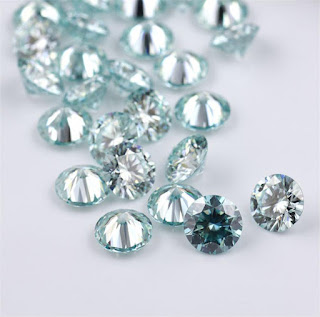
You also need a basic photography setup that can show fire and brilliance honestly. A smartphone camera works for casual shots, but a macro lens and a light box will show the stone's dispersion—the rainbow flashes moissanite is known for—without misleading edits. Finally, decide which product lines you will feature in your education content. If you sell loose stones alongside finished pieces, prioritize the shapes your buyers ask about most, such as round brilliant, Emerald Cut, and cushion cuts.
Step 1 — Build a Side-by-Side Comparison Framework
What to Do
Create a permanent comparison table that puts moissanite next to diamond and, optionally, cubic zirconia. Do not bury this in a blog post; make it a standalone page or a sticky section on your product pages. Include these columns:
- Hardness (Mohs scale)
- Refractive index
- Dispersion (fire)
- Price per carat (typical retail range)
- Brilliance (how light returns to the eye)
- Durability for daily wear
- Resale value considerations
Populate the table with industry-standard figures. Moissanite measures 9.25 on the Mohs scale, diamond measures 10, and cubic zirconia sits near 8. Moissanite's refractive index is 2.65 versus diamond's 2.42, which is why moissanite can appear more brilliant in certain lighting. Dispersion for moissanite is 0.104 compared to diamond's 0.044, meaning it throws more spectral fire.
Why This Matters
When you show numbers side by side, you stop arguing opinions and start presenting data. A shopper who reads that moissanite is slightly softer than diamond but significantly harder than every other gemstone used in engagement rings can make an informed choice. This approach also protects you legally because you are not making false equivalence claims—you are stating measurable physical properties.
Common Mistakes to Avoid
- Claiming moissanite is "identical" to diamond: It is not. The refractive index and dispersion differ measurably. Honest comparison builds credibility.
- Ignoring the weight difference: Moissanite is roughly 10-15% lighter than diamond. A 6.5 mm round moissanite weighs about 1.0 carat, while a 6.5 mm diamond weighs closer to 1.15 carats. State this clearly so buyers understand carat weight is not a direct size comparison.
- Using "flawless" loosely: Moissanite can have inclusions too. If your supplier grades clarity, use their scale rather than claiming every stone is flawless.
Step 2 — Teach the "Is It Real?" Test Honestly
What to Do
Write a clear explanation of how moissanite behaves under common diamond tests. Explain that many standard thermal diamond testers will read moissanite as diamond because both stones conduct heat similarly. This is a frequent source of customer panic when they test their moissanite jewelry at home or at a local jeweler.
Then explain the correct testing method: a diamond tester that also measures electrical conductivity. Moissanite is electrically conductive; diamond is not. A combination tester will distinguish the two. If you sell to wholesale buyers, recommend they invest in a dual-purpose tester that costs roughly $50-$150 rather than relying on a $20 thermal pen.
Why This Matters
This single piece of education prevents returns and chargebacks. When a customer takes their moissanite ring to a mall jeweler who uses a thermal tester, the jeweler may wrongly declare it "real diamond." That creates confusion. Worse, if the tester reads it as diamond and the customer later discovers it is moissanite, they may feel deceived—even though you disclosed the stone type clearly. Preempt this by publishing the testing protocol on your site.
Common Mistakes to Avoid
- Avoiding the topic entirely: If you do not explain the thermal tester issue, your customers will discover it themselves and assume you hid something.
- Claiming moissanite "passes" all diamond tests: That is false. It fails electrical conductivity tests designed to separate it from diamond.
- Not training your customer service team: Every rep should be able to explain the difference between thermal and electrical conductivity testing in under 30 seconds.
Step 3 — Use Real Product Categories to Show Range
What to Do
Organize your education content around the actual product categories you sell. If you offer loose moissanite in shapes from round to pear to baguette, show each shape with its typical millimeter-to-carat conversion. If you sell finished jewelry such as solitaire rings, halo settings, and three-stone designs, explain how setting style affects the stone's appearance.
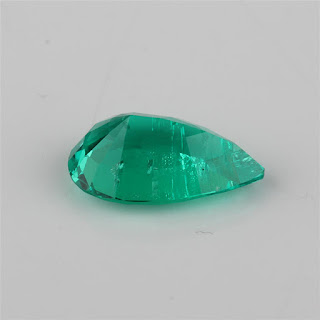
Direct buyers to your full range so they can see that moissanite is not a single product but a category with options. For example, a manufacturer that produces lab-grown diamonds, moissanite, and hydrothermal emeralds can offer a buyer a matched set of stones across different gem types. Your education content should acknowledge that moissanite is one option among several lab-grown choices, and that the right pick depends on budget, hardness requirements, and color preference. Link to your Product Categories page so buyers can explore the full catalog while they learn.
Why This Matters
When you educate within the context of your catalog, you guide buyers toward a purchase without a hard sell. A shopper researching moissanite might also want to compare it against lab-grown diamonds. If your content only discusses moissanite, you miss the chance to serve that comparison need and keep the buyer on your site.
Common Mistakes to Avoid
- Treating all moissanite as identical: Cut quality, color grade, and polish vary between manufacturers. Explain what to look for.
- Ignoring colored moissanite: Some suppliers offer fancy colors. If you stock them, include them in your education content.
- Not mentioning sourcing: Buyers increasingly ask where stones are grown. If your manufacturer operates in China with B2B and OEM services, state the origin and any quality control processes you can verify.
Step 4 — Create a Carat Weight and Millimeter Size Chart
What to Do
Publish a table that converts carat weight to millimeter diameter for round brilliant moissanite. Use realistic industry ranges, not exact figures, because cut proportions vary.
| Carat Weight (Moissanite) | Approx. Diameter (Round) | Equivalent Diamond Carat Weight at Same Diameter |
|---|---|---|
| 0.5 ct | 5.0-5.5 mm | ~0.55-0.60 ct |
| 1.0 ct | 6.3-6.6 mm | ~1.10-1.15 ct |
| 1.5 ct | 7.2-7.5 mm | ~1.60-1.70 ct |
| 2.0 ct | 7.8-8.2 mm | ~2.20-2.30 ct |
| 3.0 ct | 9.0-9.3 mm | ~3.30-3.50 ct |
Explain that because moissanite is lighter than diamond, a 1.0 carat moissanite will look slightly larger than a 1.0 carat diamond of the same proportions. This is an advantage for buyers who prioritize visual size over carat weight. However, it also means that if a buyer expects a 1.0 carat moissanite to weigh exactly the same as a 1.0 carat diamond, they will be disappointed.
Why This Matters
Carat weight confusion is one of the top reasons for returns in the moissanite market. Buyers compare millimeter measurements across different sellers and assume all 1.0 carat stones are the same size. By publishing a clear chart, you set accurate expectations and reduce post-purchase disputes.
Common Mistakes to Avoid
- Publishing only carat weight without millimeter size: Size is what buyers actually see on the finger.
- Using diamond carat weights for moissanite pricing: Price per carat differs because the stones are not equivalent in weight or cost.
- Ignoring shape differences: An emerald cut or baguette will face up larger than a round at the same carat weight because of its shallower depth. Mention this in your chart notes.
Step 5 — Showcase Color and Clarity Grading
What to Do
Explain how moissanite color is graded differently from diamond. Most moissanite on the market is near-colorless, often compared to diamond grades D-F, but some stones show a faint yellow or gray tint in certain lighting. If your supplier offers graded stones, publish their grading scale.
Clarity in moissanite is typically excellent because the stones are lab-grown under controlled conditions. Most are eye-clean, meaning no inclusions are visible without magnification. However, you should still teach buyers what to look for under 10x magnification so they can verify quality on delivery.
Why This Matters
When buyers understand that moissanite is graded on its own scale—not the GIA diamond scale—they stop expecting a GIA certificate. Instead, they learn to evaluate what matters: color appearance in natural light, cut precision, and polish quality. This is especially relevant if you also sell Color Diamond products, because the grading language for fancy colored diamonds differs again from both white diamonds and moissanite.
Common Mistakes to Avoid
- Claiming moissanite is "D color" as a blanket statement: Some stones are near-colorless, but not all. If your supplier grades color, use their specific grades.
- Skipping the magnification test: Encourage buyers to inspect stones under 10x loupe. This builds trust and reduces disputes.
- Confusing moissanite with lab-grown diamond: They are different materials with different growth processes. Your education content must keep them separate.
Step 6 — Publish an FAQ That Answers Real Buyer Questions
What to Do
Create an FAQ section that addresses the questions your customer service team actually receives. Do not invent questions; pull them from your email inbox, live chat logs, and return reasons. Common moissanite questions include:
- Will moissanite pass a diamond tester?
- Does moissanite lose its sparkle over time?
- Can I wear moissanite every day?
- How do I clean moissanite jewelry?
- Is moissanite a "fake diamond"?
- What is the difference between moissanite and cubic zirconia?
Answer each in 40-60 words with specific facts. For the cleaning question, recommend warm water, mild dish soap, and a soft brush—not ultrasonic cleaners with harsh chemicals. For the daily wear question, cite moissanite's 9.25 Mohs hardness and its resistance to chipping compared to softer gems.
Why This Matters
An FAQ page serves double duty. It answers the questions that block a sale, and it provides search engines with clear, structured content that matches long-tail queries. When a shopper types "does moissanite pass a diamond tester" into Google, your FAQ can appear as a featured snippet if you format the answer as a direct, concise paragraph.
Common Mistakes to Avoid
- Writing answers that dodge the question: If a buyer asks if moissanite is fake, do not say "it is a premium alternative." Say clearly: moissanite is a real gemstone, lab-created, with its own chemical composition (silicon carbide). It is not diamond, and it is not fake.
- Ignoring negative questions: Questions about resale value or durability will come up. Address them honestly.
- Not updating the FAQ: As new products arrive or testing methods change, revise your answers.
Pro Tips for Success
- Film a 60-second sparkle test video: Show moissanite and diamond side by side under the same LED light. Let viewers see the fire difference for themselves. Video converts better than static photos for gemstone education.
- Offer a downloadable comparison PDF: Wholesale buyers and jewelry store staff want a one-page cheat sheet they can print. Create a branded PDF with your comparison table and testing protocol.
- Train your team to use the word "lab-grown" consistently: Do not let staff say "synthetic" or "fake" interchangeably. Moissanite is lab-grown silicon carbide; cubic zirconia is synthetic diamond simulant. Precision in language builds authority.
- Ask your manufacturer for batch-level quality data: If your supplier tests each batch for hardness, refractive index, or color consistency, ask for that data and publish a summary. This is rare in the industry and will differentiate you.
- Monitor your return reasons quarterly: If a new confusion pattern emerges—say, buyers complaining about yellow tint under candlelight—write a new education piece addressing it within two weeks.
Frequently Asked Questions
Will moissanite pass a diamond tester?
Standard thermal diamond testers often read moissanite as diamond because both stones conduct heat at similar rates. To distinguish them, you need a tester that also measures electrical conductivity. Moissanite conducts electricity; diamond does not. Dual-purpose testers are available for roughly $50-$150 and are the reliable way to verify a stone.
Does moissanite lose its sparkle over time?
No. Moissanite does not dull or lose its fire with normal wear. Its hardness of 9.25 on the Mohs scale means it resists scratching from everyday contact. The stone's brilliance comes from its internal refractive properties, not a surface coating, so it will not wear off. Clean it regularly with warm soapy water to maintain its appearance.
Is moissanite a "fake diamond"?
No. Moissanite is a real gemstone with its own chemical composition—silicon carbide. It is lab-grown, not mined, and it is not a diamond simulant like cubic zirconia. Moissanite has a different refractive index (2.65 versus diamond's 2.42) and higher dispersion, which is why it shows more fire. It is a distinct gemstone, not an imitation.
Conclusion
Customer education tips for selling moissanite jewelry online come down to one principle: replace mystery with measurement. When you publish hardness scales, refractive index comparisons, millimeter-to-carat charts, and honest testing protocols, you stop competing on price alone and start competing on trust. Buyers who understand what moissanite is—and what it is not—make faster decisions, return fewer purchases, and become repeat customers who refer their friends.
Start with the comparison table and the diamond tester explanation; those two pieces answer the most common objections. Then expand into carat size charts and grading guides as your content calendar allows. If you source from a manufacturer that offers B2B and OEM services, request their technical documentation and build your education content on that verified data rather than generic marketing claims. The sellers who win in the moissanite market are not the ones with the lowest prices—they are the ones who teach their customers to buy with confidence.

评论
发表评论