Cubic Zirconia vs Moissanite vs Lab Diamond: What Buyers Should Know
Cubic Zirconia vs Moissanite vs Lab Diamond: What Buyers Should Know
For buyers comparing diamond alternatives, the choice comes down to three engineered stones: cubic zirconia offers the lowest cost, moissanite delivers extreme brilliance for a mid-range price, and lab-grown diamonds match natural diamonds in every measurable property at a fraction of the price. Based on 15 years sourcing from a Chinese manufacturer that spans lab diamonds, moissanite, and synthetic gemstones, here is a data-backed breakdown for B2B buyers.
Key Takeaways
- Cubic zirconia costs under $20 per carat but scratches easily (Mohs 8.5) and loses transparency over time.
- Moissanite (Mohs 9.25) has a refractive index of 2.65–2.69, producing more fire than a diamond, at $300–$600 per carat.
- Lab-grown diamonds (Mohs 10, refractive index 2.417) are chemically identical to mined diamonds, priced 70–90% lower for comparable quality.
- For wholesale buyers, lab diamonds and moissanite offer better durability and consumer acceptance than cubic zirconia for fine jewelry.
- Starsgem supplies all three stones with delivery in 2–4 days via DHL or FedEx, supporting B2B and OEM orders.
How to Evaluate Diamond Alternatives
Different alternatives solve different buyer needs. Three factors separate them:
- Hardness and durability: Determines scratch resistance and longevity for daily wear. Measured on the Mohs scale.
- Optical properties: Refractive index and dispersion (fire) control brightness and color flashes.
- Price per carat and supply stability: Critical for wholesale pricing and inventory planning.
Cubic Zirconia: The Budget Entry
Cubic zirconia (CZ) is a synthetic crystalline form of zirconium dioxide. It entered wide commercial use in the 1970s as an affordable diamond simulant.
Main strength: Lowest cost. Bulk wholesale prices for CZ range from $0.10 to $1.00 per carat, depending on cut and color grade. Not ideal for: Everyday wear in rings. CZ scores 8–8.5 on the Mohs scale, meaning it dulls and scratches after 1–2 years of regular use. Its refractive index of 2.15–2.18 gives less brilliance than moissanite, and its dispersion (0.058–0.066) creates visible color flashes that can appear artificial. Key difference from lab diamonds and moissanite: CZ weighs about 1.7 times more than a diamond of the same size, which buyers detect immediately when comparing stones in hand. It also accumulates oil and skin residue faster, requiring frequent polishing.Starsgem offers crushed ice cubic zirconia as part of its Synthetic Stone range, covering standard and specialty cuts.
Moissanite: High Brilliance at Mid-Range Price
Silicon carbide moissanite was first observed in meteorites in 1893, but commercial lab-grown versions only became widely available after the 1990s.
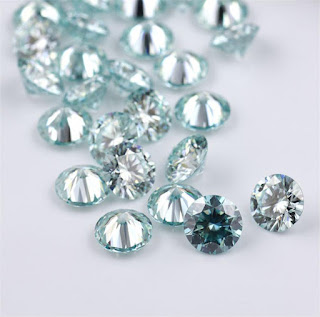
Main strength: Exceptional fire. Moissanite has a dispersion of 0.104, more than double that of diamond (0.044). Under direct light, moissanite shows strong rainbow flashes that some buyers love and others find artificial. Best for: Fashion rings, earrings, and pieces where maximum sparkle is valued. Moissanite is the second-hardest gemstone option available, with a Mohs rating of 9.25 — suitable for daily wear in most settings. Not ideal for: Buyers who want exact diamond optical behavior. Moissanite can appear slightly “oily” or yellowish in certain lighting conditions, especially in larger stones above 1 carat equivalent. Its refractive index of 2.65–2.69 also makes moissanite face-up brighter than a diamond of identical cut. Price range: Moissanite costs approximately $300–$600 per carat equivalent for premium colorless (D–F) material. Lower color grades drop to $150–$300.Starsgem supplies moissanite in 14 standard shapes — round, oval, pear, cushion, princess, emerald cut, asscher, heart, marquise, radiant, trapezoid, and baguette — plus special cuts. For colored gemstone complements, Other Color Lab Gemstones can be paired with moissanite in multi-stone designs.
Lab-Grown Diamonds: The Natural Diamond Equivalent
Lab-grown diamonds (also called CVD and HPHT diamonds) have the same chemical composition, crystal structure, hardness, and optical properties as mined diamonds. The FTC classifies them as diamonds.
Main strength: Identical behavior to natural diamond. Lab diamond has a Mohs hardness of 10, refractive index of 2.417, and dispersion of 0.044. No gemological test can distinguish it from mined material without specialized equipment that detects trace element patterns. Best for: Engagement rings, fine jewelry, and buyers requiring long-term durability or certification (GIA, IGI reports available for most lab grown diamonds). Not ideal for: Budget buyers who cannot afford lab diamond pricing at $300–$1,500 per carat for melee (0.003–0.15ct) and $800–$3,000 per carat for larger stones above 1 carat. Supply range: Starsgem offers lab-grown diamonds from 0.003ct melee up to 2ct+ rounds, covering oval, pear, cushion, princess, emerald cut, asscher, heart, marquise, baguette, trapezoid, and radiant cuts. Color diamonds — including fancy yellow, pink, and blue — are also available in the radiant category.For jewelry requiring colored accent stones, Starsgem produces Synthetic Sapphire & Ruby that pair consistently with lab-grown diamond center stones.
Side-by-Side Comparison
| Factor | Cubic Zirconia | Moissanite | Lab-Grown Diamond |
|---|---|---|---|
| Mohs hardness | 8.5 | 9.25 | 10 |
| Refractive index | 2.15–2.18 | 2.65–2.69 | 2.417 |
| Dispersion (fire) | 0.058–0.066 | 0.104 | 0.044 |
| Density (g/cm³) | 5.65–5.95 | 3.21 | 3.52 |
| Price per carat (wholesale) | $0.10–$1.00 | $150–$600 | $300–$3,000 |
| Scratch resistance | Moderate, dulls over time | High | Excellent |
| Consumer acceptance | Low for fine jewelry | Growing rapidly | Very high — sells as identical to natural |
| Best use | Costume jewelry, bulk ornaments | Fashion rings, designer pieces | Fine jewelry, bridal, certified stones |
When You Need More Than a Single Stone
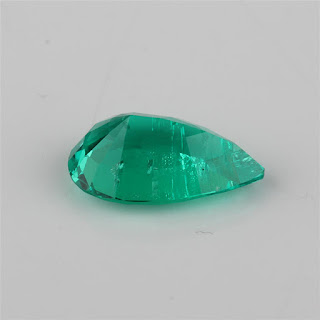
For B2B jewelry buyers, the most efficient purchasing strategy is to source multiple stone types from one supplier. Starsgem consolidates lab diamonds, moissanite, cubic zirconia, and synthetic gemstones — including emerald, sapphire, ruby, spinel, alexandrite, and other lab-grown gems — under a single factory line.
This approach simplifies QC (consistent color calibration across stone types), reduces logistics lead time (2–4 day delivery via DHL or FedEx), and allows mixed-material designs such as a lab-diamond center with moissanite side stones or synthetic ruby accents.
The company also supplies raw corundum and spinel materials for manufacturers processing their own cuts, plus nano glass and cat’s-eye cubic zirconia for specialty applications.
Frequently Asked Questions
How can I tell cubic zirconia, moissanite, and lab diamond apart without equipment?
Cubic zirconia sinks quickly in high-density liquids (specific gravity 5.65–5.95) — a simple heavy liquid test separates it from diamond (3.52). Moissanite is detectable with a standard diamond tester that measures thermal conductivity; CZ stops the reading, moissanite shows the same conductivity as diamond but a proper moissanite tester can separate the two by electrical conductivity. Lab diamonds pass every standard diamond tester.
Which stone is the most durable for an engagement ring?
Lab-grown diamond (Mohs 10) is the most scratch-resistant and heat-tolerant option. Moissanite (9.25) is second — suitable for daily wear but slightly less resistant to chipping along facet junctions. Cubic zirconia (8.5) wears down over 1–2 years of frequent use.
Do lab-grown diamonds hold resale value?
Lab-grown diamonds currently retain less resale value than natural diamonds (roughly 20–40% of original purchase price vs 50–60% for natural). Moissanite and cubic zirconia have near-zero resale value. For wholesale buyers, focus on manufacturing cost and consumer demand rather than secondhand value.
Are moissanite, cubic zirconia, and lab diamonds all produced with the same equipment?
No. Cubic zirconia is produced via skull crucible melting at 2,700°C. Moissanite uses a sublimation process in a silicon-rich atmosphere at 2,200°C with single-crystal seed growth. Lab diamonds grow by CVD (chemical vapor deposition) at 800–1,200°C under low pressure or HPHT (high pressure high temperature) at 1,400°C and 60,000 atmospheres.
What certification is available for lab diamonds?
Most lab diamonds over 0.3 carat can be certified by GIA, IGI, or GSI (Gemological Science International). Moissanite and cubic zirconia do not have standard gemological grades, but large moissanite orders can include size and color grade documentation from the manufacturer.

评论
发表评论