When Jewelry Brands Should Choose S925 Silver for Premium Collections
When Jewelry Brands Should Choose S925 Silver for Premium Collections
Sterling silver gets dismissed as a "starter metal" in fine jewelry circles. That is a mistake. S925 silver—92.5% pure silver alloyed with 7.5% copper—offers a combination of price point, workability, and aesthetic flexibility that makes it a strategic choice for premium collections, especially when paired with lab-grown diamonds and moissanite. The question is not whether silver is "good enough." The question is when it is the right call for your brand.
This guide walks through the specific scenarios where S925 makes sense for premium lines, how to execute it properly, and where it falls short. You will get concrete data on material properties, cost structures, and design constraints—not vague marketing talk.
Key Takeaways
- S925 silver suits collections priced under $300 retail, where gold would push margins below 40%.
- Lab-grown diamonds and moissanite in the 0.003ct–2ct range pair well with silver's bright white tone.
- Rhodium plating extends silver's tarnish resistance to 12–24 months with proper care.
- Silver's 10.49 g/cm³ density creates lighter pieces—an advantage for earrings and large pendants.
- Brands targeting first-time fine jewelry buyers or bridal-adjacent lines benefit most from S925.
What You Need Before Starting
Before you commit to an S925 premium collection, audit three things: your target retail price, your customer's care habits, and your supplier's plating capabilities.
Price architecture. Silver's raw material cost runs roughly 1/80th of 14k gold by weight. For a 3-gram ring, the metal cost difference is about $2 versus $160. That changes everything about your margin structure. If your retail target sits between $80 and $300, S925 is often the only way to hit healthy margins while using genuine gemstones. Plating infrastructure. Bare S925 tarnishes. Rhodium plating—the same finish used on white gold—solves this. Confirm your manufacturer offers rhodium plating at 0.5–1.0 micron thickness. Anything thinner wears off in months. Gemstone sourcing. Silver's white tone means your stones must be near-colorless. Lab-grown diamonds in the D–F range and premium moissanite work best. Your supplier should offer stones from 0.003ct melee up to 2ct center stones. A manufacturer like Diamond Jewelry supplier can provide both the stones and the silver settings in one production run, which simplifies quality control.Step 1 — Match S925 to Your Collection's Price Positioning
What to Do
Map your collection tiers before choosing metals. A typical structure looks like this:
| Collection Tier | Retail Price | Recommended Metal | Typical Stone Size |
|---|---|---|---|
| Entry fine | $80–$150 | S925 + rhodium | 0.003–0.15ct melee |
| Mid premium | $150–$300 | S925 + rhodium | 0.15–0.5ct center |
| High premium | $300–$600 | 14k gold or platinum | 0.5–2ct center |
| Bridal | $600+ | 14k–18k gold | 1ct+ center |
If your collection targets the first two rows, S925 is not a compromise—it is the correct engineering choice.
Why This Matters
Gold at current market rates makes a $150 retail ring nearly impossible without shrinking the stone to invisible proportions. Silver solves this. A 0.3ct lab-grown diamond in an S925 solitaire can retail at $180–$220 with a 50%+ gross margin. The same ring in 14k gold retails at $400+ before you see meaningful profit. For brands building accessible premium lines, S925 is the only metal that works.
Common Mistakes to Avoid
- Using S925 for high-ticket bridal: If your ring retails above $600, customers expect precious metal weight. Silver reads as "cheap" at that price point, regardless of stone quality.
- Skipping rhodium plating: Bare silver tarnishes within weeks on some skin chemistries. Rhodium plating is non-negotiable for premium positioning.
- Mismatching stone size: A 2ct stone in a silver setting looks top-heavy and risks setting failure. Keep center stones under 1ct for structural integrity.
Step 2 — Select Stones That Complement Silver's Brightness
What to Do
Choose stones with high brilliance and near-colorless grading. Silver has a bright white reflectance, so warm-tinted stones look dirty by comparison.
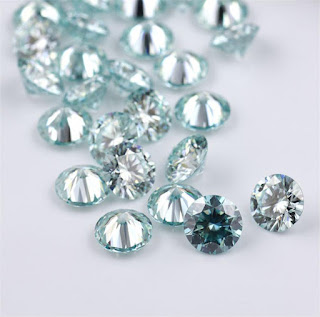
- Lab-grown diamonds: Target D–F color, VS clarity or better. Melee from 0.003ct to 0.15ct works beautifully for pavé and halo settings.
- Moissanite: Its 2.65–2.69 refractive index creates more fire than diamond. In silver, this fire is amplified—a selling point for fashion-forward lines.
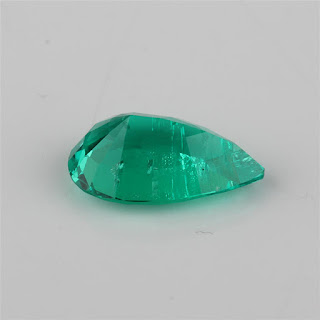
- Colored stones: Hydrothermal emeralds and lab-grown sapphires in silver create a vintage aesthetic that performs well in bohemian and art-deco collections.
Why This Matters
The metal and the stone must read as one visual unit. Silver's cool tone pairs with cool-white stones. Warm stones like champagne diamonds or low-grade emeralds clash. This is a design principle, not a preference. When you source stones and settings together—as with a Jewelry Set supplier—you control the visual harmony from the start.
Common Mistakes to Avoid
- Using I-color or warmer diamonds: In silver, the yellow tint becomes obvious. Stick to D–F.
- Oversized stones in delicate settings: A 1.5ct stone in a 1.5mm silver band will fail. Silver is softer than gold; it needs thicker walls or reinforced settings.
- Ignoring stone height: Silver's lower density means lighter pieces. A heavy stone in a light setting feels unbalanced on the finger.
Step 3 — Engineer Settings for Silver's Material Properties
What to Do
Silver's hardness is about 2.5–3 on the Mohs scale—softer than 14k gold (2.75–3.5) and much softer than platinum (4–4.5). Design accordingly:
- Increase band thickness: Use 1.8mm–2.2mm minimum band thickness for rings. Silver needs more metal to achieve the same structural rigidity as gold.
- Use prong settings for center stones: Prongs distribute stress better than bezel settings in softer metals. For stones above 0.5ct, four-prong or six-prong settings are mandatory.
- Reinforce pavé channels: Channel-set stones in silver require thicker walls between stones. A 0.8mm wall is the minimum; 1.0mm is safer.
- Specify rhodium plating after assembly: Plating after stone setting ensures even coverage. Pre-plated components show bare metal at contact points.
Why This Matters
Silver's softness is not a defect—it is a design constraint. Jewelers have worked with silver for thousands of years. The failures happen when brands treat silver like gold and use identical settings. A well-engineered silver ring with proper wall thickness and prong design will last decades with normal care. The ASTM B413-17 standard for sterling silver specifies the 92.5% silver composition, but it does not dictate design. That is your job.
Common Mistakes to Avoid
- Thin bands below 1.5mm: These bend out of shape within months. Silver needs bulk.
- Bezel settings for large stones: Bezel settings require thin metal walls that flex in silver. Use prongs for stones above 0.3ct.
- Skipping rhodium on high-wear pieces: Rings and bracelets see more abrasion than earrings. Always plate high-wear items.
Step 4 — Position S925 for the Right Customer Segments
What to Do
Target buyers who value stone quality over metal weight. Three segments respond strongly to S925 premium collections:
- First-time fine jewelry buyers (ages 18–30): They want genuine gemstones at accessible prices. A 0.1ct lab-grown diamond stud in S925 retails at $60–$90—an entry point that builds brand loyalty.
- Fashion-forward consumers: Moissanite in silver offers the "diamond look" at a fraction of the cost. These buyers prioritize sparkle over metal purity.
- Gift buyers: Silver pieces under $150 make ideal gifts for graduations, birthdays, and anniversaries. The perceived value is high; the price is approachable.
Why This Matters
The premium jewelry market is not monolithic. A 22-year-old buying her first diamond pendant has different priorities than a 40-year-old buying a platinum anniversary band. S925 lets you serve the first group without cannibalizing your gold line. You can build a complete S925 Jewelry collection that stands on its own—not as a "budget option" but as a deliberate product line.
Common Mistakes to Avoid
- Marketing S925 as "gold alternative": Position it as its own category. Customers who want gold will not be persuaded; customers who want silver will be confused.
- Ignoring care instructions: Silver needs care. Include a care card with every piece. Explain rhodium plating and re-plating timelines.
- Using silver for heirloom positioning: Silver does not hold heirloom status in most markets. Keep the messaging about everyday luxury, not legacy.
Step 5 — Manage Tarnish and Plating Lifecycles
What to Do
Plan for the reality that rhodium plating wears off. A typical lifecycle looks like this:
| Wear Pattern | Plating Lifespan | Re-plating Cost |
|---|---|---|
| Daily wear, rings | 6–12 months | $15–$30 |
| Occasional wear | 12–24 months | $15–$30 |
| Earrings (low friction) | 18–24 months | $10–$20 |
| Necklaces (low friction) | 18–24 months | $10–$20 |
Build this into your customer communication. Offer re-plating services or partner with local jewelers who do.
Why This Matters
Tarnish is the number one complaint about silver jewelry. It is also entirely manageable. Rhodium plating at 0.5–1.0 micron provides a hard, tarnish-resistant surface that mimics white gold. When the plating wears, the underlying silver tarnishes—but this takes months, not days. Brands that educate customers on re-plating build trust. Brands that stay silent generate returns and negative reviews.
Common Mistakes to Avoid
- Plating too thin: Anything under 0.3 microns wears off in weeks. Specify 0.5–1.0 microns.
- Ignoring skin chemistry: Some customers' sweat accelerates tarnishing. Offer hypoallergenic options with thicker plating.
- No re-plating program: If you sell silver, you need a re-plating path. This is a service revenue opportunity, not a cost.
Pro Tips for Success
- Order melee stones in bulk: Lab-grown diamond melee from 0.003ct to 0.15ct costs significantly less per carat when ordered in volume. A 0.01ct stone costs roughly $1–$3 depending on grade.
- Use silver for trend pieces: Fashion trends shift in 6–18 month cycles. Silver lets you test designs without the capital lockup of gold inventory.
- Combine S925 with vermeil for accent pieces: 18k gold vermeil over silver gives you gold aesthetics at a fraction of the cost. Use it for clasps, hooks, and decorative accents.
- Request rhodium plating on both sides: Many manufacturers only plate the visible surface. Double-sided plating doubles the lifespan.
- Ask for ASTM B413-17 certified silver: This standard guarantees the 92.5% silver composition. Some suppliers cut corners with 90% silver alloys that tarnish faster.
Frequently Asked Questions
Does S925 silver tarnish?
Yes, but rhodium plating prevents it for 12–24 months with normal wear. Bare S925 tarnishes within weeks to months depending on skin chemistry and humidity. The 7.5% copper in the alloy is what causes oxidation. Rhodium plating creates a barrier that stops oxygen from reaching the silver.
Can S925 hold lab-grown diamonds securely?
Yes, with proper design. Use prong settings for stones above 0.3ct, maintain band thickness above 1.8mm, and reinforce pavé channels. Silver is softer than gold, so settings need more metal. A well-designed silver ring with a 0.5ct lab-grown diamond is structurally sound for daily wear.
Is S925 suitable for engagement rings?
It depends on the price point and customer expectations. For rings under $300, S925 with a lab-grown diamond or moissanite is a viable option. For rings above $600, customers expect precious metal. If you position S925 as a "starter engagement ring" or "promise ring," it works. Position it as a lifetime commitment piece, and you risk disappointment.
How does rhodium plating affect the look of silver?
Rhodium plating gives silver the same bright white finish as white gold. It increases reflectivity and eliminates the warm undertone of bare silver. The visual difference is subtle but noticeable side-by-side. Rhodium-plated silver is indistinguishable from white gold to most buyers.
What is the cost difference between S925 and 14k gold for the same ring?
For a 3-gram ring, the metal cost is roughly $2–$4 for S925 versus $150–$180 for 14k gold at current market rates. This 40–50x difference is why S925 allows retail prices of $100–$300 while maintaining healthy margins.
Conclusion
When jewelry brands should choose S925 silver for premium collections comes down to three factors: price positioning, stone selection, and design engineering. If your retail target is $80–$300, S925 is the only metal that delivers genuine gemstones at that price with healthy margins. If you pair it with D–F color lab-grown diamonds or premium moissanite, rhodium plating at 0.5–1.0 microns, and settings engineered for silver's softer profile, you get a product that performs—not a compromise.
The brands that fail with silver treat it as "cheap gold." The brands that succeed treat it as a distinct material with its own rules. Silver is lighter, brighter, and more affordable. It lets customers access genuine lab-grown diamonds and moissanite at prices that make sense for everyday wear. That is not a downgrade. That is a market opportunity.
Start by auditing your price architecture, then source stones and settings together from a manufacturer that handles both. Build your collection around silver's strengths—lightness, brightness, and price—and you will capture a segment that gold cannot reach.

评论
发表评论