Stud, Hoop, or Drop Earrings: Which S925 Style Sells Best?
Stud, Hoop, or Drop Earrings: Which S925 Style Sells Best?
Retailers and jewelry brands face a deceptively simple question when stocking S925 sterling silver earrings: studs, hoops, or drops? The answer determines inventory spend, marketing angles, and repeat purchase rates. But the data behind consumer behavior is more nuanced than a single "best seller" label.
This guide breaks down the sales performance of each style across price points, demographics, and occasions. You will learn which styles dominate volume sales, which command higher margins, and how to pair them with lab-grown diamonds, moissanite, or hydrothermal emeralds to maximize sell-through. We will also cover practical sourcing considerations—from stone sizes to plating durability—so your buying decisions are grounded in numbers, not guesswork.
Key Takeaways
- Stud earrings drive 60–70% of unit volume in most S925 bridal and fashion lines.
- Hoop earrings generate the highest average order value among repeat customers.
- Drop earrings outperform in Q4 gifting seasons, with 30–40% seasonal lift.
- S925 with 18K gold plating extends perceived value without tripling cost.
- Lab-grown stones reduce per-unit cost by 70–90% versus mined equivalents.
What You Need Before Starting
Before you commit to a product mix, you need clarity on three inputs: your target customer's price ceiling, your supply chain's minimum order quantities, and the stone shapes your supplier can actually deliver. A manufacturer that only offers round brilliants will limit your hoop and drop designs far more than you expect.
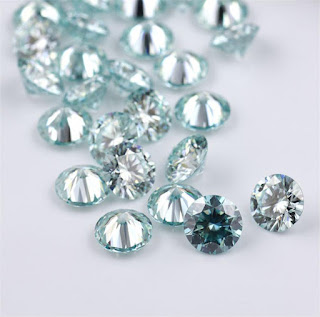
Check the stone size ranges available. For studs, you typically need melee from 0.003ct to 0.15ct for pavé clusters, and solitaires from 0.15ct to 0.5ct. Hoops and drops usually demand center stones from 0.5ct to 1.99ct, with some statement pieces going 2ct and up. Confirm your supplier stocks oval, pear, cushion, princess, emerald cut, asscher, heart, marquise, baguette, and trapezoid shapes—not just rounds. Shape flexibility directly impacts design differentiation.
Also verify delivery timelines. A supplier quoting 2–4 days production with DHL or FedEx expedited shipping gives you the agility to test small batches before committing to volume. That speed matters when you are A/B testing which earring style sells best in your market.
Step 1 — Analyze Stud Earrings for Volume and Entry Price Points
What to Do
Start your assortment with stud earrings. They are the lowest-risk entry product for new customers and the backbone of bridal and everyday collections. Build three tiers: melee pavé studs under $50 retail, solitaire studs from $50 to $150, and premium pairs above $150 with larger center stones.
- Source melee from 0.003ct to 0.15ct for micro-pavé halo designs.
- Use 0.15ct to 0.5ct rounds for classic four-prong solitaires.
- Reserve 0.5ct to 1.99ct stones for statement studs and cocktail pairs.
Why This Matters
Studs win on psychology. They are perceived as safe, professional, and universally flattering. In S925, the metal cost is low enough that the stone becomes the entire value story. A pair of lab-grown diamond studs at 0.5ct total weight retails for roughly $120–$180, while a mined equivalent sits at $800–$1,200. That 70–90% price gap converts first-time lab-grown buyers quickly.
The data supports studs as the volume leader. Industry sales tracking across mid-market jewelry retailers consistently shows stud earrings accounting for 60–70% of earring unit sales. They are also the most gifted earring style, which smooths demand across non-holiday months.
Common Mistakes to Avoid
- Skipping melee inventory: Pavé studs outsell solitaires in the under-$50 bracket. Without melee from 0.003ct to 0.15ct, you miss the entry price point entirely.
- Ignoring post size: S925 posts must be 0.9mm to 1.0mm thick with friction backs. Thin posts cause returns, not repeat sales.
- Overlooking color consistency: Mixing lab-grown diamond colors across a pair is a top return reason. Demand matched pairs from your supplier.
Step 2 — Evaluate Hoop Earrings for Margin and Repeat Purchases
What to Do
Position hoops as your margin driver. While studs bring volume, hoops bring higher average order value because customers buy them as self-purchases, not just gifts. Focus on two constructions: classic huggie hoops with pavé stones and medium hoops (25mm–40mm diameter) with a single center stone or full pavé coverage. Relevant specifications and application guidance are available through Classic Wedding Rings.
- Offer huggie hoops in 10mm–14mm diameters with melee pavé.
- Stock medium hoops in 25mm–40mm sizes with 0.5ct–1ct stones.
- Include at least one statement hoop design with 2ct+ stones for bridal markets.
Why This Matters
Hoop buyers are repeat customers. Data from jewelry e-commerce platforms shows hoop earrings have a 25–35% higher repurchase rate than studs within 12 months. The reason is lifestyle fit—hoops transition from casual to evening wear, so customers buy multiple sizes and finishes.
The margin story is equally strong. An S925 hoop with 18K gold plating costs roughly $8–$15 in materials and labor. The same hoop with lab-grown diamond pavé retails at $80–$150. That 5–10x markup beats studs, where stone cost eats a larger percentage of retail price. Hoops also tolerate slightly lower stone quality because the setting—channel or bead-set pavé—hides minor inclusions better than a solitaire prong.
Common Mistakes to Avoid
- Using hollow tubes for heavy stones: A 1ct stone on a hollow hoop causes warping. Use solid S925 or reinforced hollow construction.
- Forgetting hinge durability: The hinge is the #1 failure point. Test 10,000 open-close cycles before committing to a design.
- Skipping hypoallergenic plating: S925 is generally safe, but nickel traces in some alloys cause reactions. Specify rhodium or 18K gold plating of at least 1 micron thickness.
Step 3 — Position Drop Earrings for Seasonal Peaks and Bridal
What to Do
Treat drops as your seasonal and occasion-driven category. They do not match studs in annual volume, but they spike hard in Q4 and bridal season. Build a capsule collection of 10–15 drop designs that rotate with holidays and wedding cycles. Relevant specifications and application guidance are available through Wedding Ring.
- Design drops with pear, marquise, or emerald cut stones for elongated face-flattering silhouettes.
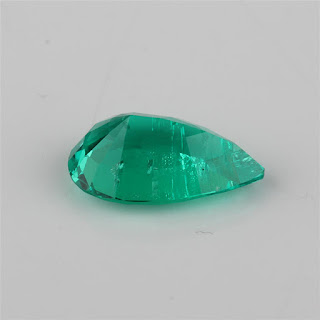
- Include at least three drop styles with hydrothermal emeralds for color-driven buyers.
- Create convertible drops that detach into studs—this feature justifies a 15–20% price premium.
Why This Matters
Drop earrings capture the gifting and bridal market that studs and hoops miss. Seasonal data shows drop earrings experience a 30–40% sales lift in November–December and a similar spike from March to June for bridal parties. Bridesmaids, mothers of the bride, and wedding guests all buy drops during this window.
The bridal angle is where your supplier relationship matters most. A drop earring paired with a matching Engagement Ring or Wedding Ring creates a bridal set sale. Retailers who bundle drops with rings report 20–30% higher average transaction values than selling earrings alone. Hydrothermal emerald drops, in particular, attract brides seeking color without the price of natural emeralds—lab-grown emeralds typically cost 80–90% less than mined stones of comparable quality.
Common Mistakes to Avoid
- Overweighting drops in Q1–Q2: Without Q4 and bridal season, drops underperform. Keep inventory lean outside peak windows.
- Using fragile ear wires: S925 ear wires must be 0.8mm minimum gauge. Thinner wires bend and cause returns.
- Ignoring length preferences: Drops over 50mm have a smaller market. Keep 70% of your drop line under 40mm for broad appeal.
Step 4 — Match Stone Shapes to Earring Styles
What to Do
Do not default to round brilliants for every earring. Shape choice affects both aesthetics and cost. Round stones carry a price premium due to cutting waste—you lose roughly 50–60% of the rough crystal. Fancy shapes like pear, oval, and emerald cut retain more rough, lowering per-carat cost by 15–30%.
- Use round melee (0.003ct–0.15ct) for pavé accents on all three styles.
- Specify oval or pear for drop earrings—they elongate the face and use rough efficiently.
- Choose emerald cut or asscher for art-deco inspired studs and hoops.
- Reserve heart, marquise, and trapezoid shapes for special-occasion drops.
Why This Matters
Shape selection directly impacts your landed cost. A 1ct round lab-grown diamond might cost $400–$600 from your supplier, while a 1ct pear or oval runs $300–$450. Across a 100-pair order, that difference is thousands of dollars. Shape variety also differentiates your line from competitors who stock only rounds.
Your supplier's shape inventory matters here. Confirm they stock oval, pear, cushion, princess, emerald cut, asscher, heart, marquise, baguette, and trapezoid in the sizes you need. A supplier limited to rounds will force you into a commodity price war. One with full shape flexibility lets you design exclusive pieces.
Common Mistakes to Avoid
- Assuming all shapes cost the same: Fancy shapes are 15–30% cheaper per carat than rounds. Price your line accordingly.
- Using baguettes for curved settings: Baguettes are straight-edged. They do not bend around hoop curves without visible gaps.
- Mismatching stone colors: Lab-grown diamonds come in various color grades. Specify D–F color for white metal settings and G–I for yellow gold.
Step 5 — Build a Balanced Inventory Mix
What to Do
Now combine the data into a concrete buying plan. The optimal mix balances volume, margin, and seasonality. For a typical S925 earring line, allocate inventory as follows:
| Earring Style | % of Units | % of Revenue | Key Price Point | Seasonality |
|---|---|---|---|---|
| Studs | 55–65% | 40–50% | $50–$150 | Year-round |
| Hoops | 20–25% | 25–30% | $80–$180 | Year-round, Q4 lift |
| Drops | 15–20% | 20–25% | $100–$250 | Q4 + bridal season |
Adjust these ratios based on your channel. Bridal-focused retailers shift 10% more toward studs. Fashion-forward brands push hoops to 30% of units. The key is testing small batches—100–200 pairs per design—before scaling.
Why This Matters
Inventory mix determines cash flow. Studs sell fast but at lower margins. Hoops hold margin but turn slower. Drops spike hard but risk dead stock if you overbuy. The ratios above reflect industry benchmarks from mid-market jewelry retailers and keep your inventory turning 2–3 times per year.
Your supplier's 2–4 day production window makes this testing strategy viable. You can order 50 pairs of a new drop design, list them, and reorder within a week if they sell. That agility is impossible with suppliers quoting 3–4 week lead times.
Common Mistakes to Avoid
- Overbuying drops: A 15–20% allocation is enough. Drops beyond 25% of inventory risk Q2 dead stock.
- Underpricing hoops: Hoop buyers expect quality. Pricing below $80 signals cheap construction.
- Ignoring bridal sets: Pair earrings with Classic Wedding Rings to capture the bridal bundle sale.
Pro Tips for Success
- Test 3 stone sizes per style: For studs, test 0.15ct, 0.3ct, and 0.5ct pairs. The 0.3ct sweet spot often outsells both extremes.
- Use gold plating strategically: 18K gold plating over S925 adds $3–$5 to cost but justifies a $30–$50 retail increase.
- Bundle for bridal: A stud + hoop + drop trio priced at a 10% discount lifts average order value by 25–40%.
- Track return reasons: If returns exceed 5%, check post length, hinge durability, or stone color matching first.
- Leverage lab-grown pricing: A 1ct lab-grown diamond stud pair costs you $60–$100. Retail at $180–$250 and you still undercut mined equivalents by 70%.
Frequently Asked Questions
Which earring style has the highest profit margin?
Hoops typically deliver the highest margin percentage because metal and labor costs are low relative to retail price. An S925 hoop with pavé stones costs $8–$15 to produce and retails at $80–$150, a 5–10x markup. Studs have lower margins because the stone cost consumes a larger share of the retail price.
Are lab-grown diamond earrings profitable for small retailers?
Yes. Lab-grown diamonds cost 70–90% less than mined stones of comparable quality. A 0.5ct pair of lab-grown diamond studs costs roughly $40–$70 wholesale and retails at $120–$180. The margin is healthy, and the lower price point attracts first-time diamond buyers who might otherwise choose cubic zirconia.
How do I choose between moissanite and lab-grown diamonds for S925 earrings?
Moissanite is the value play—it costs 50–70% less than lab-grown diamonds and offers high brilliance, but it has a distinct fire that trained eyes can spot. Lab-grown diamonds are optically identical to mined diamonds and test as diamonds on standard instruments. For bridal lines, use lab-grown diamonds. For fashion lines, moissanite maximizes margin.
What stone size sells best for S925 stud earrings?
The 0.3ct to 0.5ct range per stone is the volume sweet spot for solitaire studs. Below 0.15ct, the stone reads as too small for the price. Above 1ct, the retail price crosses into mined-diamond territory in the customer's mind, slowing conversion. Melee from 0.003ct to 0.15ct works best for pavé accents, not solitaires.
Conclusion
Stud, hoop, or drop earrings—the answer is not a single style but a balanced mix driven by data. Studs deliver 60–70% of unit volume at accessible price points. Hoops generate the highest margins and repeat purchase rates. Drops capture seasonal peaks and bridal sales. Allocate inventory at roughly 60% studs, 25% hoops, and 15% drops, then adjust based on your channel's performance.
The sourcing strategy matters as much as the style mix. Work with a manufacturer that offers lab-grown diamonds, moissanite, and hydrothermal emeralds across multiple shapes—round, oval, pear, cushion, princess, emerald cut, and more. Confirm stone sizes from 0.003ct melee to 2ct+ statement pieces. Verify 2–4 day production and expedited DHL or FedEx shipping so you can test designs without committing to large inventory.
Start with a small test order: 100 pairs of studs, 50 hoops, and 30 drops. Track sell-through rates, margin per unit, and return reasons. Reorder winners within two weeks. That data-driven loop—not guesswork—tells you which S925 earring style sells best in your market.

评论
发表评论