S925 Engagement Ring Buying Guide for Budget-Conscious Bridal Customers
S925 Engagement Ring Buying Guide for Budget-Conscious Bridal Customers
Introduction
You have found the one. Now you need the ring — without wrecking your savings account. The S925 engagement ring is the quiet workhorse of the bridal jewelry world: sterling silver alloyed with 92.5% pure silver, it delivers the bright white look of platinum at a fraction of the price. For budget-conscious bridal customers, this metal choice frees up the budget for what actually matters: the stone.
Traditional retail markups on engagement rings routinely hit 200-300% over wholesale. That is the problem this guide tackles head-on. Whether you are buying for yourself or sourcing for a jewelry business, understanding how S925 silver, lab-grown diamonds, and moissanite work together can save you hundreds of dollars per ring.
This S925 engagement ring buying guide covers stone selection, metal quality checks, sizing, and sourcing strategies. You will learn how to verify silver purity, compare lab-grown diamond carat weights against moissanite equivalents, and spot the difference between a fair price and a retail trap. No fluff — just practical numbers, standards, and buying steps.
Key Takeaways
- S925 sterling silver rings typically cost 70-85% less than equivalent 14k gold settings, making larger center stones affordable.
- Lab-grown diamonds are chemically identical to mined diamonds but priced 40-60% lower per carat.
- Moissanite offers 2.4-2.65 refractive index versus diamond's 2.42, creating comparable sparkle at roughly 10% of diamond cost.
- Verify S925 purity with a silver acid test or look for hallmarks; genuine sterling contains 92.5% silver by weight.
- Ordering directly from a B2B manufacturer cuts retail markup, with delivery times of 2-4 days via DHL or FedEx.
What You Need Before Starting
Before you browse a single ring, gather three things: a budget ceiling, a stone preference, and a ring size. Without these, you will waste hours comparing options that do not fit your reality.
Your budget ceiling should be a hard number, not a range. Decide what portion goes to the setting versus the stone. A general rule in the industry: allocate 60-70% of your ring budget to the center stone and 30-40% to the setting. For an S925 setting, that ratio shifts heavily toward the stone because the metal costs so little.
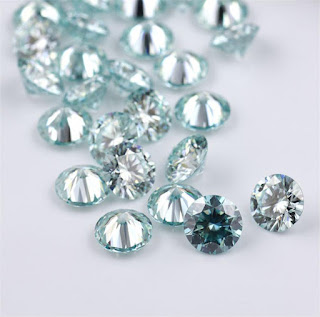
Stone preference matters because lab-grown diamonds and moissanite behave differently. Lab-grown diamonds score 10 on the Mohs hardness scale; moissanite scores 9.25. Both are durable for daily wear, but moissanite shows more fire (colored light dispersion) in sunlight. If you want the exact optical properties of a diamond, choose lab-grown. If you want maximum sparkle per dollar, moissanite wins.
Finally, confirm your ring size with a professional sizer or a printable ring gauge. Sterling silver rings can be resized, but the process adds cost and time. Getting it right on the first order saves both.
When you are ready to compare settings, start with a reputable manufacturer's Engagement Ring collection to see how S925 pairs with various stone shapes and carat weights.
Step 1 — Choose Your Center Stone: Lab-Grown Diamond vs. Moissanite
What to Do
- Compare carat-for-carat pricing. A 1-carat lab-grown diamond typically ranges from $600-$1,200 depending on cut and color grade. A 1-carat equivalent moissanite (6.5mm round) runs $150-$300.
- Check the hardness and durability specs. Lab-grown diamonds hit 10 on the Mohs scale; moissanite sits at 9.25. Both withstand daily wear, but diamond resists scratching slightly better.
- Evaluate brilliance and fire. Moissanite has a refractive index of 2.4-2.65 versus diamond's 2.42. That means moissanite actually disperses more colored light — some buyers love it, some find it too flashy.
- Verify certification. Lab-grown diamonds should come with IGI or GIA grading reports. Moissanite typically comes with a manufacturer's warranty but no universal grading standard.
Why This Matters
The stone is 60-70% of your ring's visual impact and 80-90% of its cost. Choosing between lab-grown diamond and moissanite is the single biggest financial decision in this process. Lab-grown diamonds offer identical chemistry and hardness to mined diamonds — they are real diamonds, just created in a controlled environment over 2-4 weeks instead of billions of years underground. Moissanite, by contrast, is a silicon carbide gemstone that looks similar but has different optical properties.
For budget-conscious bridal customers, the math is straightforward. A 1.5-carat lab-grown diamond in an S925 setting might total $1,200-$1,800. The same ring with a 1.5-carat equivalent moissanite (7mm round) might total $400-$600. Both are stunning. The difference is whether you prioritize diamond authenticity or maximum size per dollar.
Common Mistakes to Avoid
- Assuming bigger is always better: A poorly cut 2-carat stone looks duller than a well-cut 1-carat stone. Cut quality drives brilliance more than carat weight.
- Skipping certification: If a lab-grown diamond has no IGI or GIA report, walk away. The report verifies carat weight, color, clarity, and cut.
- Confusing carat with size: Moissanite is lighter than diamond, so a 1-carat moissanite measures larger than a 1-carat diamond. Compare millimeter dimensions, not carat weight, when choosing between the two.
Step 2 — Verify the S925 Silver Quality
What to Do
- Look for the S925 or 925 hallmark stamped inside the band. This indicates 92.5% pure silver alloyed with 7.5% other metals, usually copper.
- Perform a simple magnet test. Silver is not magnetic; if the ring sticks to a magnet, it contains ferrous metals and is not genuine sterling.
- Ask for an acid test or XRF certification from the manufacturer. A reputable supplier will provide material composition documentation.
- Check for rhodium plating. Many S925 rings receive a rhodium coating that adds brightness and prevents tarnishing. This plating wears off over 6-12 months and can be reapplied by a jeweler.
Why This Matters
Sterling silver is the most affordable precious metal that still looks premium. At roughly $0.60-$0.90 per gram (industry spot price range), an S925 setting weighing 3-5 grams costs only $2-$5 in raw material. That is why S925 engagement rings can carry larger, higher-quality stones than gold rings at the same price point.
The catch is quality control. Cheap S925 rings from unverified sources may contain less silver than advertised or use low-quality casting that leaves porosity and weak spots. A ring that bends or breaks within months is no bargain. Verify the hallmark, request material documentation, and buy from manufacturers with established quality processes.
Common Mistakes to Avoid
- Trusting the hallmark alone: Counterfeit 925 stamps exist. Buy from verified B2B manufacturers or request independent testing.
- Ignoring rhodium plating: Unplated sterling silver tarnishes within weeks of daily wear. Rhodium plating is not optional for engagement rings — it is essential.
- Choosing weight over craftsmanship: A heavier ring is not automatically better. Look for smooth edges, secure stone settings, and even metal thickness.
Step 3 — Select the Setting Style and Stone Shape
What to Do
- Match the setting to your lifestyle. Solitaire settings are classic and secure. Halo settings add perceived size but require more prongs that can snag on clothing. Pave settings offer continuous sparkle but need regular inspection to ensure stones stay seated.
- Choose a stone shape that flatters your hand. Round brilliant cuts maximize brilliance. Oval and pear shapes elongate fingers. Emerald cuts show clarity but require higher-grade stones because their open table reveals inclusions.
- Consider the setting's metal weight. A solitaire S925 setting uses 2-4 grams of silver. A pave setting with 20-40 melee stones uses 3-5 grams. Heavier settings cost slightly more but feel more substantial.
- Think about the wedding band pairing. A solitaire engagement ring pairs easily with any wedding band. A halo or side-stone setting may require a curved band to sit flush.
Why This Matters
The setting determines how the stone is held, how the ring wears, and how it pairs with your wedding band. For budget-conscious bridal customers, the setting is also where you can save or overspend. A simple solitaire in S925 might cost $50-$150 wholesale. A complex pave setting with 50 lab-grown diamond melee stones might cost $200-$400.
Your Wedding Ring should complement the engagement ring, not compete with it. If you choose a high-profile halo engagement ring, plan for a plain or slightly curved wedding band. If you choose a low-profile solitaire, almost any wedding band works.
Common Mistakes to Avoid
- Choosing a setting that hides the stone: Intricate halos and side stones can distract from a beautiful center stone. Let the stone be the star.
- Ignoring prong security: Four-prong settings show more stone but offer less security than six-prong settings. For daily wear, six prongs are safer.
- Forgetting the wedding band: Measure both rings together. A gap between engagement ring and wedding band is a common disappointment.
Step 4 — Compare Prices Across Sourcing Channels
What to Do
- Check retail jewelry stores first to establish a baseline. A 1-carat lab-grown diamond solitaire in 14k gold typically retails for $2,500-$4,500.
- Compare against online direct-to-consumer brands. These often price 30-50% below traditional retail.
- Look at B2B manufacturer pricing. Wholesale prices for the same ring might be 50-70% below retail.
- Factor in delivery time. Reputable manufacturers like Starsgem offer 2-4 day production times with expedited DHL or FedEx shipping.
Why This Matters
The markup structure in jewelry is aggressive. Traditional retail stores apply 200-300% markup over wholesale. Online brands reduce that to 100-150%. B2B manufacturers sell at wholesale or near-wholesale prices because they move volume.
For a budget-conscious bridal customer, buying from a manufacturer directly can mean the difference between a 0.5-carat and a 1.5-carat center stone at the same budget. The trade-off is that you handle your own sizing, warranty, and after-sales service. That is manageable if you know your ring size and choose a reputable manufacturer.
Consider the Classic Wedding Rings category for timeless, low-profile designs that pair well with any engagement ring. Classic styles also hold their visual appeal longer than trend-driven designs.
Common Mistakes to Avoid
- Chasing the lowest price without verifying quality: A suspiciously cheap ring usually has thin metal, poor stone quality, or both.
- Ignoring shipping and customs: International orders may incur duties. Factor 5-10% into your total cost.
- Skipping the return policy: Even with accurate sizing, returns happen. Confirm the manufacturer's return policy before ordering.
Step 5 — Order, Verify, and Protect Your Ring
What to Do
- Request a video or photo of the finished ring before shipping. Reputable manufacturers provide this.
- Verify the stone certificate matches the stone in the ring. Check the certificate number against the stone's laser inscription if applicable.
- Insure the ring within 30 days of purchase. Jewelry insurance typically costs 1-2% of the ring's value annually.
- Schedule an annual checkup with a local jeweler to inspect prongs and rhodium plating.
Why This Matters
The buying process does not end at checkout. Verification protects you from receiving a different stone than you paid for. Insurance protects your investment against loss or theft. Annual maintenance keeps the ring looking new.
S925 silver requires more maintenance than gold or platinum. Rhodium plating wears off, silver tarnishes, and prongs loosen. Budget $50-$100 per year for maintenance and replating.
Common Mistakes to Avoid
- Skipping the certificate check: A stone that does not match its certificate is a red flag.
- Delaying insurance: Most policies require coverage within 30 days of purchase.
- Ignoring maintenance: A loose prong can cost you a stone. Annual inspections are cheaper than replacement.
Pro Tips for Success
- Buy the stone and setting separately: You can often save 10-20% by purchasing a loose stone and a separate setting, then having a local jeweler set it.
- Choose a 6.5mm round moissanite for a 1-carat look: This size mimics a 1-carat diamond's face-up appearance at a fraction of the cost.
- Request rhodium plating at purchase: Ensure your S925 ring ships with a fresh rhodium coat for maximum brightness.
- Ask about melee stone quality: If your setting includes small lab-grown diamonds, confirm they are at least GH color and VS clarity.
- Order during off-peak seasons: Manufacturers often have faster turnaround outside the November-December holiday rush.
Frequently Asked Questions
Is S925 silver durable enough for an engagement ring?
Yes, with proper care. S925 sterling silver scores 2.5-3 on the Mohs hardness scale, which is softer than gold or platinum. However, rhodium plating adds a hard protective layer. With annual maintenance and replating every 6-12 months, an S925 engagement ring lasts for decades.
How much can I save choosing S925 over 14k gold?
Substantially. A 14k gold setting might cost $300-$600 wholesale, while the same design in S925 costs $50-$150. Over the ring's lifetime, you save $250-$450 on the setting alone, which can upgrade your center stone by 0.5 carats or more.
Can I upgrade the stone later?
Yes, but plan for it. S925 settings can accommodate stone upgrades if the new stone has the same or smaller diameter. A 6.5mm round stone can be replaced with another 6.5mm round. Going larger requires a new setting.
Conclusion
This S925 engagement ring buying guide gives you a clear path: choose your stone, verify your silver, select a setting, compare sourcing channels, and protect your purchase. The S925 engagement ring is the smart choice for budget-conscious bridal customers because it shifts spending from metal to stone, where it matters most.
The approach works because it is data-driven. Lab-grown diamonds at 40-60% below mined diamond prices, moissanite at roughly 10% of diamond cost, and S925 settings at 70-85% below gold equivalents — these numbers compound into a ring that looks twice its price. You are not sacrificing quality; you are eliminating retail markup.
Your next step is concrete: set your budget, pick your stone, and request a quote from a verified manufacturer. With 2-4 day production times and expedited shipping, you could be wearing your ring within a week. Start comparing today, and let the numbers guide you to the ring that fits both your finger and your finances.

评论
发表评论