How to Select Stone Shape and Setting Style for S925 Engagement Rings
How to Select Stone Shape and Setting Style for S925 Engagement Rings
Choosing the right stone shape and setting style for S925 engagement rings is harder than it looks. Sterling silver is soft enough to bend under pressure, so the setting must protect the stone. The stone shape dictates how light travels through the gem, how much finger coverage you get, and how the ring wears over decades. Most buyers pick a shape first and a setting second — that order creates problems. This guide walks you through the selection process step by step, covering the practical trade-offs between round, oval, princess, pear, and emerald cuts, and matching each to the right setting type for S925 silver. Relevant specifications and application guidance are available through Classic Wedding Rings.
Key Takeaways
- Round brilliant and oval cuts deliver the most sparkle per carat in S925 settings.
- Prong settings suit round and oval stones; bezels protect softer shapes like pear and marquise.
- S925 silver needs thicker gallery rails and reinforced prongs compared to platinum or gold.
- Halo settings add perceived size without increasing carat weight — useful for budget-conscious buyers.
- Lab-grown diamonds and moissanite perform differently in silver; hardness and refractive index matter.
What You Need Before Starting
Before you compare shapes, you need three things: a stone budget, a finger size, and a lifestyle profile. The budget determines whether you look at lab-grown diamonds, moissanite, or hydrothermal emeralds. Finger size affects proportions — a 1.5ct round on a size 4 finger looks enormous, but the same stone on a size 8 looks modest. Lifestyle matters because S925 silver scratches easily; a nurse or a mechanic needs a low-profile bezel, not a tall prong setting.
You also need to understand the metal itself. S925 sterling silver is 92.5% silver and 7.5% copper alloy. It is softer than 14k gold (which tests around 130–140 Vickers hardness) and much softer than platinum. That softness means the setting must be designed with extra metal mass at stress points. A standard 1.5mm prong that works in platinum needs to be 2.0mm or thicker in S925.
Finally, decide on the stone material. Lab-grown diamonds offer hardness of 10 on the Mohs scale and a refractive index of 2.42. Moissanite measures 9.25 Mohs with a refractive index of 2.65–2.69, which produces more fire than diamond. Hydrothermal emeralds sit at 7.5–8 Mohs and require protective settings because they are brittle. Each material changes your setting options.
Step 1 — Match the Stone Shape to the Setting Type
What to Do
Start with the shape because it drives everything else. Round brilliant is the most forgiving shape for S925 settings — the symmetrical outline distributes pressure evenly, and the 57–58 facets hide minor setting imperfections. Oval cuts elongate the finger and offer about 15–20% more surface area than a round of the same carat weight. Princess cuts are square with sharp corners; those corners are vulnerable to chipping, so they need V-shaped prongs or a partial bezel. Pear and marquise shapes have pointed tips that must be protected by a bezel or a deep V-prong. Emerald cuts have step facets and an open table; they show inclusions more readily but look elegant in a channel setting.
For each shape, the setting must match the girdle thickness. Round brilliants have a medium girdle that accepts standard prongs. Princess cuts often have a thin girdle at the corners, requiring a V-prong that wraps around the corner. Pear shapes need a reinforced tip prong — if the tip is exposed, a hard knock can fracture the stone.
Why This Matters
The shape-to-setting match determines whether the ring survives daily wear. A round brilliant in a four-prong S925 setting is a proven combination; jewelers have made this for over a century. A princess cut in the same four-prong setting is risky because the corners are unsupported. The difference is not cosmetic — it is structural. Sterling silver work-hardens over time, but it will not protect a fragile stone corner the way a thicker gold alloy would.
Common Mistakes to Avoid
- Choosing a princess cut for an active lifestyle: The sharp corners chip easily. If you love the square look, ask for a bezel setting instead of prongs.
- Ignoring the girdle thickness: Thin girdles on pear and marquise stones crack under pressure. Always request a girdle thickness of at least 0.5mm for S925 settings.
- Picking a tall setting for a low-profile lifestyle: High prong settings snag on sweaters and hair. If the wearer works with hands, choose a bezel or a flush setting.
Step 2 — Match the Setting Style to the S925 Metal Properties
What to Do
Sterling silver requires different setting geometry than gold or platinum. The prongs must be thicker — aim for 1.8mm to 2.0mm at the base, tapering to 1.2mm at the tip. The gallery (the metal under the stone) should be solid, not open filigree, because open galleries weaken the head. A basket setting with four or six prongs works well for round and oval stones. A bezel setting — where the metal wraps completely around the stone — is the safest option for S925 because it distributes impact across the entire circumference.
Consider the setting styles available from your manufacturer. Solitaire settings are the classic choice: a single stone held by four or six prongs. Tension settings grip the stone by pressure alone, but they require a harder metal than S925 — avoid tension settings in silver. Pave settings, where small melee diamonds line the band, work in S925 but require careful quality control because the tiny prongs can wear down. Halo settings surround the center stone with a ring of melee stones; they add sparkle and perceived size without increasing carat weight. Channel settings hold stones in a continuous metal track — ideal for Wedding Ring bands that pair with the engagement ring.
Why This Matters
S925 silver is about 30% softer than 14k gold. That softness means the setting must compensate. A pave band in S925 will lose melee stones faster than the same band in gold unless the prongs are reinforced. A channel setting protects stones better because the metal track shields the girdle from impact. The trade-off is that channel settings hide more of the stone, reducing brilliance by roughly 10–15% compared to a prong setting.
Common Mistakes to Avoid
- Using a tension setting in S925: Tension relies on the metal's springiness; silver is too soft and will deform, dropping the stone.
- Choosing a pave band without reinforced prongs: Ask for double-pronged melee settings or a micro-bezel to extend the ring's life.
- Skipping rhodium plating: S925 silver tarnishes. Rhodium plating (a 0.1–0.3 micron layer) adds hardness and prevents blackening, but it wears off in 6–12 months and needs re-plating.
Step 3 — Match the Stone Material to the Setting
What to Do
Lab-grown diamonds are the safest choice for S925 engagement rings because their hardness (10 Mohs) resists scratching, and their refractive index (2.42) produces strong brilliance. They come in every shape — round, oval, pear, cushion, princess, emerald cut, asscher, heart, marquise, baguette, trapezoid, and radiant. If you want a classic Engagement Ring, a round lab-grown diamond in a six-prong solitaire is the benchmark.
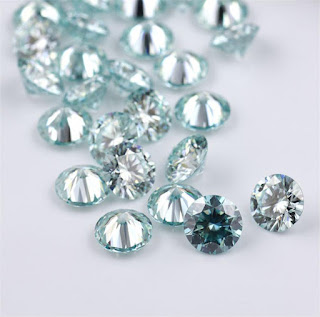
Moissanite is a strong alternative. Its refractive index of 2.65–2.69 means it throws more fire than diamond — some buyers love that, others find it too rainbow-like. Moissanite is slightly softer than diamond at 9.25 Mohs, but that is still harder than any gemstone except diamond and a few others. It works well in prong settings, but avoid step cuts like emerald or asscher because moissanite's double refraction can create a fuzzy appearance in those cuts.
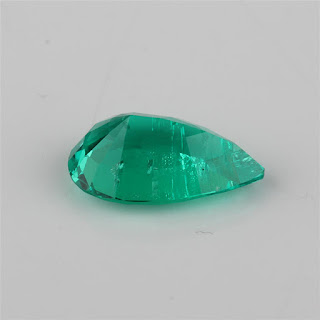
Hydrothermal emeralds are the most fragile option. At 7.5–8 Mohs, they scratch more easily, and they are brittle — a sharp blow can crack them. Emeralds must go in a bezel setting or a deep V-prong setting that protects the corners. Never put a hydrothermal emerald in a tension or pave setting.
Why This Matters
The stone material determines the setting's required protection level. A lab-grown diamond can survive a four-prong solitaire in S925 because the stone itself is nearly indestructible. A hydrothermal emerald cannot — it needs the full perimeter protection of a bezel. Moissanite sits in between; it tolerates prongs but benefits from a thicker gallery rail.
Common Mistakes to Avoid
- Putting an emerald in a prong setting: The corners will chip within months. Use a bezel or a halo with a protective rim.
- Choosing a step cut in moissanite: The double refraction creates a hazy look. Stick to brilliant cuts for moissanite.
- Ignoring the stone's depth: Deep stones (like some pear cuts) sit high in the setting, increasing snag risk. Ask for a shallow cut if you want a low profile.
Step 4 — Balance Carat Weight, Finger Size, and Setting Proportions
What to Do
The carat weight must match the finger size and the setting style. A 1ct round brilliant measures about 6.5mm in diameter. On a size 5 finger (16.5mm circumference), that stone covers about 40% of the finger width — a classic proportion. On a size 7 finger (17.8mm), the same stone looks smaller. If you want the same visual coverage on a larger finger, you need a larger carat weight or a shape with more surface area per carat, like an oval or a pear.
The setting adds width. A halo setting adds 2–3mm to the overall diameter. A pave band adds visual weight. Measure the total ring width — the stone plus the setting — and compare it to the finger size. A ring that is too wide for the finger looks clunky; a ring that is too narrow looks lost.
Why This Matters
Proportion is the difference between a ring that looks expensive and one that looks costume-like. The ideal ratio of stone diameter to finger width is between 0.35 and 0.55. Below 0.35, the stone looks small; above 0.55, the ring overwhelms the hand. For S925 rings, the metal's softness also means wider settings are more durable — a 2mm band is significantly stronger than a 1.5mm band.
Common Mistakes to Avoid
- Buying a 2ct stone for a size 4 finger: The ring will look top-heavy and may spin on the finger. Consider a 1–1.5ct stone instead.
- Choosing a thin band for a large stone: A 1.5mm band cannot support a 2ct stone in S925. Use at least a 2mm band.
- Forgetting the wedding band: The engagement ring must sit flush against the Classic Wedding Rings band. If the setting has a high basket, the wedding band may not sit flat.
Step 5 — Verify Quality with Specifications and Certifications
What to Do
Before you order, request specific numbers from your manufacturer. Ask for the stone's carat weight, cut grade, color grade, and clarity grade. For lab-grown diamonds, look for certification from IGI or GIA. For moissanite, check the color grade (D–F is colorless) and the cut quality. For hydrothermal emeralds, ask about the clarity and whether the stone is oiled or untreated.
For the S925 setting, verify the metal purity (92.5% silver, 7.5% copper) and ask about rhodium plating thickness. Request the prong dimensions — a minimum of 1.8mm at the base for S925. Ask about the gallery thickness and whether the setting has been stress-tested. A reputable manufacturer will provide these specifications without hesitation.
Why This Matters
S925 silver is inexpensive, but the stone is not. A lab-grown diamond of 1ct can cost several hundred dollars; a hydrothermal emerald of the same size is cheaper but still significant. The setting is the cheapest part of the ring, yet it determines whether the stone survives. Specifications protect you from both overpaying for a low-quality stone and receiving a setting that fails.
Common Mistakes to Avoid
- Skipping certification for lab-grown diamonds: Uncertified stones may be misgraded. Insist on IGI or GIA reports.
- Accepting vague plating claims: Ask for the rhodium thickness in microns. A 0.1-micron layer wears off in months; 0.3 microns lasts longer.
- Not requesting a sample: Before a bulk order, order a single sample ring. Test it for a week of daily wear before committing.
Pro Tips for Success
- Use a six-prong setting for round brilliants in S925: Six prongs distribute pressure better than four and protect the stone if one prong wears down.
- Request a reinforced gallery: A solid gallery rail under the stone adds structural strength without changing the ring's appearance.
- Choose a low-profile setting for daily wear: A cathedral setting or a basket setting with a low center of gravity reduces snagging and protects the stone better in S925.
- Pair the engagement ring with a matching wedding band: Order both from the same manufacturer to ensure the metals match and the rings sit flush.
- Plan for re-plating: Rhodium-plated S925 rings need re-plating every 6–12 months. Budget for this maintenance.
Frequently Asked Questions
Can I use a tension setting for an S925 engagement ring?
No. Tension settings rely on the metal's springiness to hold the stone. S925 silver is too soft — the metal will deform under pressure, and the stone will loosen or drop. Use a prong, bezel, or channel setting instead.
What is the best stone shape for a small finger?
Round brilliant and oval cuts are the safest choices for small fingers (sizes 4–5). They have the most balanced proportions and the least risk of snagging. Avoid elongated shapes like marquise or pear, which can overwhelm a small finger.
How thick should the band be for an S925 engagement ring?
For a stone under 1ct, use a 1.8–2.0mm band. For stones over 1ct, use a 2.0–2.5mm band. Thinner bands risk bending under the stone's weight, especially in S925 silver.
Is moissanite a good choice for an S925 engagement ring?
Yes, for brilliant cuts. Moissanite's hardness (9.25 Mohs) and high refractive index make it durable and sparkly. Avoid step cuts like emerald or asscher, which look hazy due to double refraction.
How often should I re-plate an S925 ring?
Rhodium plating wears off in 6–12 months with daily wear. Re-plating costs a small fee at most jewelers. If you want to avoid maintenance, choose an unplated S925 ring and accept the natural silver patina.
Conclusion
Selecting the stone shape and setting style for S925 engagement rings comes down to three variables: the stone's hardness, the setting's protective geometry, and the metal's softness. Round and oval brilliants in prong or bezel settings are the safest, most versatile choices. Princess, pear, and marquise cuts need extra protection at their corners and tips. Hydrothermal emeralds demand bezel settings. Moissanite works well in brilliant cuts but poorly in step cuts. Always verify the specifications — prong thickness, rhodium plating, certification — before ordering. S925 silver is an affordable metal, but it punishes poor setting design. Choose a setting that compensates for the metal's softness, and your ring will last decades. Start with a round or oval lab-grown diamond in a six-prong solitaire, and you cannot go wrong.

评论
发表评论